What should I know before meeting a Korean local for the first time?
A few small things that help.
Here’s what to know.
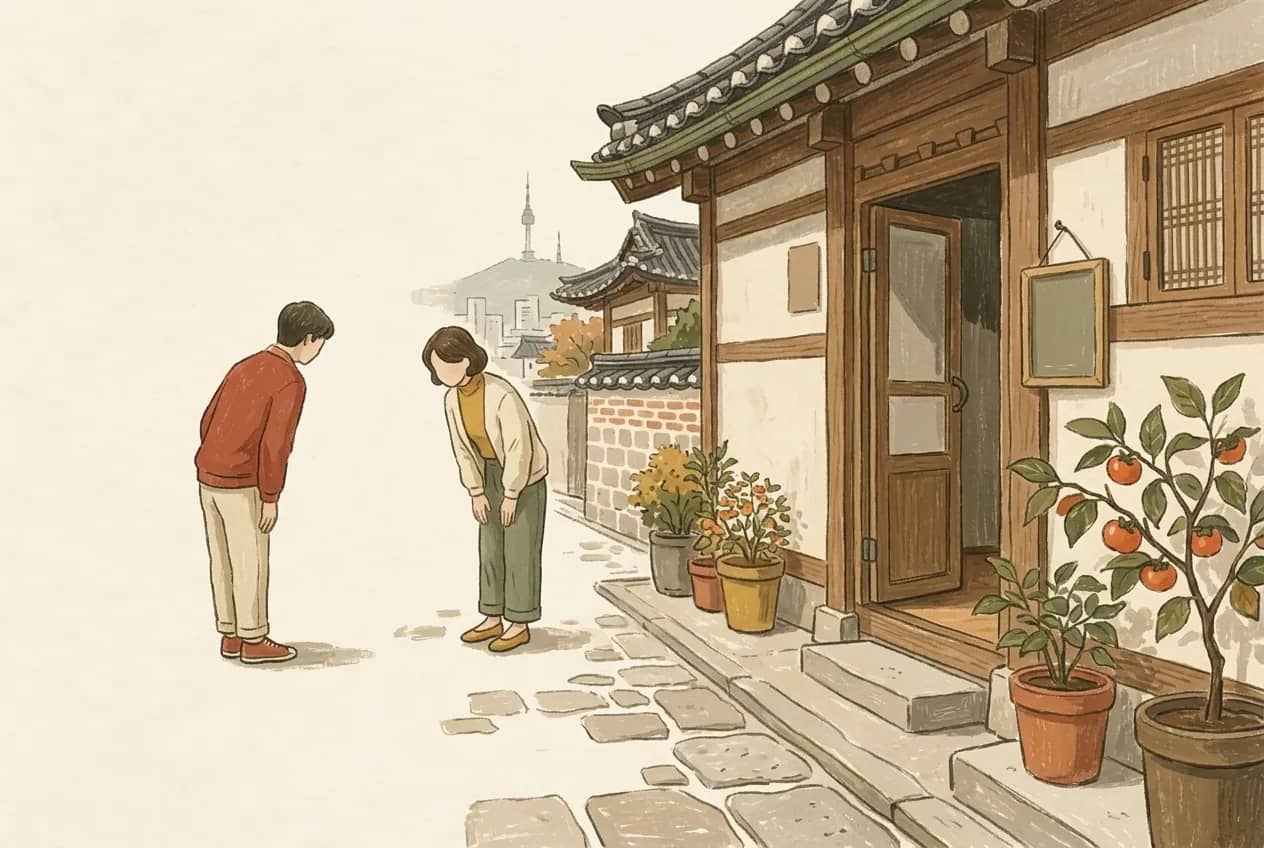
Be on time, greet with a slight bow and "annyeonghaseyo", give and receive with two hands, let the older person sit first and pour for others rather than yourself. Age is established early because it sets how Korean is spoken. Being slightly formal at the start is safe; Korean social distance shortens quickly once it is clear you are trying.
Before you go
- Start with one shared interest.
- Choose a public place you can both find.
- Keep the plan simple and respect a no.
How do you greet someone you are meeting for the first time?
A slight bow from the neck and shoulders with "annyeonghaseyo" (hello) covers every situation you will be in. Handshakes happen too, often combined with a small bow, and in a business-like context the left hand lightly supports the right forearm. Hugging someone you have just met is not done.
A little more detail
"Cheoeum boepgesseumnida" means roughly "I am meeting you for the first time" and is the standard first-meeting phrase. Following it with "bangapseumnida" (pleased to meet you) is natural. Both are worth practicing until they come out without hesitation, because the opening sets the register for everything after it.
Exchanging names usually includes asking what to call each other. If your name is hard to pronounce in Korean, offering a short version yourself saves the other person an awkward attempt.
Why does age come up so quickly?
Age determines grammar, so Koreans establish it early for functional reasons. Korean has several speech levels and a set of relational terms, and you cannot address someone correctly until you know whether they are older or younger than you. A question about your age in the first few minutes is not personal curiosity, it is the equivalent of asking which pronoun to use.
A little more detail
Korea moved to international age reckoning in official use in 2023, so stated ages now generally match what you would expect. Birth year is still commonly asked instead of age, because year of birth is what determines school cohort and therefore social position.
As a visitor you are outside this system and nobody will hold you to it. Using the polite -yo ending with everyone, regardless of age, is correct and safe for the entire trip.
What are the table and giving rules?
Two hands for anything passed to or from someone older or senior: money, a card, a glass, a gift, a phone. If one hand is occupied, the left hand touches the right forearm. This is the single most visible courtesy in Korea and the easiest to adopt.
- Give and receive with two hands
- Let the eldest person sit and start first
- Pour for others, never for yourself
- Do not stand chopsticks upright in rice
- Take shoes off wherever there is a raised floor or a shoe cabinet at the door
- Keep your voice low in cafes and on public transport
A little more detail
At a table, the oldest person sits first and usually starts eating first. Elders are served first, and if someone older pours you a drink you hold the glass with two hands and, traditionally, turn slightly away when drinking. You do not pour your own drink; you keep an eye on other people's glasses and fill them, and someone will fill yours.
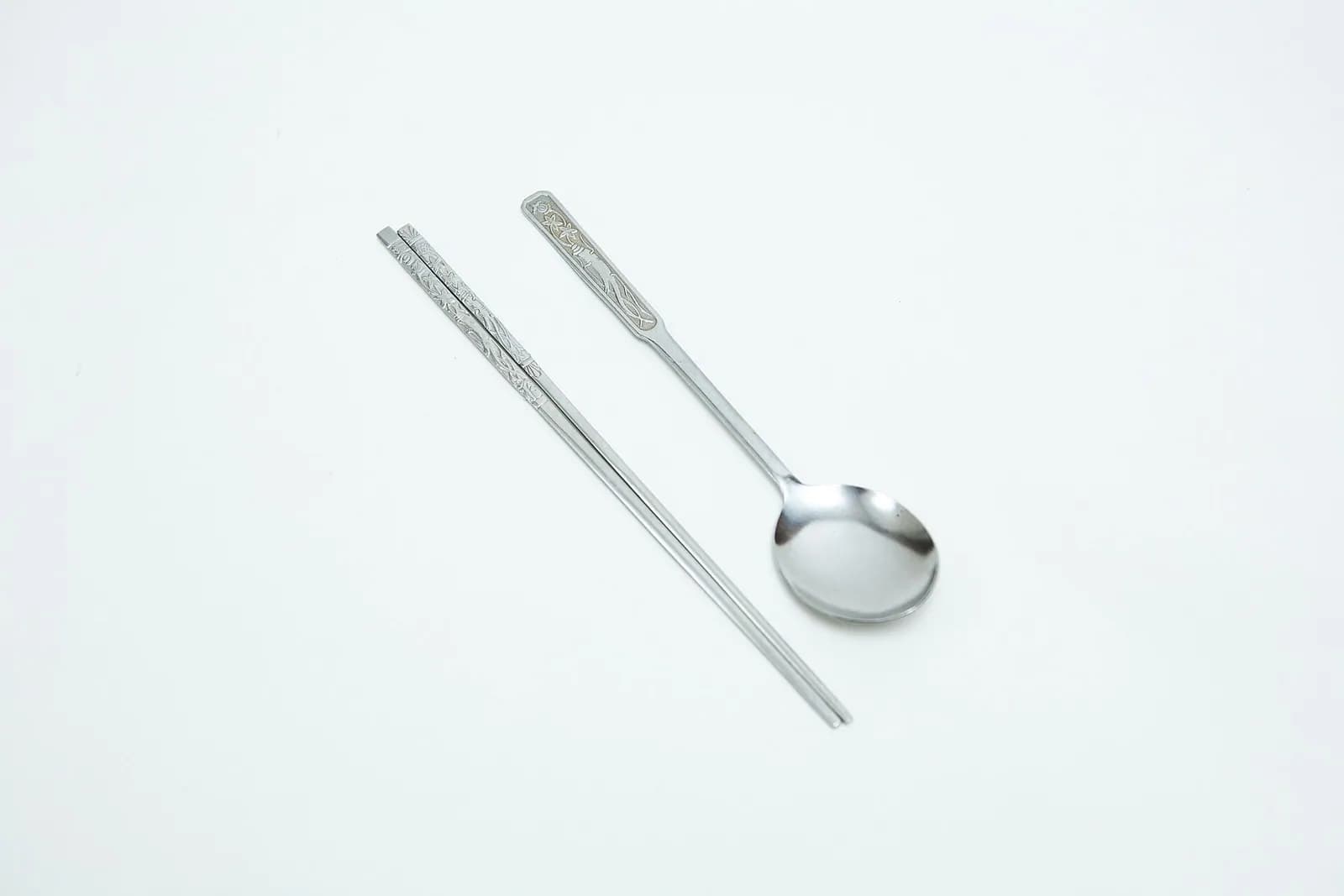
Chopstick rules are short and worth knowing. Do not stand chopsticks upright in rice, which resembles a funeral offering, and do not pick up the rice bowl to eat from it, unlike in Japan or China. The spoon is for rice and soup, chopsticks for everything else.
How punctual do you need to be?
Be on time or slightly early, and message if you will be more than five minutes late. Punctuality is taken seriously in Korea and the messaging norm is immediate, because everyone is coordinating over KakaoTalk in real time as they travel. Arriving late without a message is the most common avoidable mistake visitors make.
A little more detail
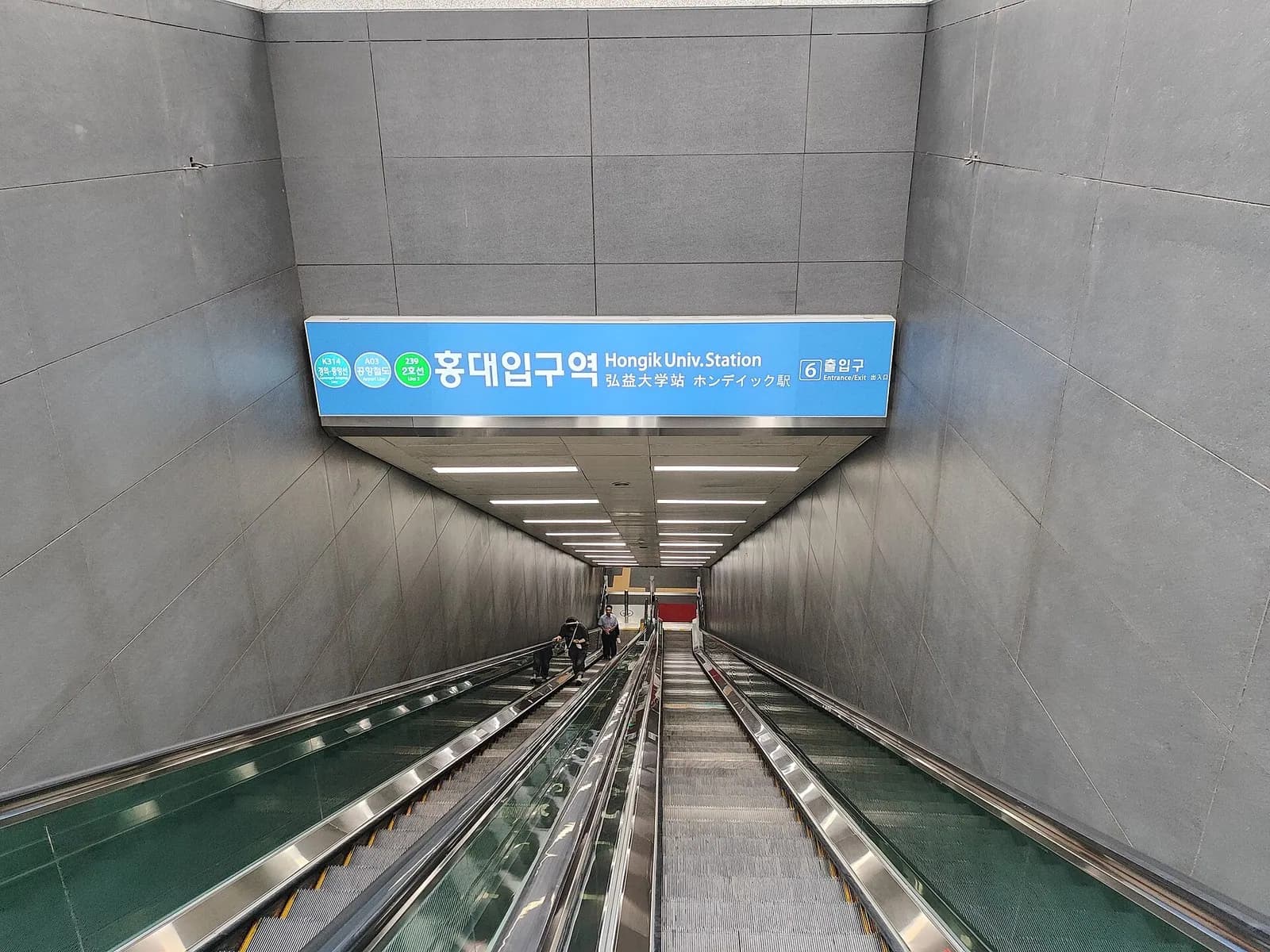
Agree the meeting point precisely, using a station exit number rather than a landmark. Seoul subway exits are numbered and signposted, and "exit 6 of Hongik University Station at 2pm" is unambiguous in a way that "outside the station" is not; large stations have more than ten exits several hundred meters apart.
If plans change, change them by message early rather than silently absorbing the inconvenience. Cancelling with a day's notice is fine; cancelling an hour before is not.
Who pays, and how do you handle it?
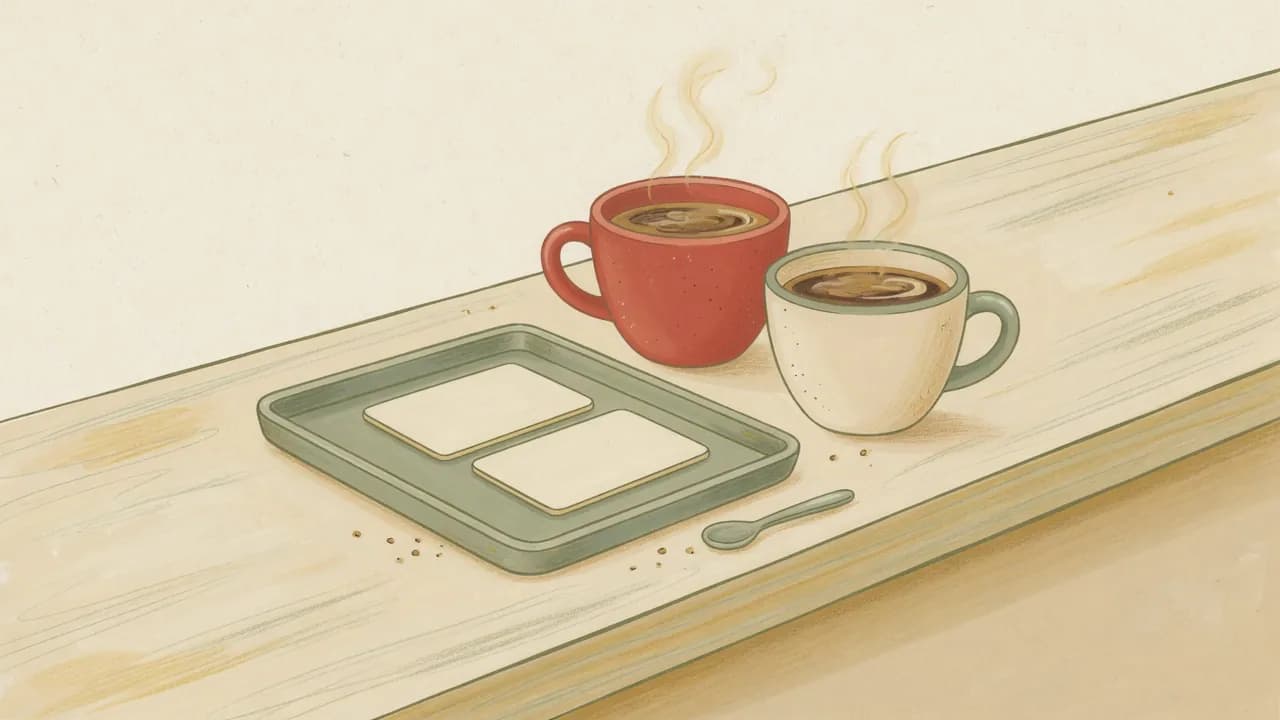
Expect some negotiation at the counter and do not treat it as a formality you should win at all costs. The older person or the person who suggested the outing traditionally pays, and splitting is now completely normal among younger Koreans, particularly for coffee. Offering clearly and then accepting the outcome gracefully is the right move.
A little more detail
A comfortable convention for a first meeting between a visitor and a resident is that each pays for their own coffee, or one pays for coffee and the other for a snack afterwards. This is common enough that proposing it will not seem odd. In a matching context such as localseoul, the resident is not paid by the traveler at all, so splitting is the expected default.
If someone insists on paying, let them, thank them, and pay for the next round or the next stop. Reciprocating later is more appreciated than refusing at the time.
What should you avoid?
Avoid opening with North Korea, military service, politics or questions about why Korea does something a particular way. None is forbidden, and all of them arrive better an hour into a conversation than in the first ten minutes. Compulsory military service in particular is a subject most Korean men will discuss if they choose to, and dislike being interviewed about.
A little more detail
Avoid physical familiarity. Back-slapping, shoulder-touching and hugs with someone you have just met are read as intrusive, even though same-sex friends in Korea are physically affectionate with each other once close.
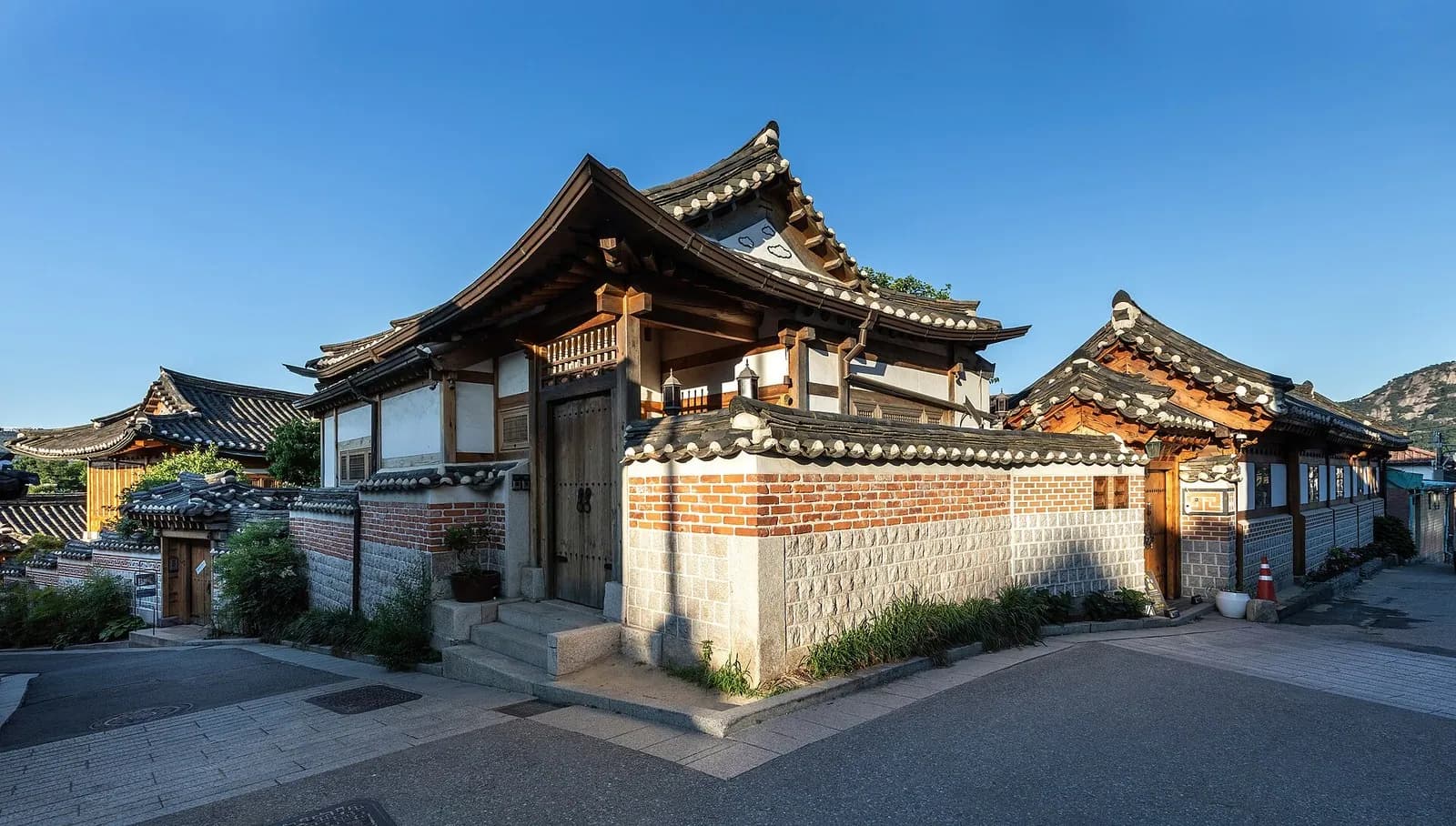
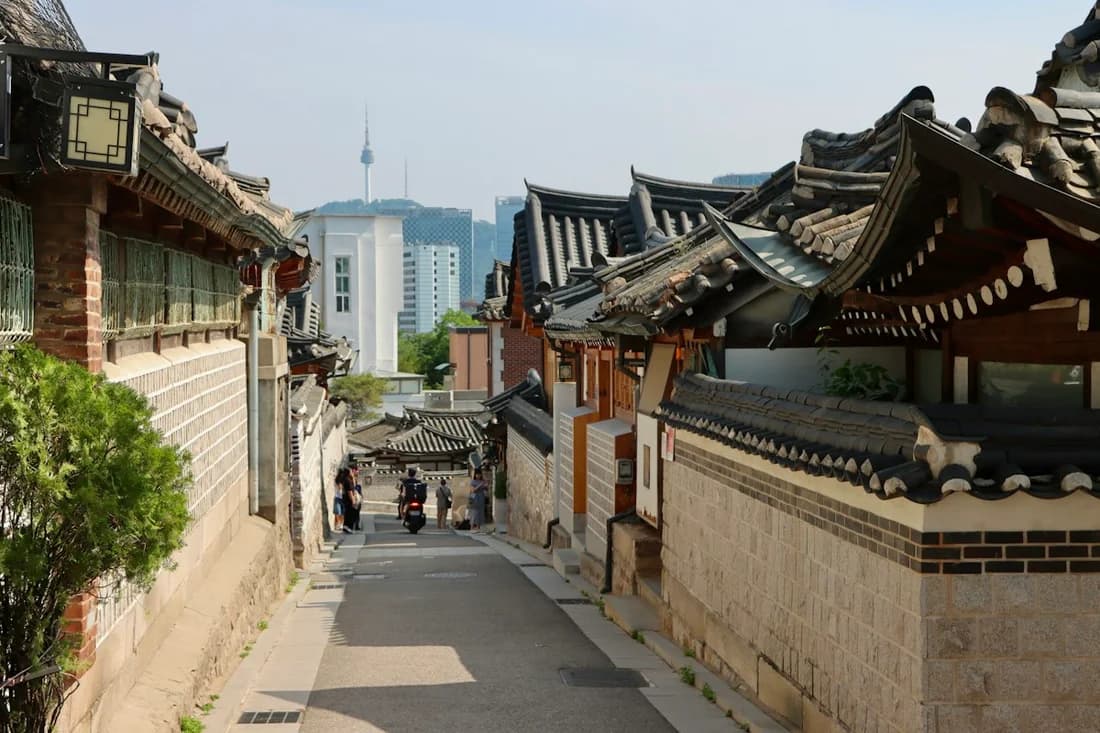
Avoid photographing people without asking, including staff, market vendors and residents in Bukchon. In residential hanok areas this is a live local complaint rather than an abstract courtesy, and signs asking for quiet and privacy are there because of visitor behavior.
Good questions.
Do I have to bow?
A slight nod of the head and shoulders is enough and is what most people actually do. Deep bows are for formal occasions and for much older people. Nobody expects a visitor to judge the depth correctly, and a small bow with a greeting is always acceptable.
Should I bring a gift to a first meeting?
It is not expected but it is well received. Something small and specific to where you are from travels better than anything expensive. Give it with two hands. Koreans often do not open a gift in front of the giver, which is politeness rather than disinterest.
What do I call someone I have just met?
Use their name followed by ssi, as in "Jihun-ssi", which is polite and safe between adults of similar standing. Do not use given names alone. Relational terms such as oppa or eonni are for established relationships and sound strange coming from a stranger.
Is it rude to refuse alcohol?
No, and it is increasingly common. Say it early and plainly rather than after several rounds: "jeoneun sul mot masyeoyo" (I cannot drink alcohol) is understood and generally accepted without further discussion. Holding a glass of something non-alcoholic keeps the toasting rhythm intact.
Do I take my shoes off?
Yes wherever there is a raised entry floor, a shoe cabinet by the door, or shoes already lined up. This applies to homes, traditional restaurants with floor seating, temple halls and some guesthouses. Clean socks without holes are a genuinely practical consideration in Korea.
Plans and opening hours can change. Check the venue or official source before you go. How we put these guides together · Suggest a correction
Get a feel for the neighborhood.
Keep exploring.
All guides ↗ Make friends
What should we talk about?
Start with curiosity, skip the interview.
 Make friends
Who gets the coffee?
Agree on the bill without the awkwardness.
 Make friends
Feeling at home in Seoul
Language, small gestures and expectations.