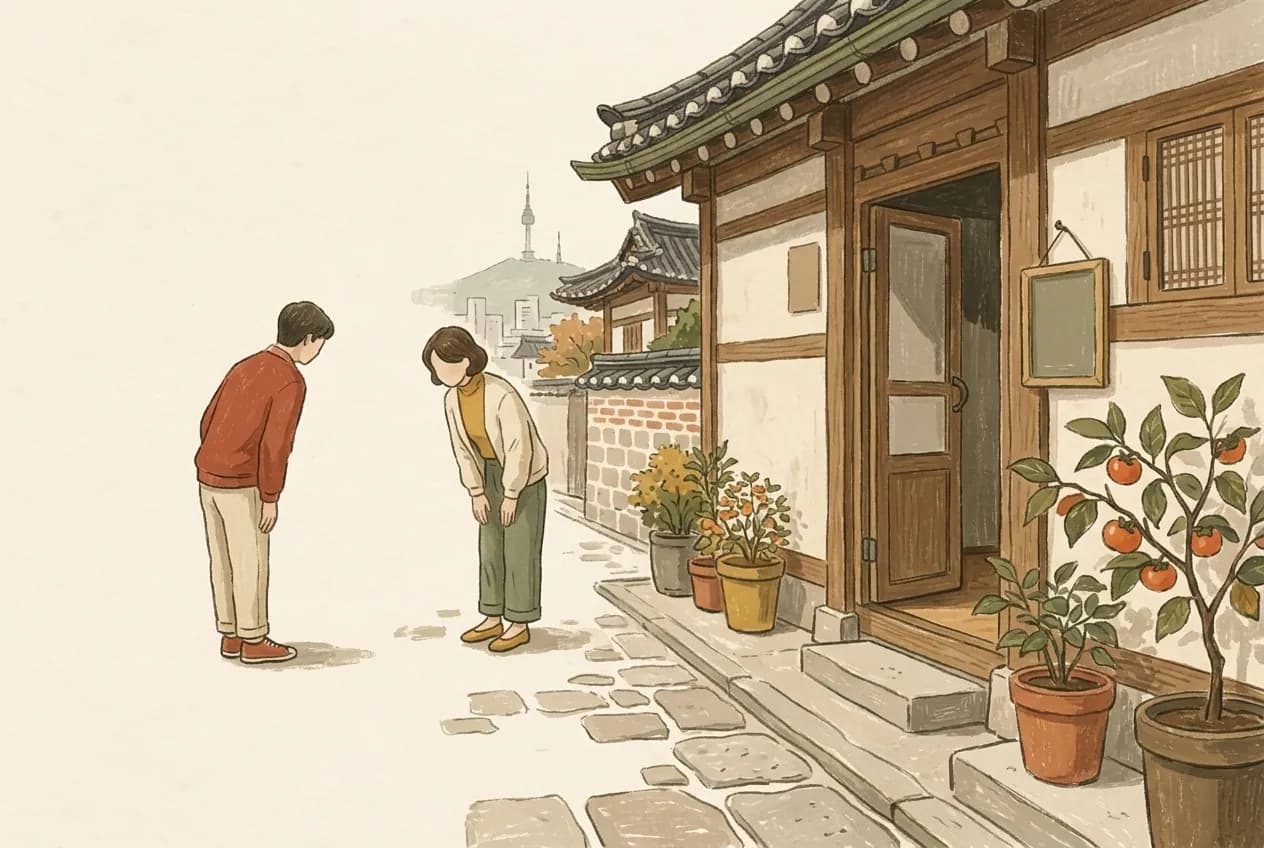
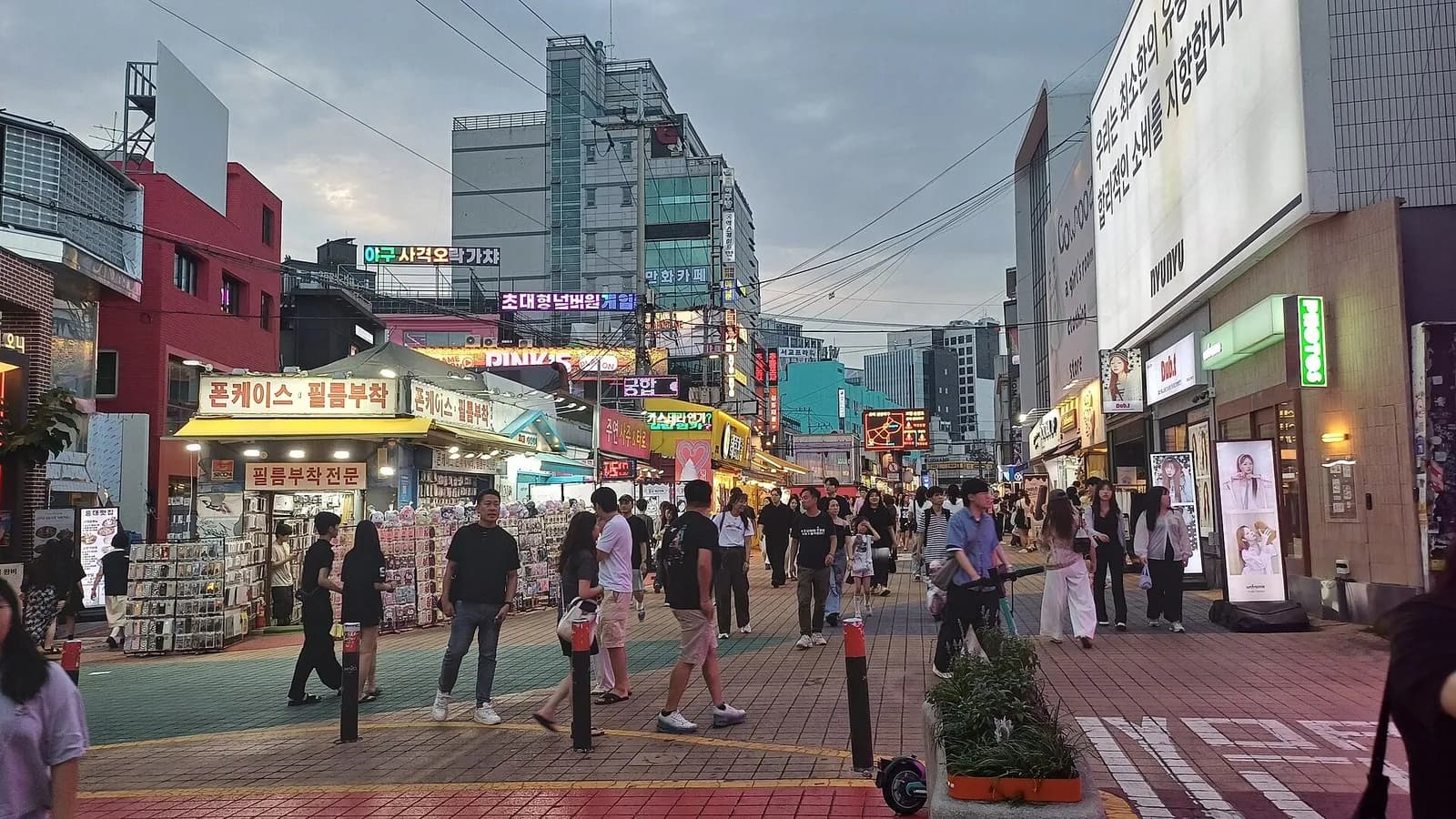
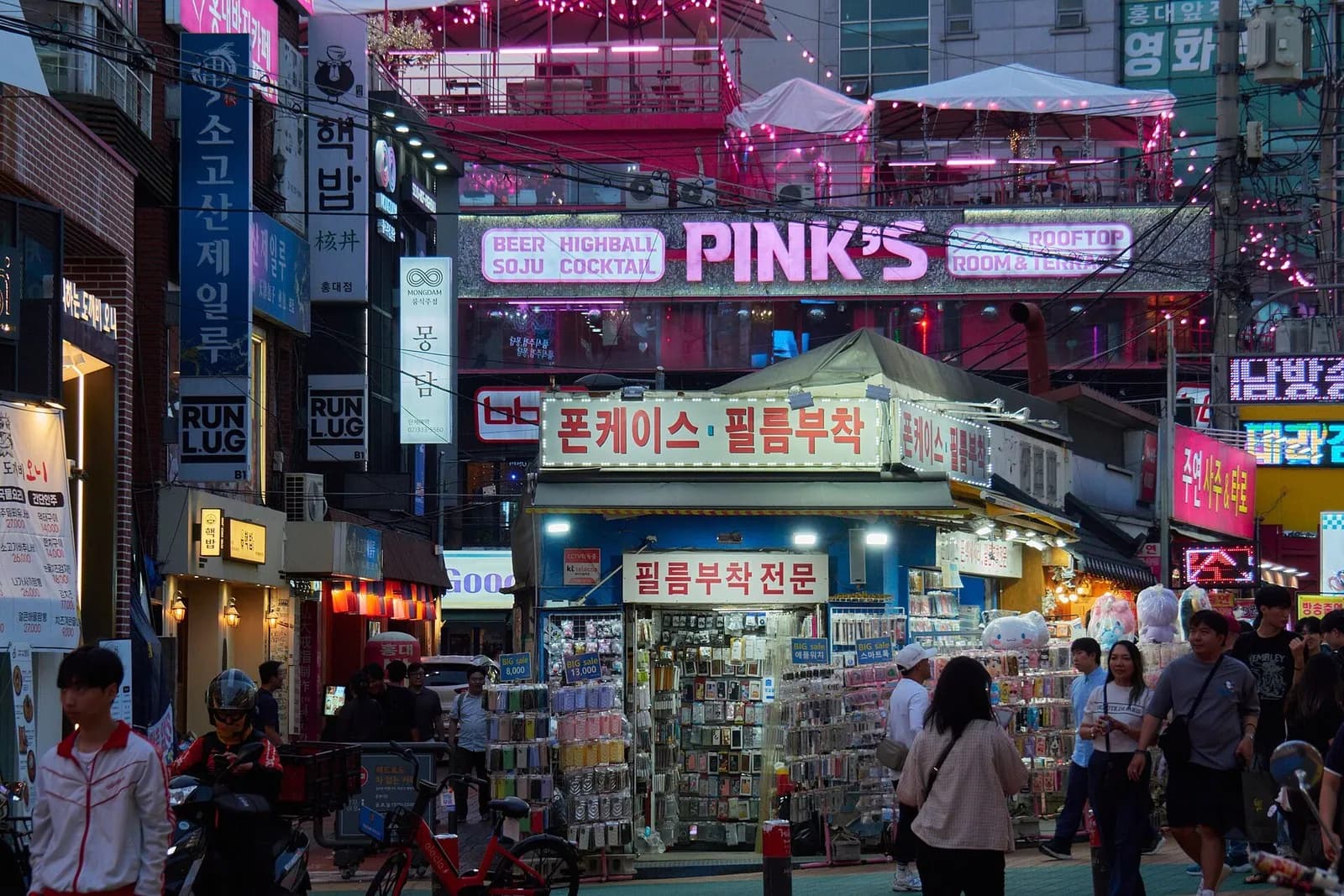
What do you talk about when you meet a Korean local?
Start with curiosity, skip the interview.
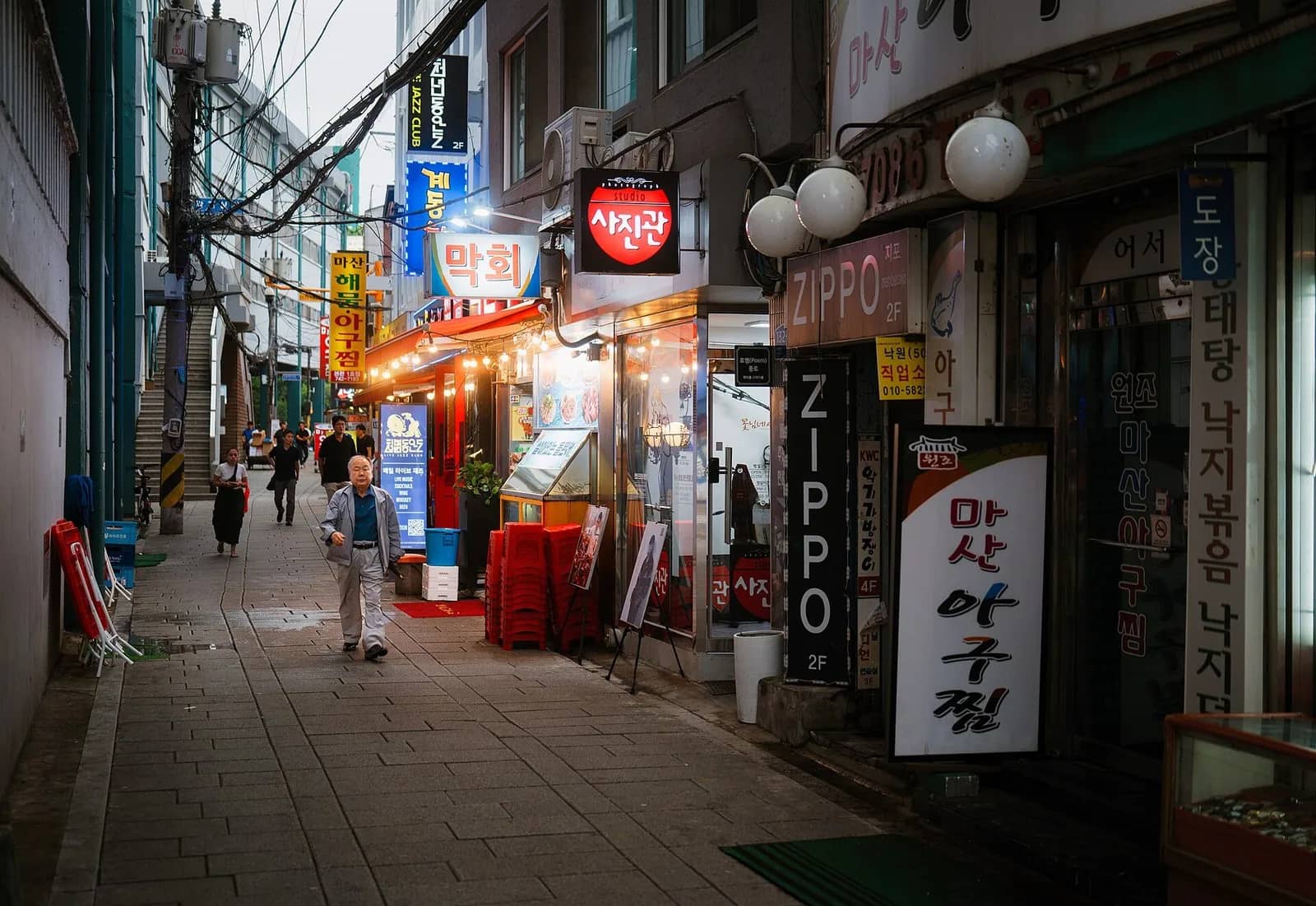
Here’s what to know.
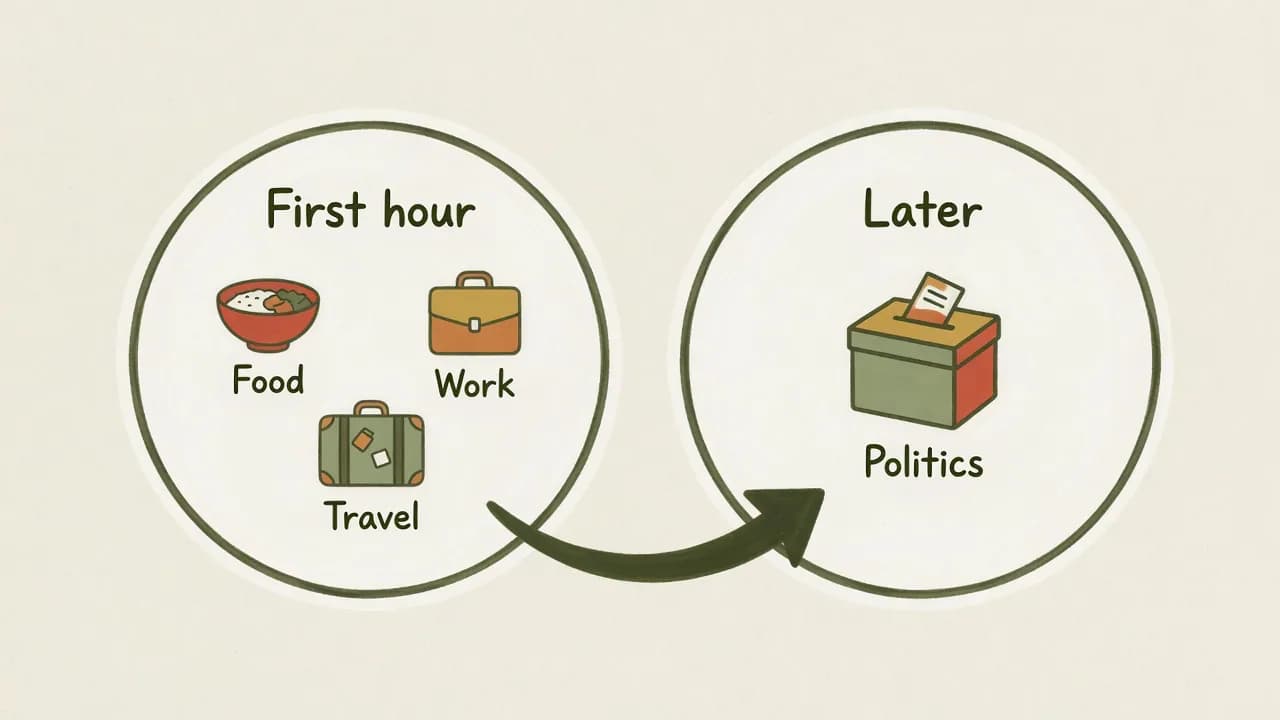
Ask about the neighborhood you are standing in, food, work and how Seoul has changed, and ask for specifics rather than opinions. Korean small talk opens with age, job, family and where you are from, which feels direct to some visitors but is the normal way of locating someone socially. Avoid politics, North Korea and military service in the first hour.
Before you go
- Start with one shared interest.
- Choose a public place you can both find.
- Keep the plan simple and respect a no.
How does Korean small talk usually open?
It opens with placing questions: where are you from, how old are you, what do you do, are you married, do you have siblings. To visitors from cultures where these are private, it can feel like an interview. In Korean terms it is orientation, because speech level and forms of address depend on knowing where someone sits relative to you.
A little more detail
Answer briefly and ask the same questions back. Reciprocating is what turns it from an interrogation into a conversation, and Koreans generally expect the return question. Declining to answer is fine but stalls the opening, so a short factual answer is the smoother move.
Weather, traffic and whether you have eaten are the other standard openers. "Bap meogeosseoyo?" (have you eaten?) is a greeting as much as a question, and the expected answer is simply yes or not yet.
What questions produce good answers?
Specific, local and answerable-from-experience questions work best. A resident can tell you exactly where they eat lunch, what this street looked like ten years ago, and which of the things on your list is not worth the trip. They cannot usefully answer "what is Korean culture like", and being asked tends to flatten the conversation.
- What has changed in this neighborhood in the last five years?
- Where do you eat when you are not trying to impress anyone?
- What do visitors always get wrong about Seoul?
- Which of these places on my list would you skip?
- What do people here do on a normal Sunday?
- What is on the menu that a foreigner would never order?
Which topics land well?
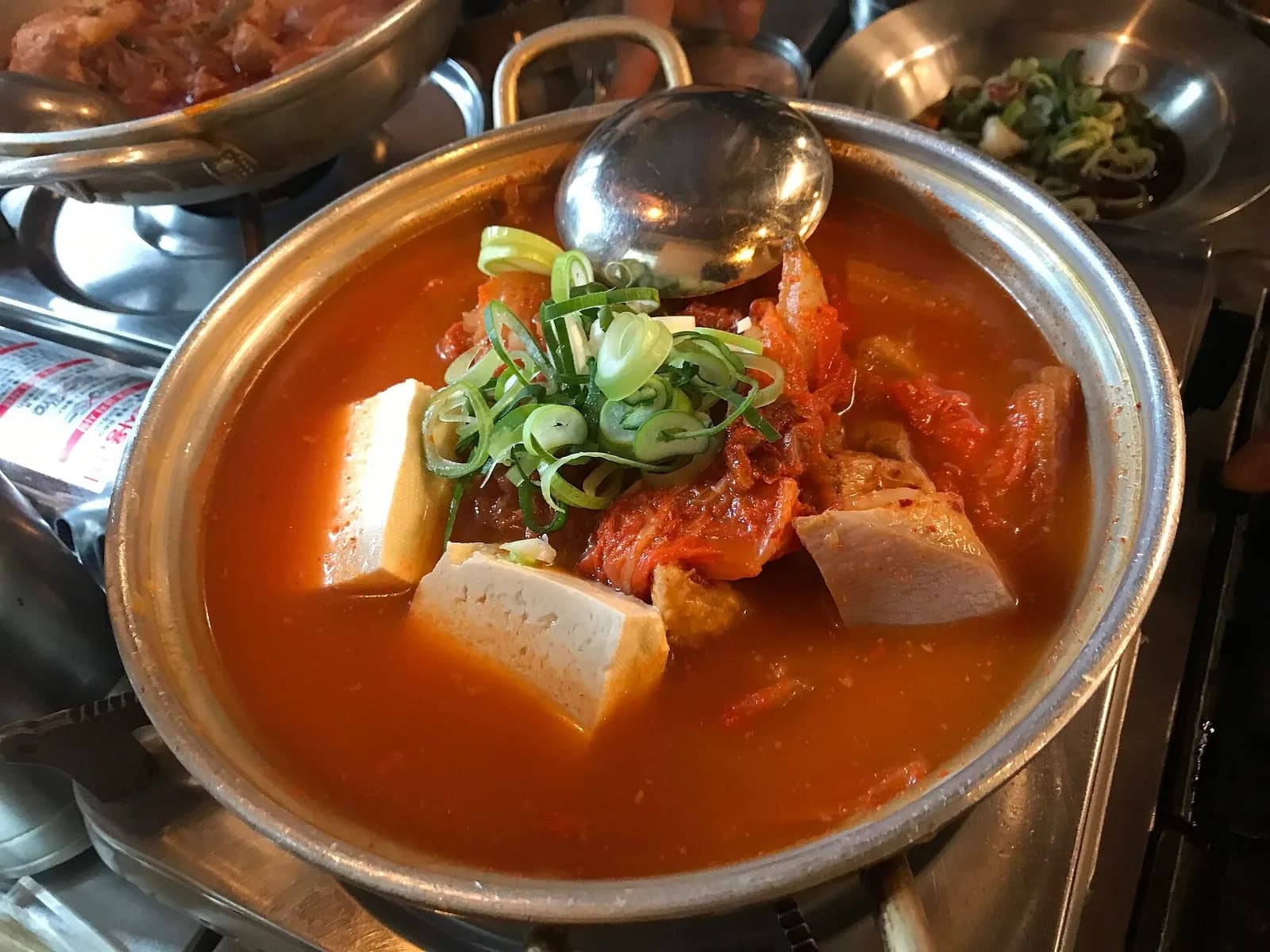
Food is the safest and richest subject in Korea and it is not a cliche. Regional differences, what people ate growing up, why a particular stew belongs to a particular season, and the difference between what tourists order and what residents order will fill an hour easily and produce concrete recommendations.
A little more detail
Work and study are normal topics rather than private ones. Koreans discuss jobs, hours and company culture openly, and the conversation about how work is organized in Korea compared with your country is one most residents are interested in having.
Travel is the natural reverse direction. Ask where they have been in Korea outside Seoul and where they want to go abroad. Domestic travel recommendations from a resident are consistently better than anything an itinerary generator produces, and it gives them the role of expert, which makes the conversation easier for both of you.
Music, film and sport all work, with one caution: assuming that a Korean person is invested in K-pop is a little like assuming an American follows the NFL. Many do, many do not, and asking which they actually listen to is better than naming a group.
Which topics should wait?
North Korea, politics and history with Japan are the three that most reliably go wrong when raised early. They are not taboo, and residents will discuss them, but as opening subjects from a stranger they put the other person in the position of representing a country rather than speaking as a person.
| Topic | First hour | Later | Note |
|---|---|---|---|
| Food and neighborhoods | Yes | Yes | Richest subject in any Korean conversation |
| Work, study, hours | Yes | Yes | Discussed openly, not private |
| Travel in and outside Korea | Yes | Yes | Gives them the expert role |
| K-pop and K-drama | With care | Yes | Ask what they listen to, do not assume |
| Politics, North Korea, Japan | No | If they raise it | Better once you are people rather than nationalities |
| Military service | No | If they raise it | Most men dislike being interviewed about it |
| Appearance, surgery, weight | No | Rarely | Normalised between close friends only |
A little more detail
Compulsory military service is a similar case. Most Korean men have done it and have views on it, and most dislike being asked about it as a novelty. If it comes up because they raise it, follow their lead.
Money, appearance and plastic surgery are the third group. Korea has a visible cosmetic-procedure industry and visitors sometimes open with it, which lands badly. Comments on someone's weight or skin, which are more normalised between close Korean friends, are not available to a stranger.
What if the conversation stalls?
Move the conversation to something in front of you. Ordering food, walking to a second place or looking at something on a menu gives both people a task and restarts the talk without anyone having to produce a topic. This is why Korean meetings so often move from cafe to restaurant to another cafe rather than staying in one seat.
A little more detail
Ask them to teach you something. Requesting the Korean name for what you are eating, or asking how to say a phrase properly, reliably restarts a stalled conversation and gives the other person something concrete to do. "Igeo hanguk-mallo mwoyeyo?" means "what is this called in Korean?"
Accept that some silence is normal. Korean conversation tolerates pauses more than American or Southern European conversation does, and filling every gap can read as nervous. A quiet stretch while eating is not a failure of the meeting.
How do you ask for real recommendations?
Ask about habit rather than quality. "Where do you actually go?" produces a different answer from "what is the best restaurant here?", because the second question makes the person responsible for your satisfaction and pushes them towards the safe, famous answer they think you want.
A little more detail
Name a constraint. Saying that you have two hours, that you are near a particular station, or that you cannot eat pork gives a resident something to solve, and Koreans generally respond well to a concrete problem. Open-ended requests get open-ended answers.
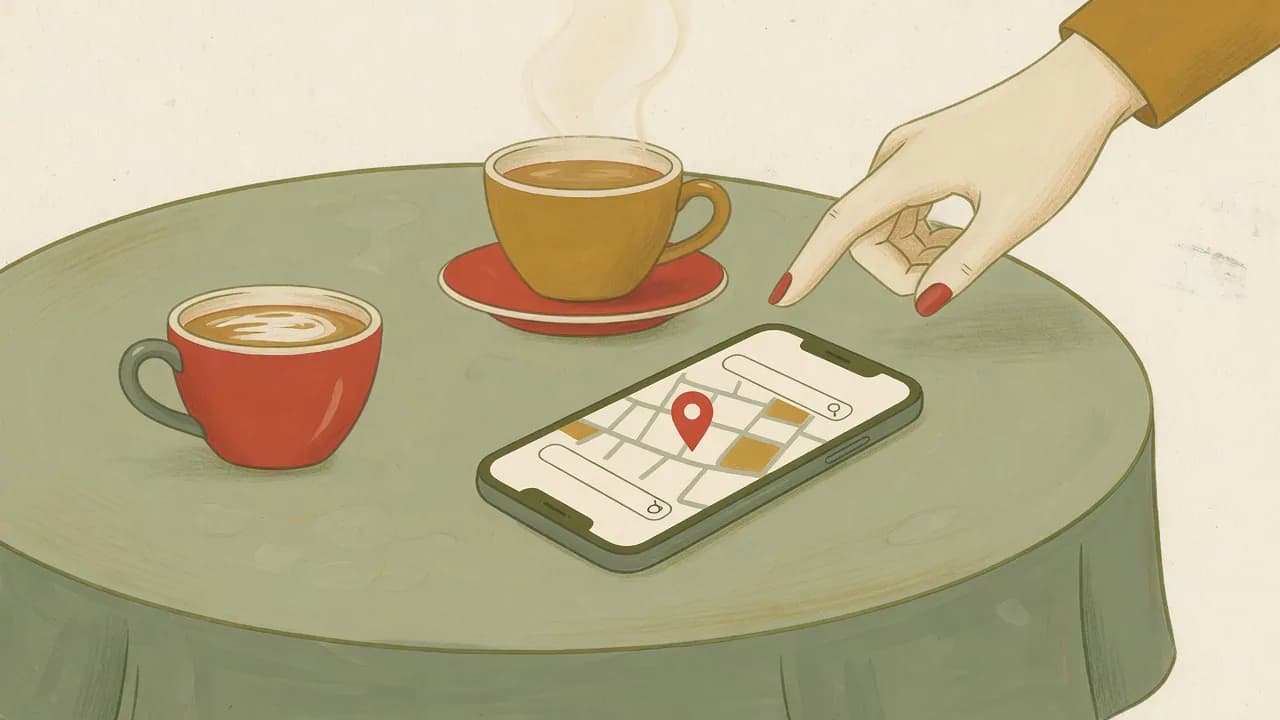
Write the names down in Korean, not romanisation. Ask them to type the place name into your phone in hangul so you can paste it into Naver Map later. Romanised Korean place names frequently fail in Korean map apps, and this one habit saves more time than any other on a Seoul trip.
Good questions.
Is it rude to ask a Korean about North Korea?
Not rude, but it is a tiring opening question for most Seoul residents, who live with it as background rather than as a daily topic. It goes better later in a conversation, or when they bring it up. As an icebreaker it tends to produce short, flat answers.
Can I talk about K-pop?
Yes, if you ask rather than assume. Interest varies as widely as interest in any mainstream music does elsewhere. Asking what they actually listen to is a better opening than naming a group, and it often leads towards Korean indie and hip-hop that visitors rarely hear about.
Why do Koreans ask my age straight away?
Because Korean grammar requires it. Speech levels and forms of address depend on relative age, so establishing it early is functional rather than personal. Birth year is often asked instead of age, since it determines school cohort and therefore social position.
What should I ask to get recommendations I could not find online?
Ask where they go on a normal weekday, give a constraint such as time or location, and ask what on your list they would skip. Then have them type the place name in Korean into your phone, because romanised names often fail in Korean map apps.
What language will the conversation be in?
English, in most cases. Seoul residents who choose to meet visitors usually want English practice, and services matching travelers with residents assume it. Reading hangul and knowing a handful of Korean phrases changes the atmosphere without changing the working language.
Plans and opening hours can change. Check the venue or official source before you go. How we put these guides together · Suggest a correction