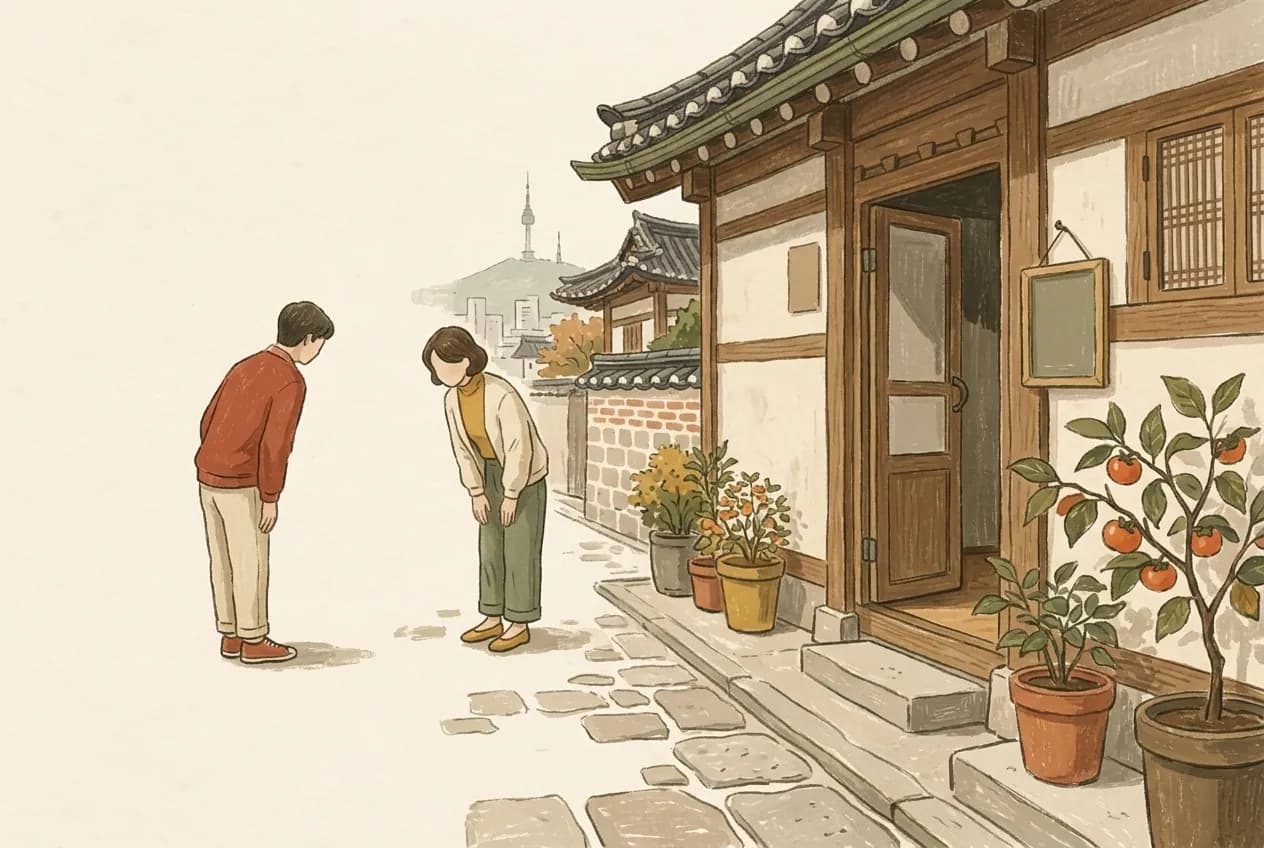
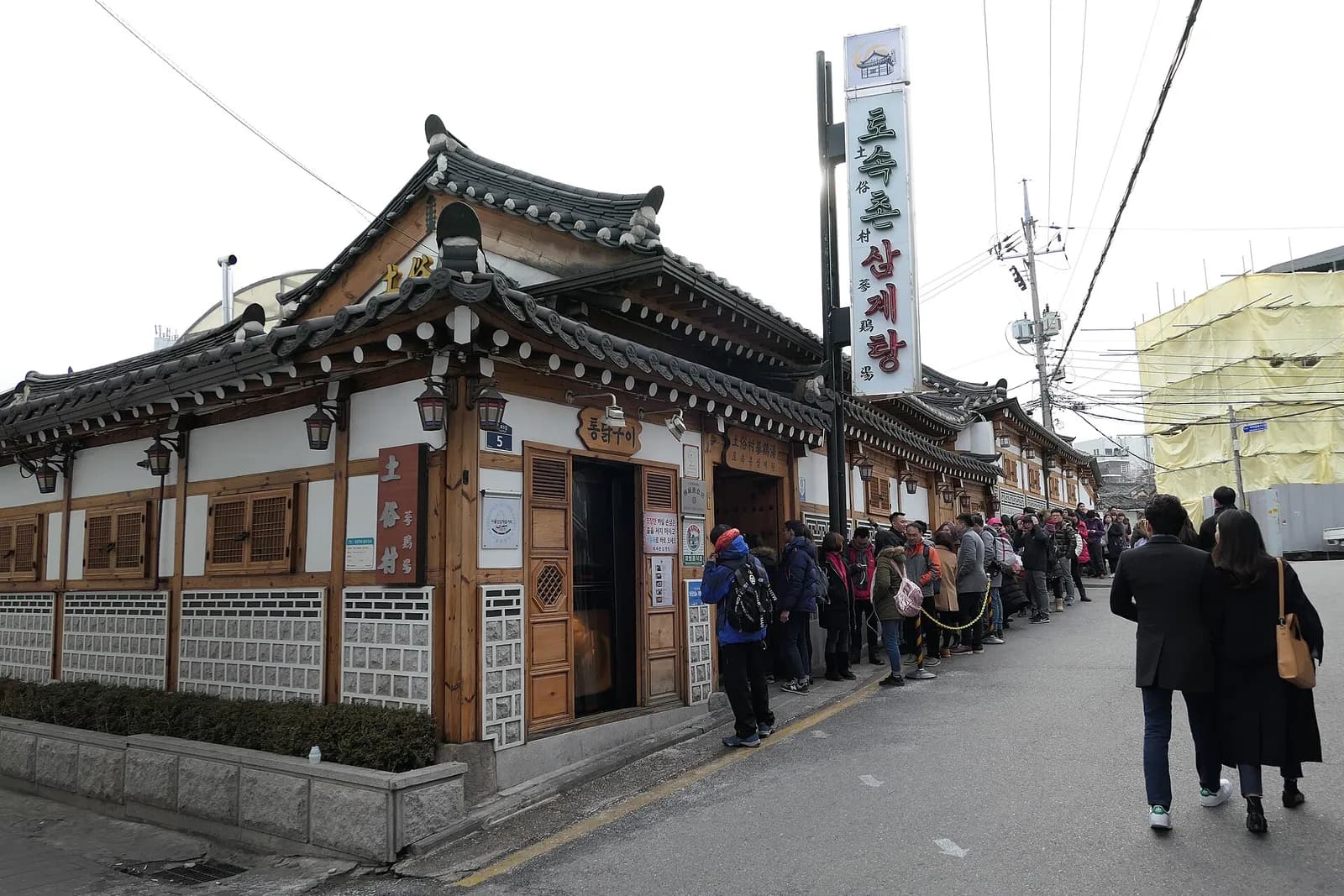
Who pays for coffee when you meet a local in Korea?
Agree on the bill without the awkwardness.
Here’s what to know.
For a first meeting between a traveler and a resident, splitting or paying for your own is normal and expected. The older person or whoever suggested the outing traditionally pays the whole bill, and the other person then buys the next round or the next stop. Among younger Koreans, straightforward splitting is now common, especially for coffee.
Before you go
- Start with one shared interest.
- Choose a public place you can both find.
- Keep the plan simple and respect a no.
What is the default in Korea?
The traditional default is that one person pays the whole bill, not that everyone pays a share. Who that person is follows a rough order: the eldest, the person who proposed the meeting, the person with the higher income or status, or the person whose turn it is. Splitting a single bill at the counter was historically unusual.
A little more detail
That has shifted substantially among people under about forty, where dutch pay, from the English phrase, is now ordinary and uncontroversial. Cafes and casual restaurants will split a card payment without comment, and friends routinely settle shares by instant bank transfer afterwards.
The two systems coexist, which is why the counter moment can look confusing. A visitor does not need to work out which one applies; offering clearly and then accepting the outcome covers both.
So who pays when a traveler meets a Seoul resident?
Each person paying for their own is the cleanest default, and it is what most residents expect in this situation. Neither of you is hosting the other in a formal sense, the amounts are small, and separate payment avoids putting either person in debt to the other.
A little more detail
Where a service arranges the meeting, this matters more. On localseoul, the traveler pays the local nothing at all, because the local is not working: they are meeting you. Each person covers their own coffee or food. After a verified meetup localseoul sends the local a KRW 10,000 Starbucks e-gift, which comes from localseoul rather than from you.
Treating a resident as though they were a guide and paying for everything is the mistake to avoid here. It converts a social meeting into a transaction, which is usually not what the other person signed up for.
What actually happens at the counter?
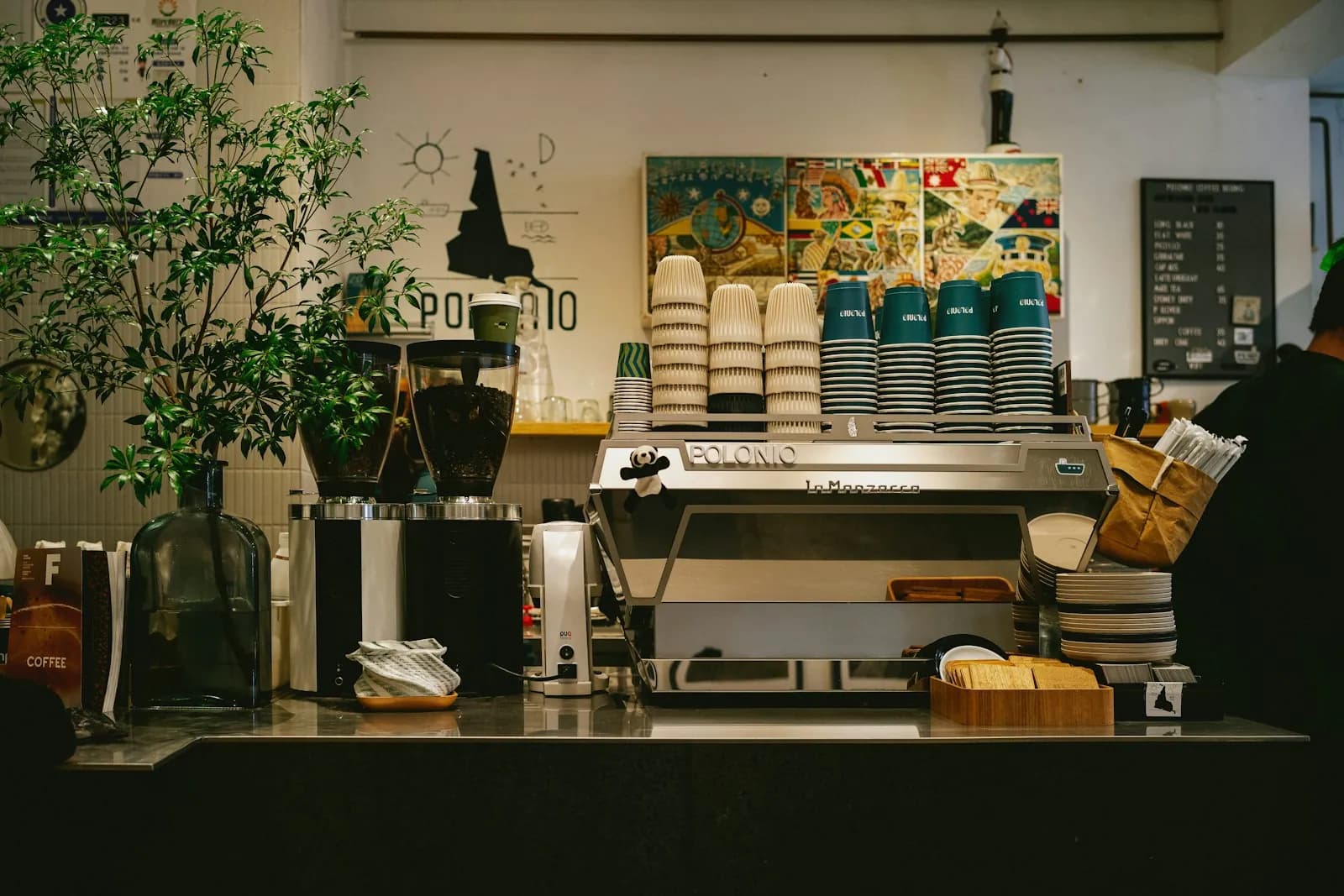
In a cafe you normally order and pay at the counter before sitting, so the question arises immediately on arrival. Say what you are doing rather than negotiating: "I will get mine" while stepping up is clear and closes it. If they have already paid for both, thank them and buy the next thing.
- Cafes: pay at the counter when ordering, before you sit
- Casual restaurants: pay at the front counter on the way out
- Cards are accepted almost everywhere, including small restaurants
- Market stalls and older shops may want cash
- There is no tipping, and staff may try to return money you leave
A little more detail
In restaurants you usually pay at the front counter on the way out rather than at the table, so both people stand up together and the moment happens there. This is why the polite scramble towards the till is a visible feature of Korean dining.
The useful phrases are short. "Ttaro gyesan hae juseyo" means "please charge us separately" and staff at cafes and casual restaurants handle it routinely. "Jega naelgeyo" means "I will pay". "Gachi gyesan hae juseyo" means "please charge it together".
What is the next-round convention?
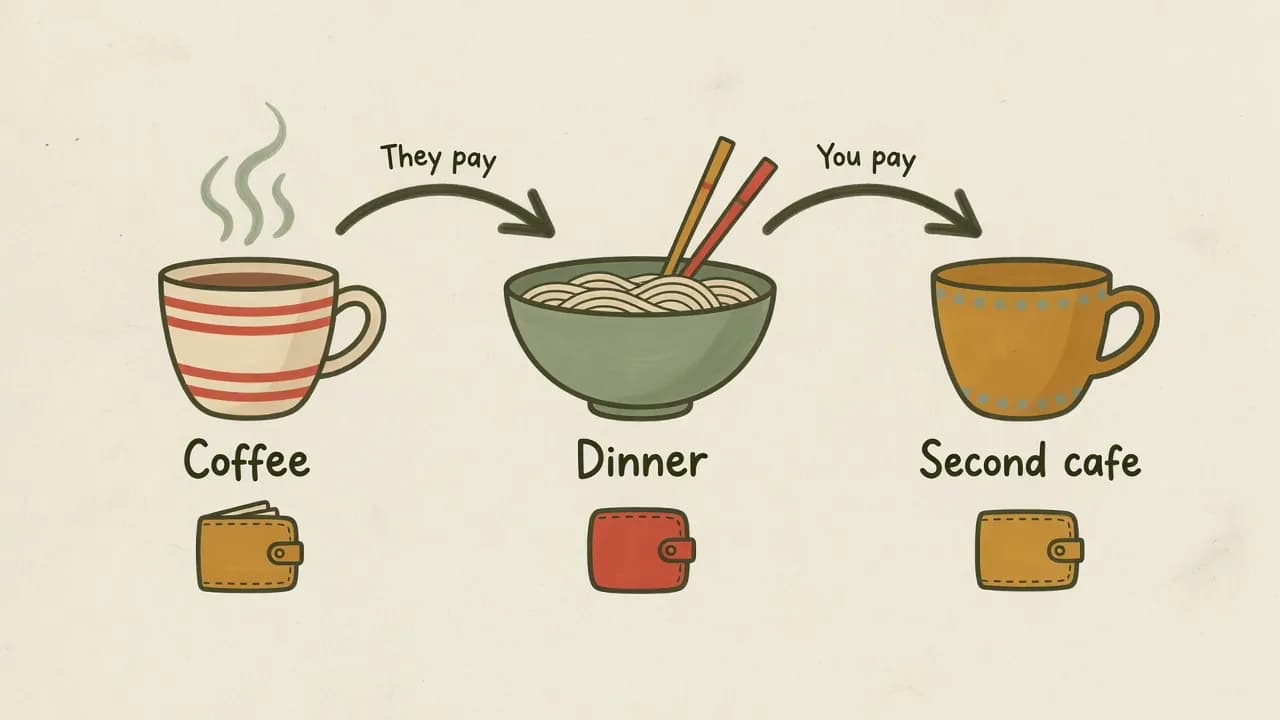
If someone pays for the first thing, you pay for the second. A Korean evening frequently moves through stages, and the payment is distributed across them rather than split within one. Coffee, then dinner, then a second cafe or a bar, with a different person paying each time, is the standard shape.
A little more detail
This is the graceful way out of an argument at the counter. Rather than insisting, let them pay and say "then the next one is mine", which is understood immediately and settles the matter. It also implies a second stop, which is usually welcome.
The same logic works across meetings. If a resident buys coffee on the first meeting and you meet again, that round is yours. Reciprocity over time matters more in Korea than exact fairness in any single instance.
How do Koreans settle shares between themselves?
Usually by instant bank transfer, often within minutes and often initiated in the KakaoTalk chat where the plans were made. Korean banking apps make small transfers effortless, and Kakao's own payment function is built into the messenger, so "send me 12,000" is an entirely normal end to a meal.
A little more detail
Visitors generally cannot participate in this, because it requires a Korean bank account. Having cash on you solves it: handing over your share in notes is accepted without friction and avoids an awkward exchange about transfer details.
Splitting a card payment at the till is the other option and works in most cafes and casual restaurants. It is less usual at small independent places and at market stalls, where one person paying and being repaid in cash is smoother.
How much does a meeting actually cost?
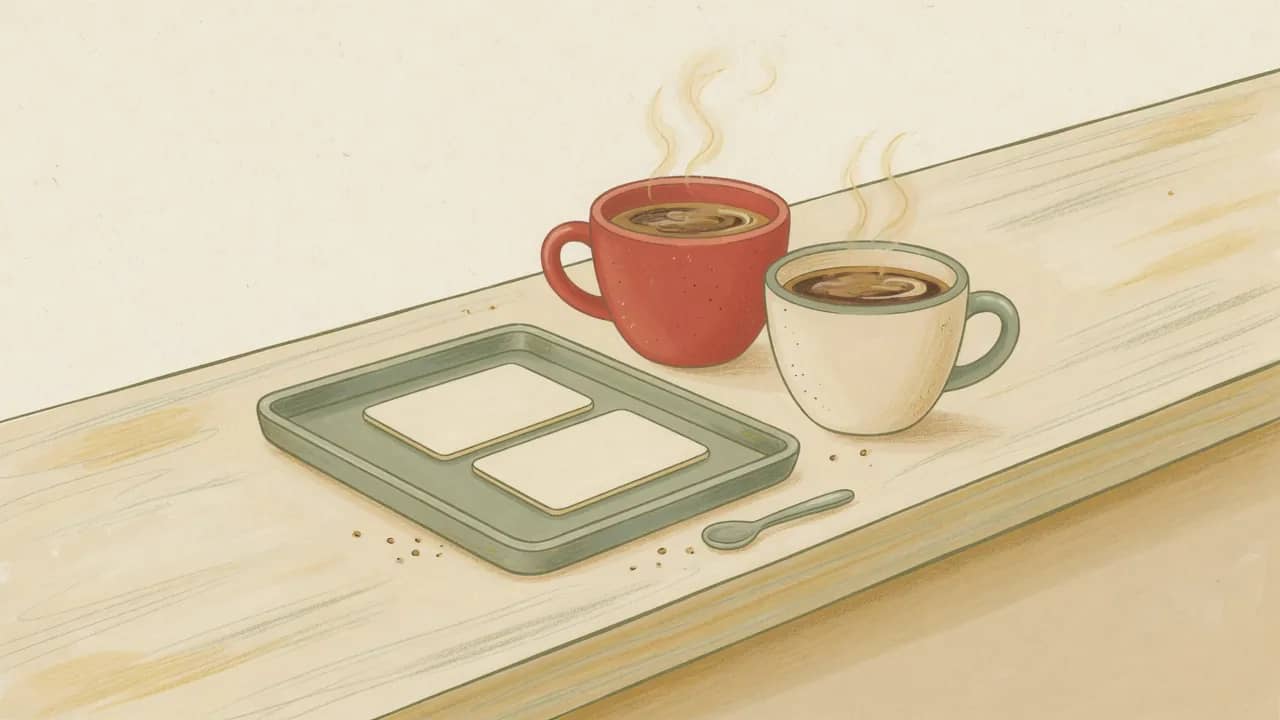
Coffee and a walk is the cheapest and most common first format, and the cost is one cafe drink each. Cafe prices vary widely across Seoul, from inexpensive chains to specialty roasteries in Seongsu that charge considerably more, so choosing the venue effectively chooses the price.
A little more detail
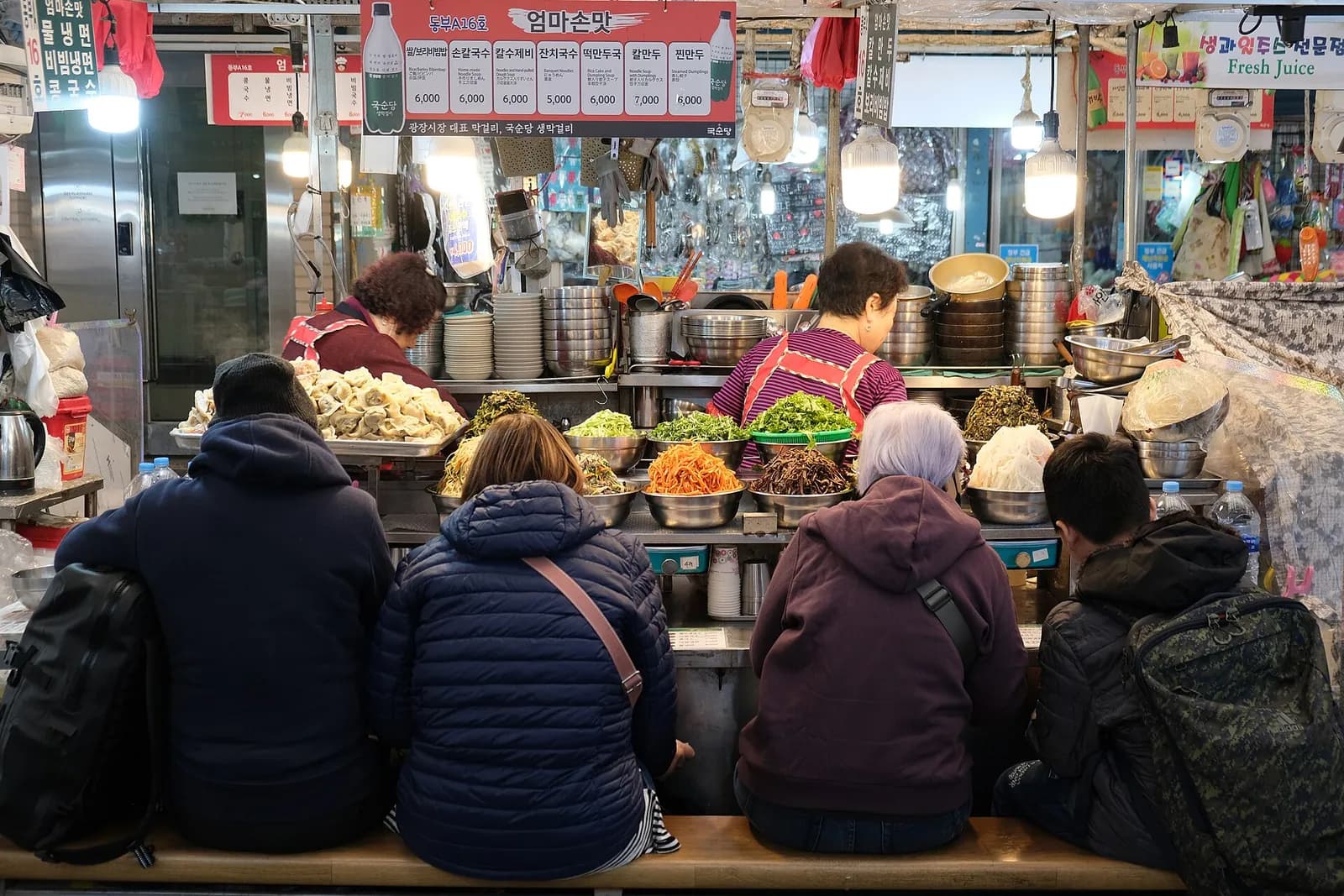
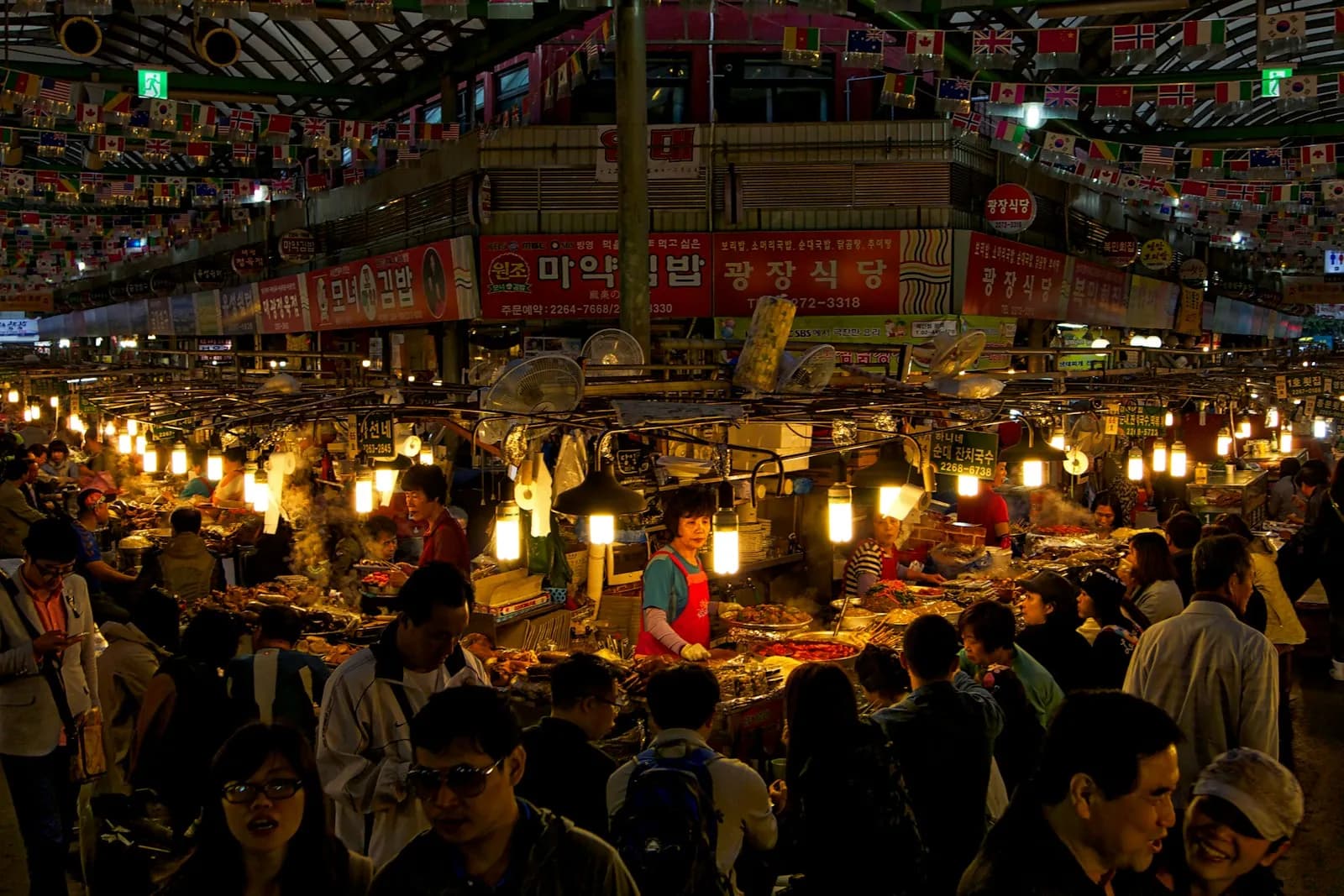
A market meal at Gwangjang, a bunsik snack place or a noodle house is inexpensive and low-pressure. Korean barbecue and a drinking evening is the expensive end, and it also introduces the multi-stage payment sequence, which is more to navigate on a first meeting.
Staying with coffee for a first meeting therefore avoids two problems at once: it keeps the money trivial, and it keeps the ending clean.
Good questions.
Should I pay for the local as a thank you?
Buying one coffee as a thank you is fine and will be understood. Paying for an entire day changes the nature of the meeting into something closer to hiring a guide, which is usually not what a resident meeting a visitor socially wants. Reciprocating at the next stop is the better instinct.
Do I tip a local who shows me around?
No. There is no tipping culture in Korea and offering money to someone who met you socially is awkward rather than generous. If you want to show appreciation, buy a round, bring a small gift from your country, or send a message afterwards.
Can we split the bill in Korean restaurants?
Usually yes in cafes and casual restaurants, using "ttaro gyesan hae juseyo" (please charge us separately). Some small independent places and market stalls prefer one payment, in which case one person pays and the other hands over cash.
Is it free to meet a local through localseoul?
Yes. Matching is free during early access and the traveler pays the local nothing. Each person covers their own food or coffee. After a verified meetup the local receives a KRW 10,000 Starbucks e-gift from localseoul, not from the traveler.
What if they refuse to let me pay anything?
Let them, thank them properly, and claim the next round explicitly. Saying "then the next one is mine" is the standard Korean resolution and is understood immediately. Continuing to push at the counter after a clear refusal is more awkward than accepting.
Plans and opening hours can change. Check the venue or official source before you go. How we put these guides together · Suggest a correction