Yongsan: the station, the park, and the hillside neighborhoods
Museums, a meal and a useful station.
Here’s what to know.
Yongsan-gu is the district between Namsan and the Han River in central Seoul. Yongsan Station is a mall and long-distance rail hub on subway line 1; nearby are the National Museum of Korea, the War Memorial, the former US garrison now becoming a park, and hillside neighborhoods such as Haebangchon and Huam-dong.
Before you go
- Pin your arrival station and a meeting place.
- Check today’s opening hours before setting out.
- Leave time to walk and choose an indoor backup.
What is Yongsan, and why does it feel like several places?
Yongsan-gu is a district, not a neighborhood, and it contains at least five things that have little to do with each other: a transport and retail hub at Yongsan Station, a museum quarter at Ichon, a very large former military base in the middle, the international strip of Itaewon and Hannam to the east, and steep old residential areas under Namsan.
A little more detail
The reason for that fragmentation is the base. For most of the twentieth century the center of the district was a garrison — Japanese, then American — which meant the city grew around a hole roughly three square kilometers wide. Everything in Yongsan is oriented toward the edge of that space.
Since the relocation of the garrison, parts of the site have opened to the public in stages as the Yongsan Park project proceeds. Access has been partial and by reservation for some sections, so check what is currently open rather than assuming a finished park.
What is at Yongsan Station?
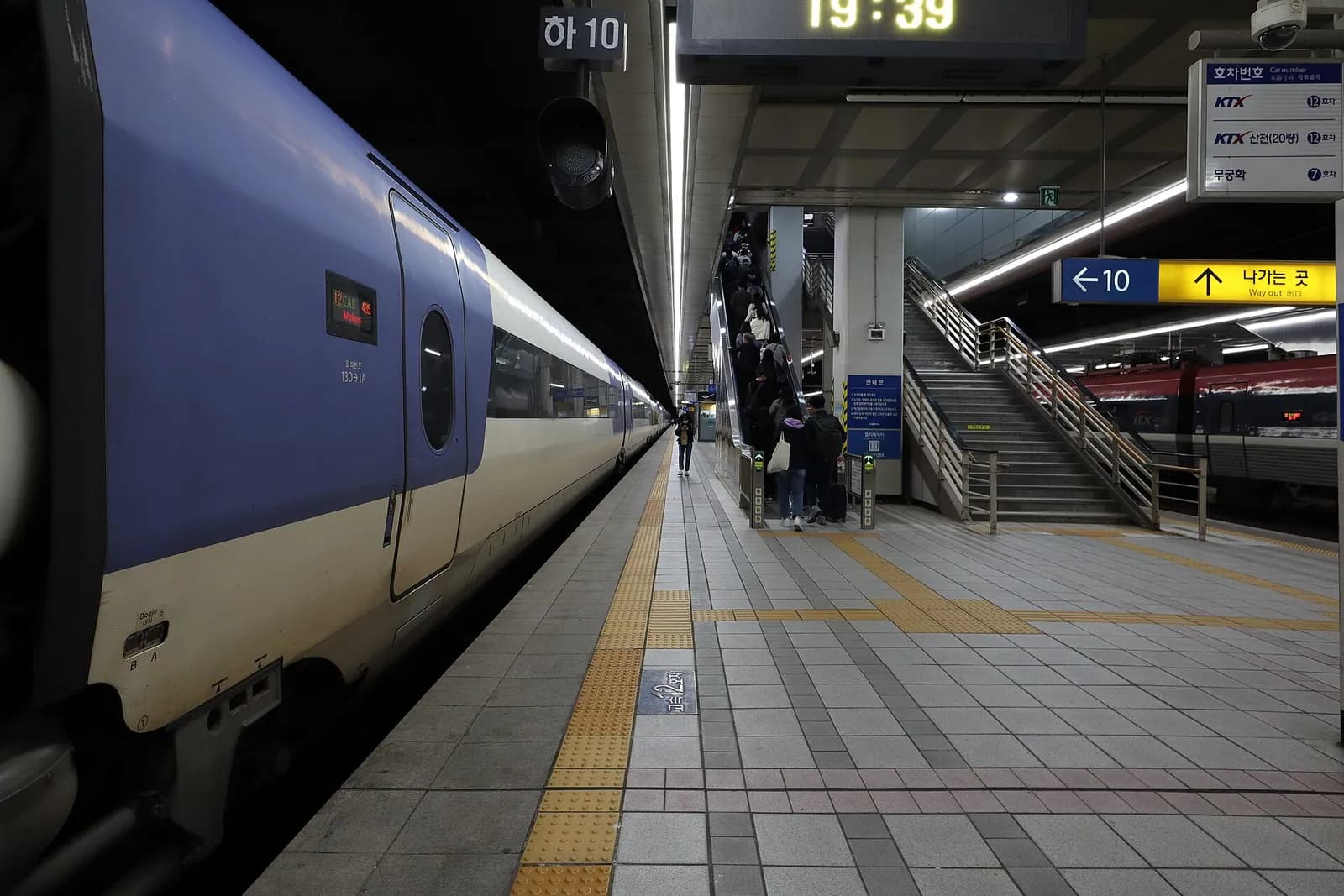
Yongsan Station is one of Seoul's two main long-distance rail terminals, with KTX services south toward Gwangju and Mokpo, alongside subway line 1 and the Gyeongui-Jungang line. Attached to it is a large mall complex with cinemas, restaurants and department-store floors.
A little more detail
Behind the station is the remains of the Yongsan Electronics Market, once the country's dominant place to buy computers and components. It has shrunk considerably as buying moved online, and much of the surrounding area is under redevelopment. Visit for the atmosphere of an older retail model rather than for bargains.
For travelers, the practical value of Yongsan Station is as a transfer point: it is a straightforward place to start a day trip south by KTX, and it links directly to Ichon and the museum quarter one stop away.
Which Yongsan sights are actually worth the time?
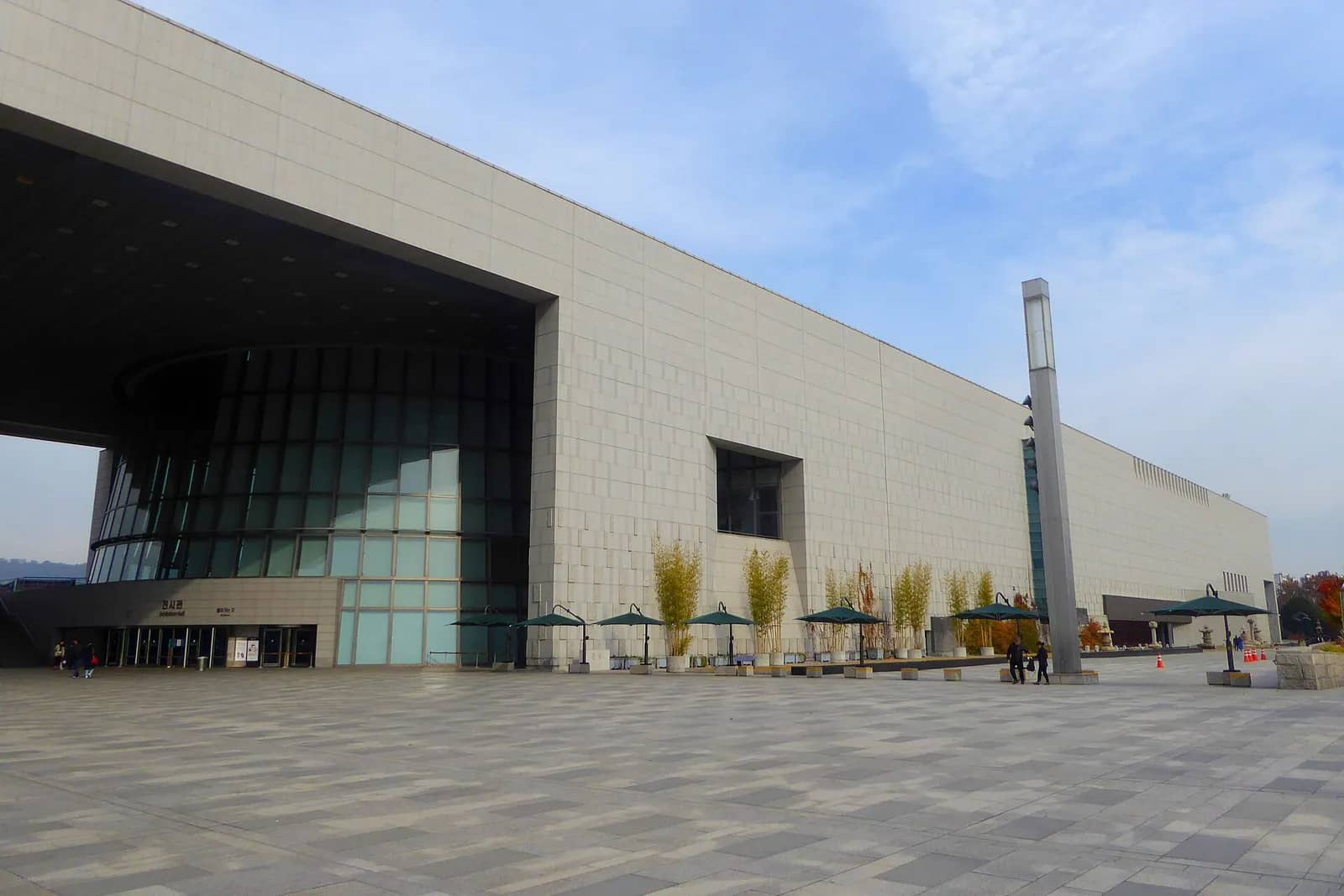
The National Museum of Korea, near Ichon Station on line 4 and the Gyeongui-Jungang line, is the country's principal museum and admission to the permanent galleries is free. It is large enough to need two to three hours for a selective visit, and it sits in landscaped grounds with a pond and a view toward Namsan.
| Part of Yongsan | Nearest station | What you go for | Time needed |
|---|---|---|---|
| Yongsan Station area | Yongsan (line 1) | Mall, KTX departures, electronics market | 1 hour |
| Ichon / museum quarter | Ichon (line 4) | National Museum of Korea, riverside park | Half a day |
| Samgakji | Samgakji (lines 4, 6) | War Memorial of Korea | 2 hours |
| Haebangchon / Huam-dong | Noksapyeong (line 6) | Hillside streets, Namsan walks, small restaurants | An afternoon |
| Itaewon / Hannam | Itaewon, Hangangjin (line 6) | International food, galleries | An evening |
A little more detail
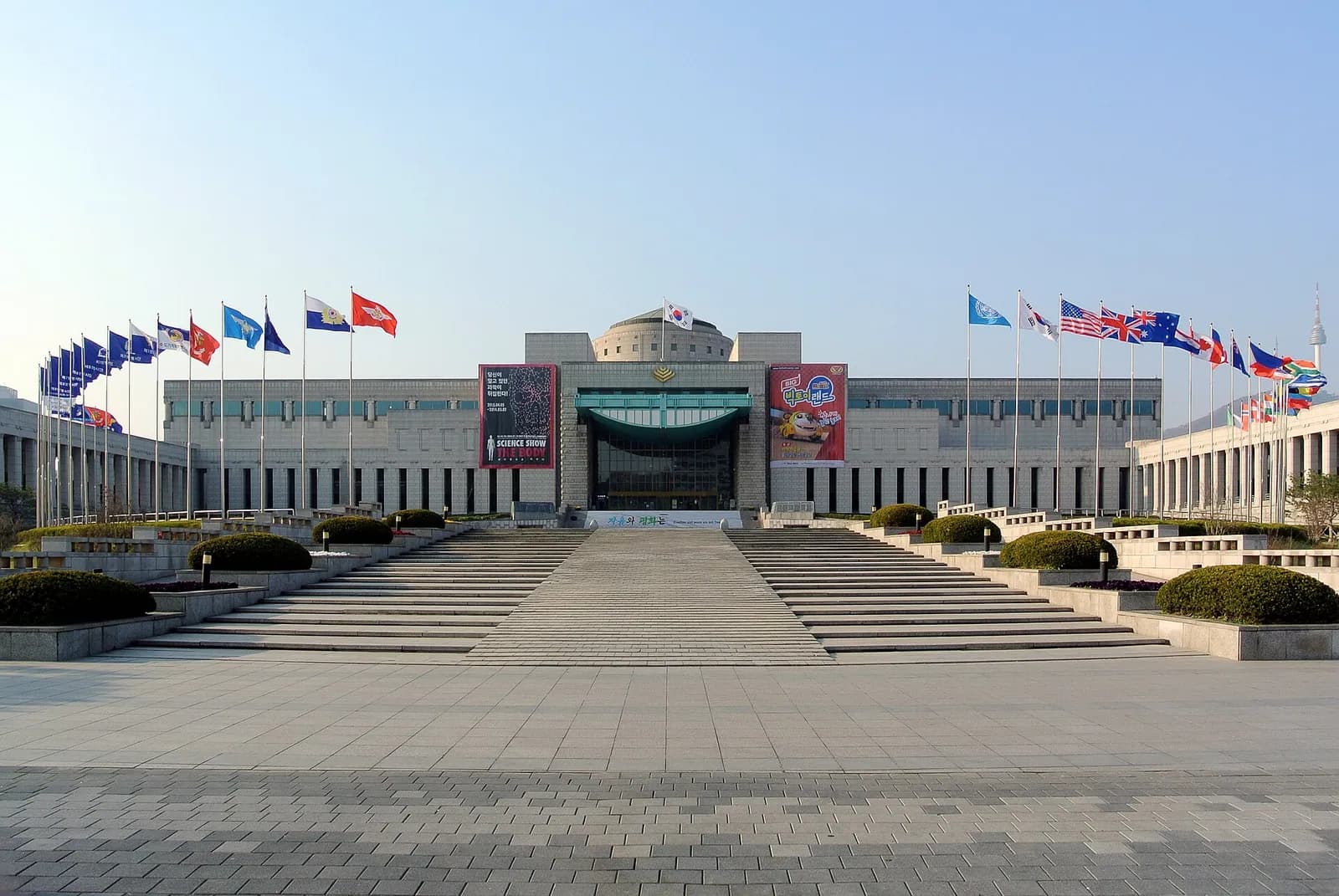
The War Memorial of Korea, near Samgakji Station where lines 4 and 6 meet, covers Korean military history with a strong focus on the Korean War, including outdoor aircraft and vehicle displays. It is the clearest single explanation in Seoul of why the peninsula is divided.
Namsan itself rises on Yongsan's northern edge. The cable car and the tower are reached from the Myeongdong side, but the quieter walking approaches come up from Huam-dong and Haebangchon on the Yongsan slope.
What are the hillside neighborhoods like?
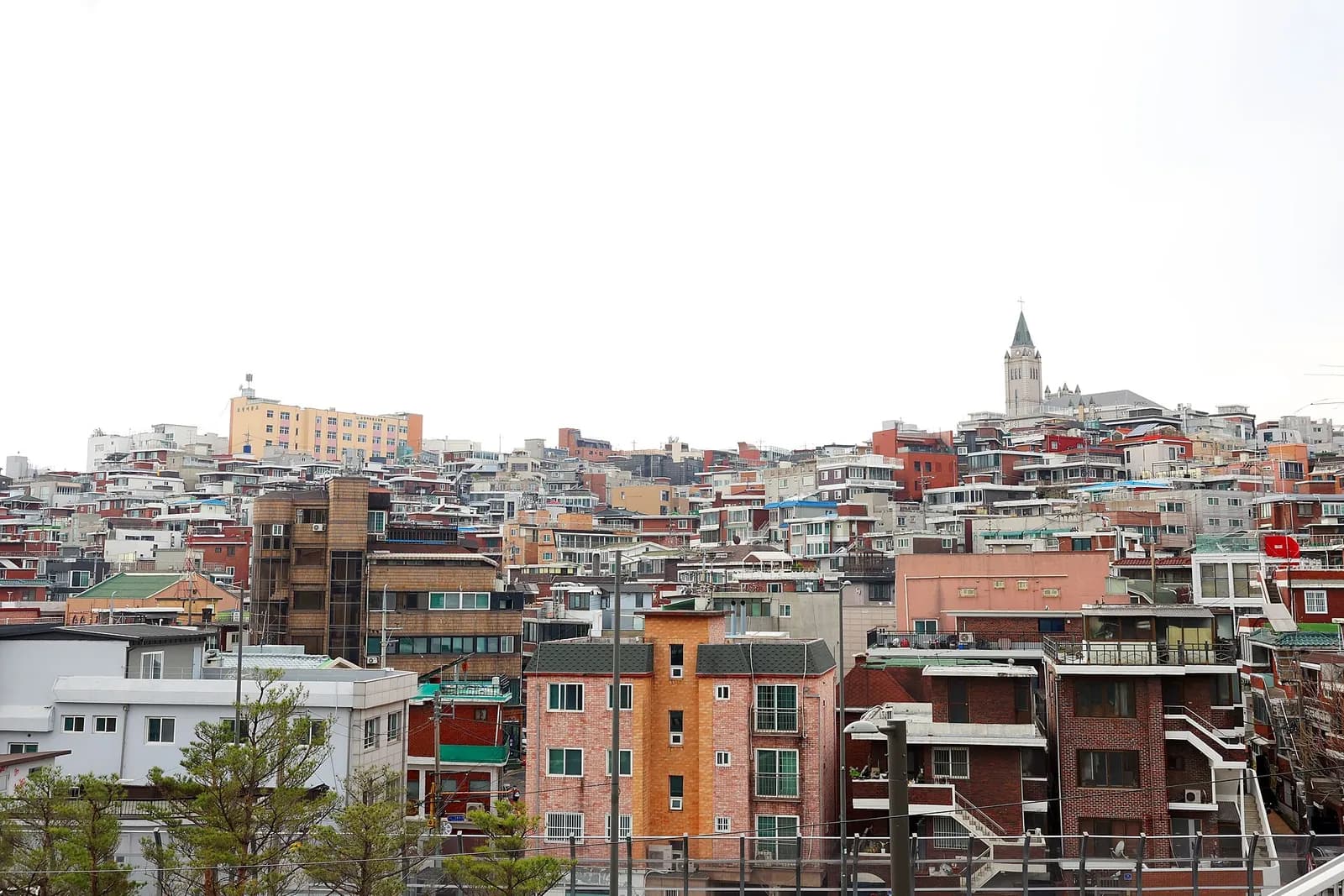
Haebangchon and Huam-dong are the two best known. Both are dense, steep and old by Seoul standards, built up rapidly in the mid-twentieth century on land under Namsan, with narrow stepped lanes and low buildings that survived the apartment-tower era because the slopes were too awkward to redevelop.
A little more detail
Haebangchon has a substantial foreign resident population and a strip of small restaurants and bars along its main road; Huam-dong, closer to Seoul Station, is quieter and more residential, with a slowly growing number of cafes in converted houses.
Walking them is a workout, and the reward is views back over the district and a sense of the city's texture before the towers. These are working neighborhoods, so the usual courtesy applies: keep noise down in the lanes, especially at night.
How does a local change a day in Yongsan?
Yongsan is the district where visitors most often waste time, because the sights are far apart, the terrain is hilly and the subway connections between its parts are indirect. Knowing which two things to pair in one afternoon is most of the battle.
A little more detail
A resident also knows what is currently open on the old base, which has changed repeatedly as the park project advances, and which hill routes have stairs rather than slopes.
localseoul matches travelers with ID-verified Seoul residents for coffee, food or a walk. It is free during early access, it is not a tour service, and the local is not paid by you. Most requests hear back within 48 hours.
Good questions.
Is the National Museum of Korea free?
Entry to the permanent galleries is free; special exhibitions are usually ticketed. It is near Ichon Station on subway line 4 and the Gyeongui-Jungang line, and a selective visit takes two to three hours.
Can you visit Yongsan Park?
Parts of the former US garrison site have opened to the public in stages as the park project proceeds, in some cases by advance reservation. Check the current status before going, because what is accessible has changed repeatedly.
Is Yongsan Station worth visiting?
Mainly as a transport hub and mall. It is a KTX terminal for services toward the southwest, it has cinemas and restaurants, and the shrinking electronics market behind it is interesting as a relic rather than a place to shop.
How is Yongsan related to Itaewon?
Itaewon is a neighborhood inside Yongsan-gu, on the district's eastern side along subway line 6. When people say Yongsan they usually mean the station and museum side; when they mean the international restaurant strip they say Itaewon.
Plans and opening hours can change. Check the venue or official source before you go. How we put these guides together · Suggest a correction
Keep exploring.
All guides ↗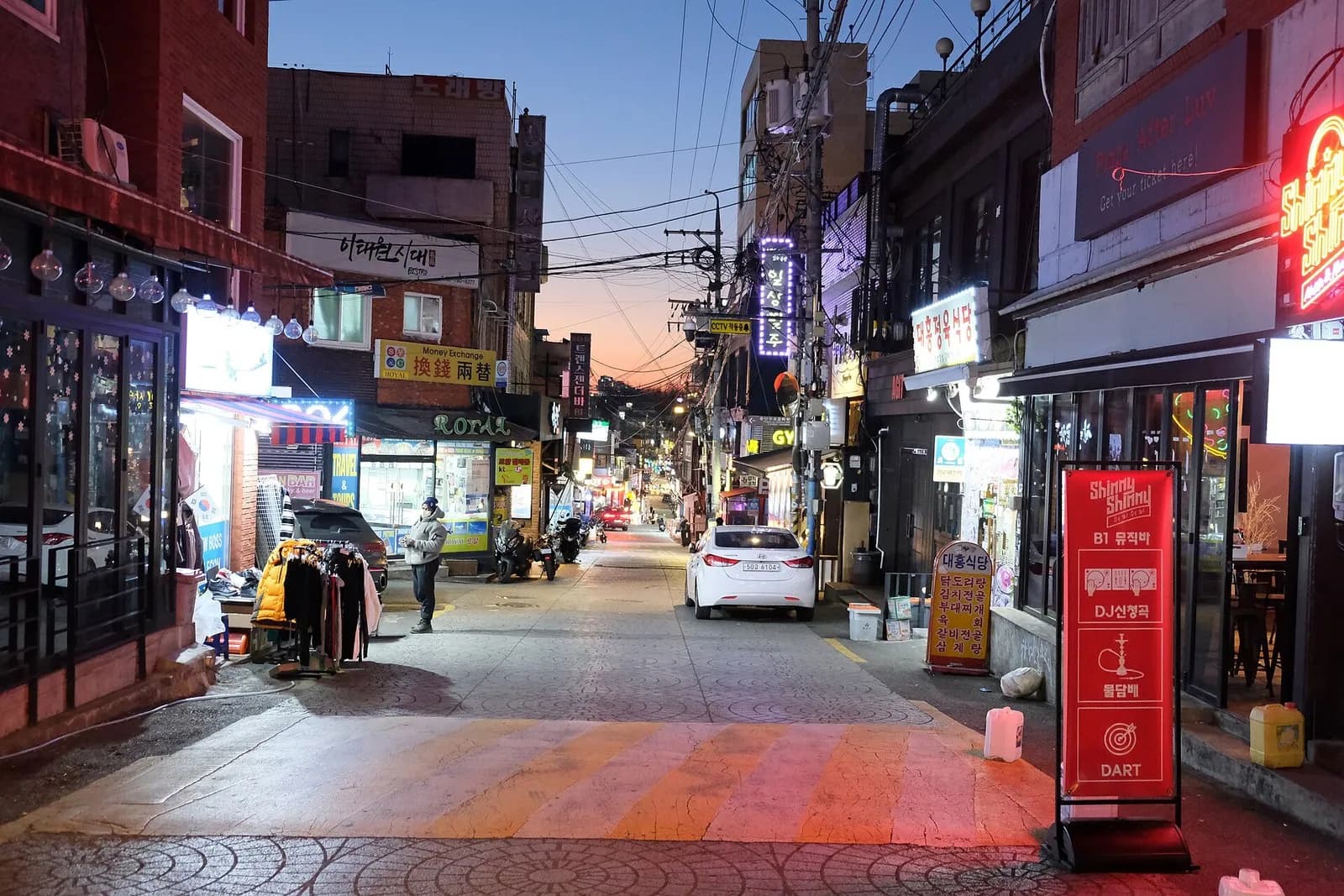 Neighborhoods
An afternoon in Itaewon
Food, hills and a neighborhood crossroads.
 Neighborhoods
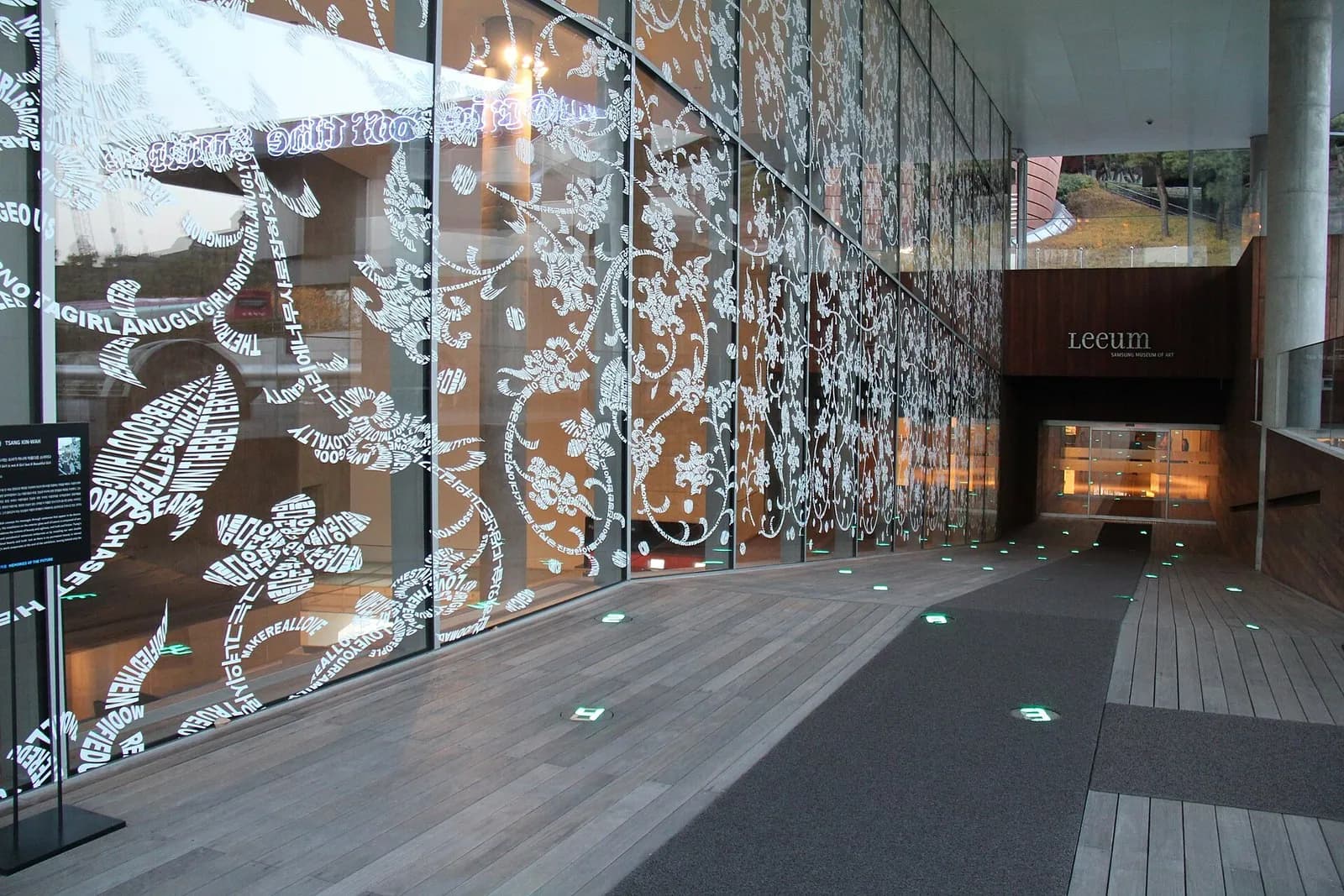
A wander through Hannam
Design, galleries and hilly side streets.
 Your kind of trip
Your first three days in Seoul
Pick a neighborhood. Leave room to wander.