Itaewon in 2026: what a local shows you that the guidebooks skip
Food, hills and a neighborhood crossroads.
Here’s what to know.
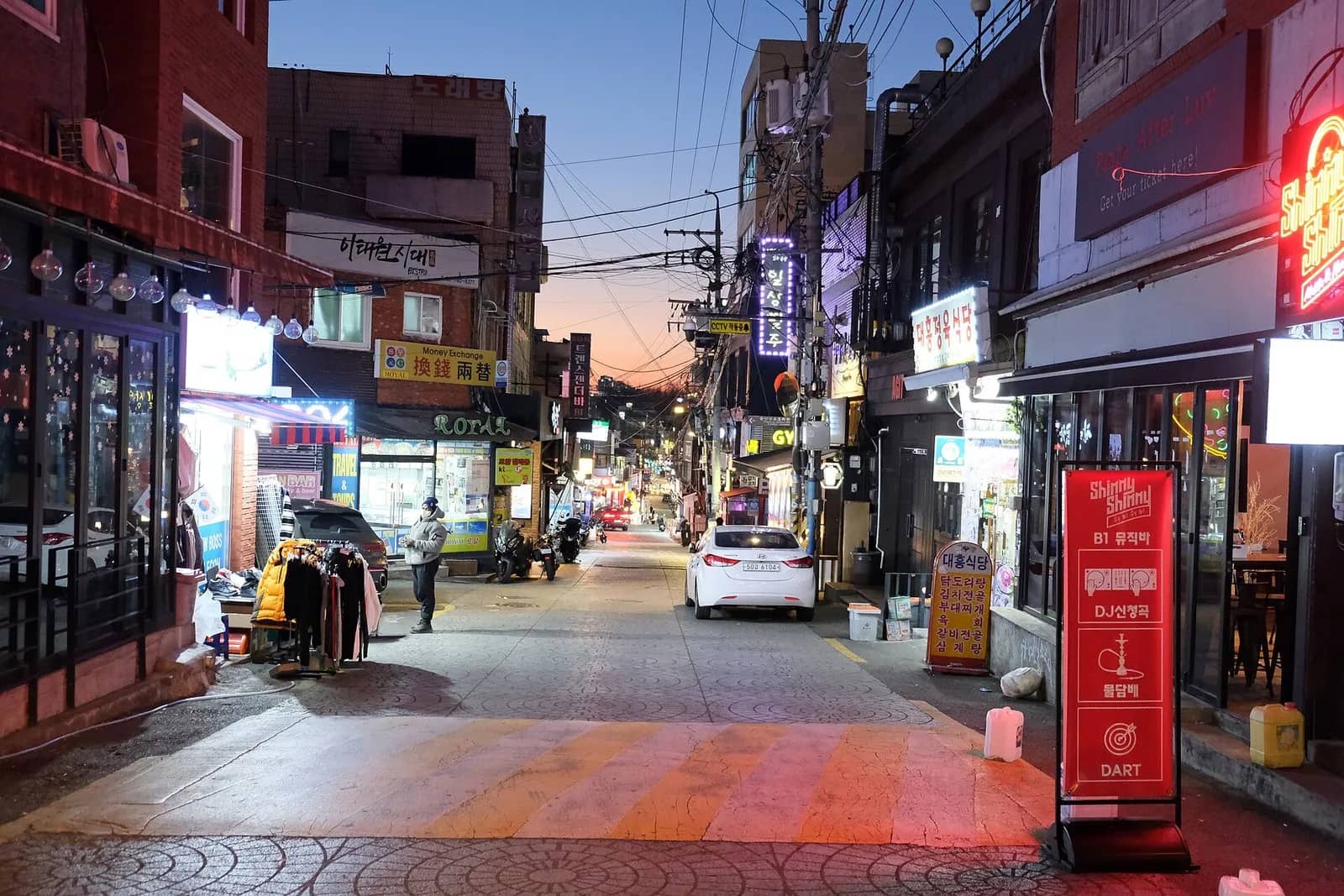
Itaewon is the area around Itaewon Station on subway line 6, in Yongsan-gu. The main road is the tourist version: souvenir shops, tailors and chain bars. What residents use are the hills around it — Gyeongnidan-gil, Haebangchon, the Usadan-ro slope by the central mosque, and Hannam-dong to the east.
Before you go
- Pin your arrival station and a meeting place.
- Check today’s opening hours before setting out.
- Leave time to walk and choose an indoor backup.
Where exactly is Itaewon, and how do you get there?
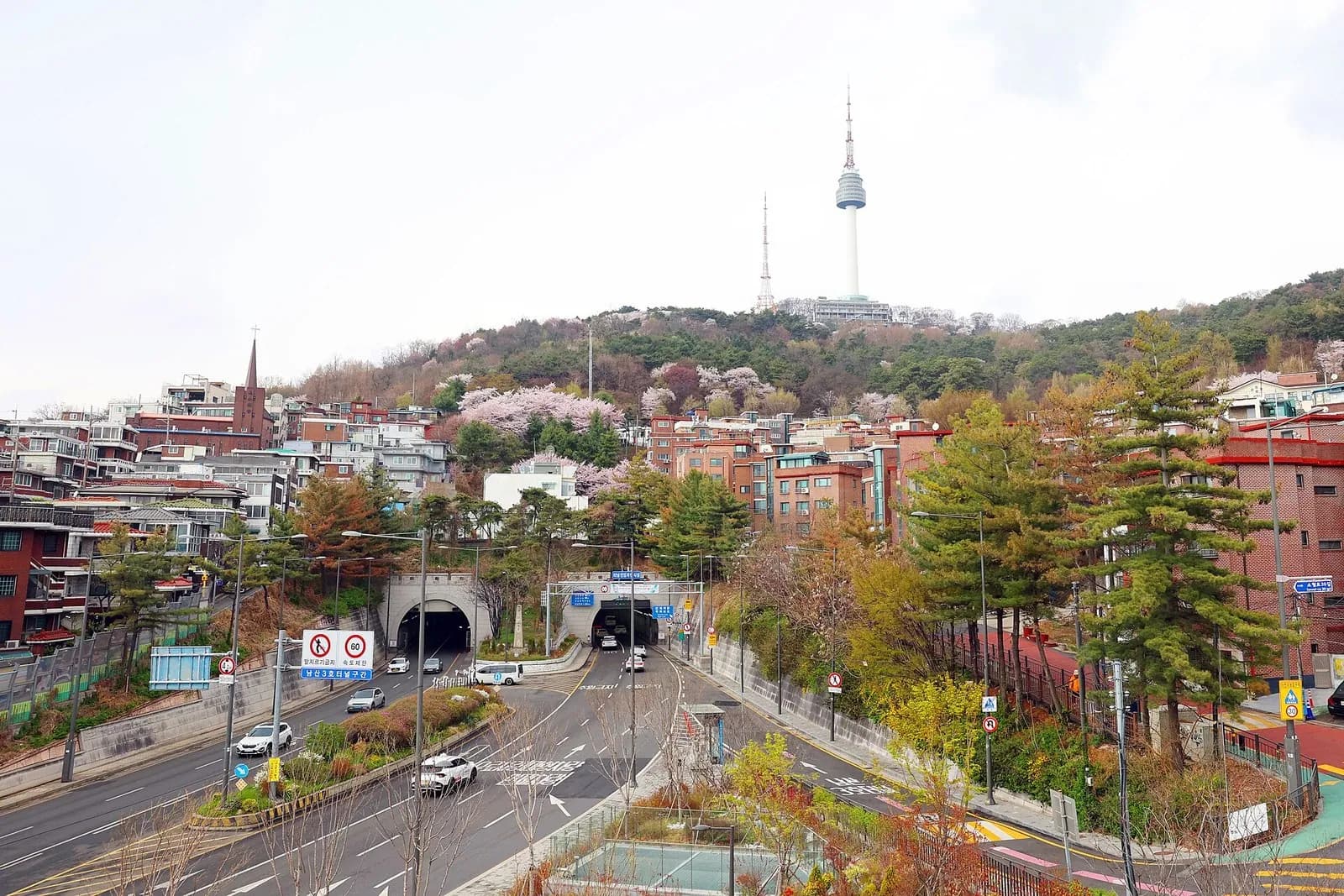
Itaewon sits in Yongsan-gu, on the southern slope of Namsan, roughly between Seoul Station and the Han River. The fastest way in is subway line 6 to Itaewon Station; the stops on either side, Noksapyeong and Hangangjin, are each about ten minutes' walk from Itaewon Station and open onto completely different neighborhoods.
A little more detail
Line 6 runs along Itaewon-ro, the main road, which means almost everything worth seeing is uphill or downhill from it. Yongsan is one of the hilliest parts of central Seoul, and a three-minute detour from the main road can involve a steep staircase. Comfortable shoes matter here more than in Myeongdong or Gangnam.
What are the four neighborhoods people mean by Itaewon?
Locals rarely say Itaewon on its own. They name the sub-area: Gyeongnidan-gil, Haebangchon, Usadan-ro, or Hannam-dong. Each has its own character, and the walk between any two of them takes ten to twenty minutes.
| Sub-area | Nearest station | What it is used for | Best time |
|---|---|---|---|
| Itaewon-ro (main road) | Itaewon (line 6) | Shopping, chain bars, tailors | Afternoon |
| Gyeongnidan-gil | Noksapyeong (line 6) | Small independent restaurants, wine bars | Evening |
| Haebangchon | Noksapyeong (line 6) | Residential streets, cafes, Namsan views | Late afternoon |
| Usadan-ro / mosque area | Itaewon (line 6) | Halal food, groceries, prayer | Midday to early evening |
| Hannam-dong | Hangangjin (line 6) | Galleries, quiet cafes, embassies | Daytime |
A little more detail
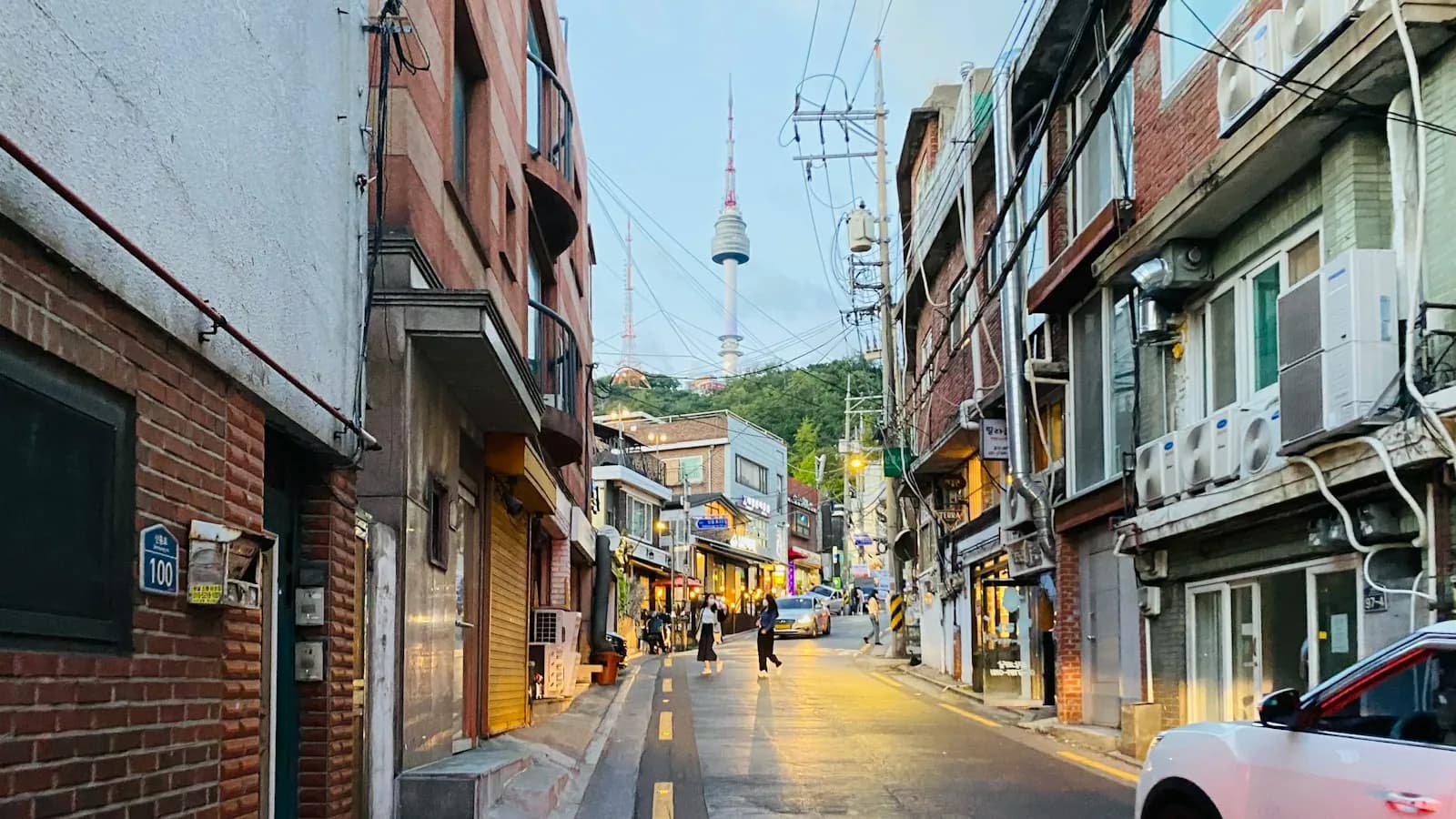
Gyeongnidan-gil climbs north from Noksapyeong Station toward Namsan and is known for small restaurants run by chefs who trained abroad. Haebangchon, further west along the same ridge, grew as a postwar settlement and is now the most residential of the four, with a mix of long-time Korean households and foreign residents.
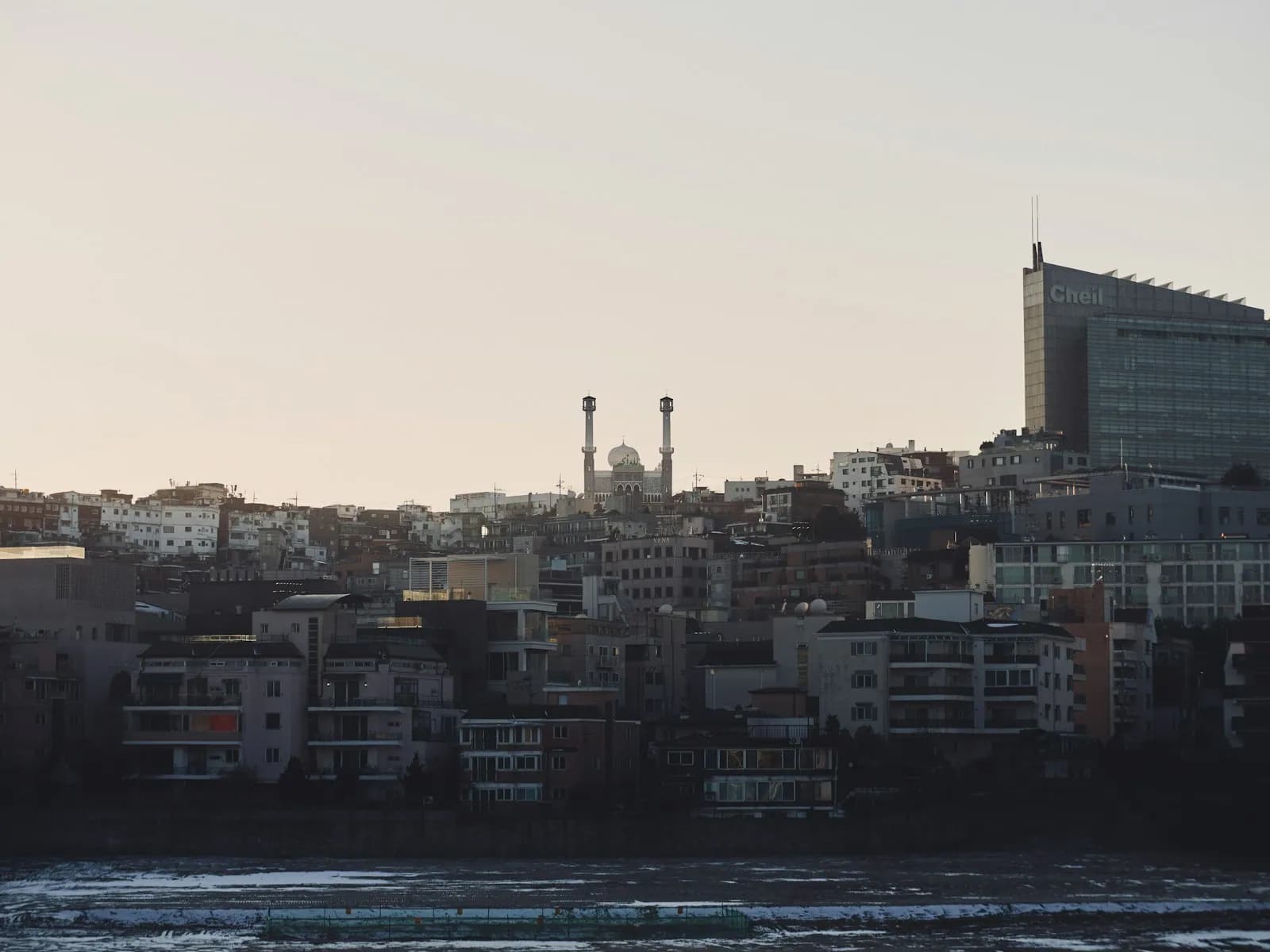
Usadan-ro rises south of the main road toward the Seoul Central Masjid, the country's largest mosque. The streets below it hold Korea's densest cluster of halal butchers, Middle Eastern and South Asian restaurants and grocers. Hannam-dong, east past Hangangjin Station, is the expensive side: embassies, galleries and quiet residential streets.
What do you eat in Itaewon that you cannot eat elsewhere in Seoul?
Itaewon is the one district in Seoul where non-Korean food is the reason to come rather than a fallback. The concentration around Usadan-ro and the mosque covers Turkish, Pakistani, Egyptian, Uzbek and Nigerian cooking, often in single rooms with handwritten menus, and the halal grocers on the same slope sell ingredients that are difficult to find elsewhere in the country.
A little more detail
The hill restaurants in Gyeongnidan-gil and Haebangchon lean the other way: small kitchens doing Italian, Mexican, Thai or modern Korean at a scale of twenty seats. Portions and prices are closer to a neighborhood restaurant than to a tourist strip, and many close one weekday a week, which is the kind of detail a resident will know and a review site will not.
Korean food has not left. The older alleys behind the main road still hold galbi houses, gamjatang places open through the night and pojangmacha-style tents in winter. If you want both in one evening, the practical order is Korean first on the flat, then coffee or drinks uphill.
Is Itaewon safe, and what changed after 2022?
Itaewon is an ordinary Seoul neighborhood with ordinary Seoul safety, but crowd management is now taken seriously here after the 2022 Halloween crowd disaster in one of the narrow alleys off the main road. Since then the district and police have run crowd control on peak nights, and several sloped alleys have one-way pedestrian flow and monitoring.
A little more detail
The practical implication for a visitor in 2026 is simple: avoid the narrow uphill alleys off Itaewon-ro at peak weekend hours, especially around Halloween, and use the wider roads instead. On any normal evening the area is calm by the standards of Hongdae or Gangnam.
The other thing worth knowing is that Itaewon's nightlife has thinned since its 2010s peak, and some of what guidebooks describe as the club strip is closed or changed. Bars are increasingly spread up the hills rather than concentrated on one street.
How does meeting a resident change an Itaewon visit?
Itaewon rewards someone who knows which hill to climb and when. The difference between the main road and Gyeongnidan-gil on a Tuesday evening is the difference between a souvenir street and a neighborhood people actually live in, and nothing on the map tells you which staircase gets you there.
A little more detail
localseoul matches independent travelers with ID-verified Seoul residents for coffee, food or a walk, free during early access. It is not a tour and not a guide service — the local is not paid by you, and you are meeting a person rather than buying an itinerary. Most requests hear back within 48 hours.
A practical half-day route through Itaewon
If you have four or five hours and want the version residents would recognize, walk it as a loop rather than up and down the main road. The whole route is about four kilometers with some climbing.
- Start at Noksapyeong Station and walk up into Haebangchon in the late afternoon, when the light on Namsan is best.
- Cut east along the ridge into Gyeongnidan-gil and stop for coffee before the dinner rush.
- Drop down to Itaewon-ro and cross to the south side for the Usadan-ro slope and the mosque area.
- Eat on the slope, where kitchens stay open through the evening.
- Finish east toward Hangangjin and Hannam-dong, or take line 6 back from Itaewon Station.
Good questions.
Is Itaewon still worth visiting in 2026?
Yes, but for food and neighborhoods rather than nightlife. The club strip has thinned since its 2010s peak, while the hillside areas of Gyeongnidan-gil, Haebangchon and the halal restaurant cluster near the central mosque are the reasons residents still come.
How far is Itaewon from Myeongdong?
About fifteen minutes by taxi over or around Namsan, or roughly twenty-five minutes by subway with one transfer. They sit on opposite sides of the same mountain, which is why the taxi feels short and the subway does not.
Can you find halal food in Itaewon?
Yes. The slope of Usadan-ro below the Seoul Central Masjid holds Korea's densest cluster of halal restaurants, butchers and grocers, covering Turkish, Pakistani, Uzbek and other cuisines. It is the most reliable place in Seoul for halal groceries.
Do people speak English in Itaewon?
More than anywhere else in Seoul. Itaewon has been the city's international district for decades, many staff are used to English menus, and a large share of residents are foreign. You will still meet Korean-only kitchens on the hills.
Plans and opening hours can change. Check the venue or official source before you go. How we put these guides together · Suggest a correction
Keep exploring.
All guides ↗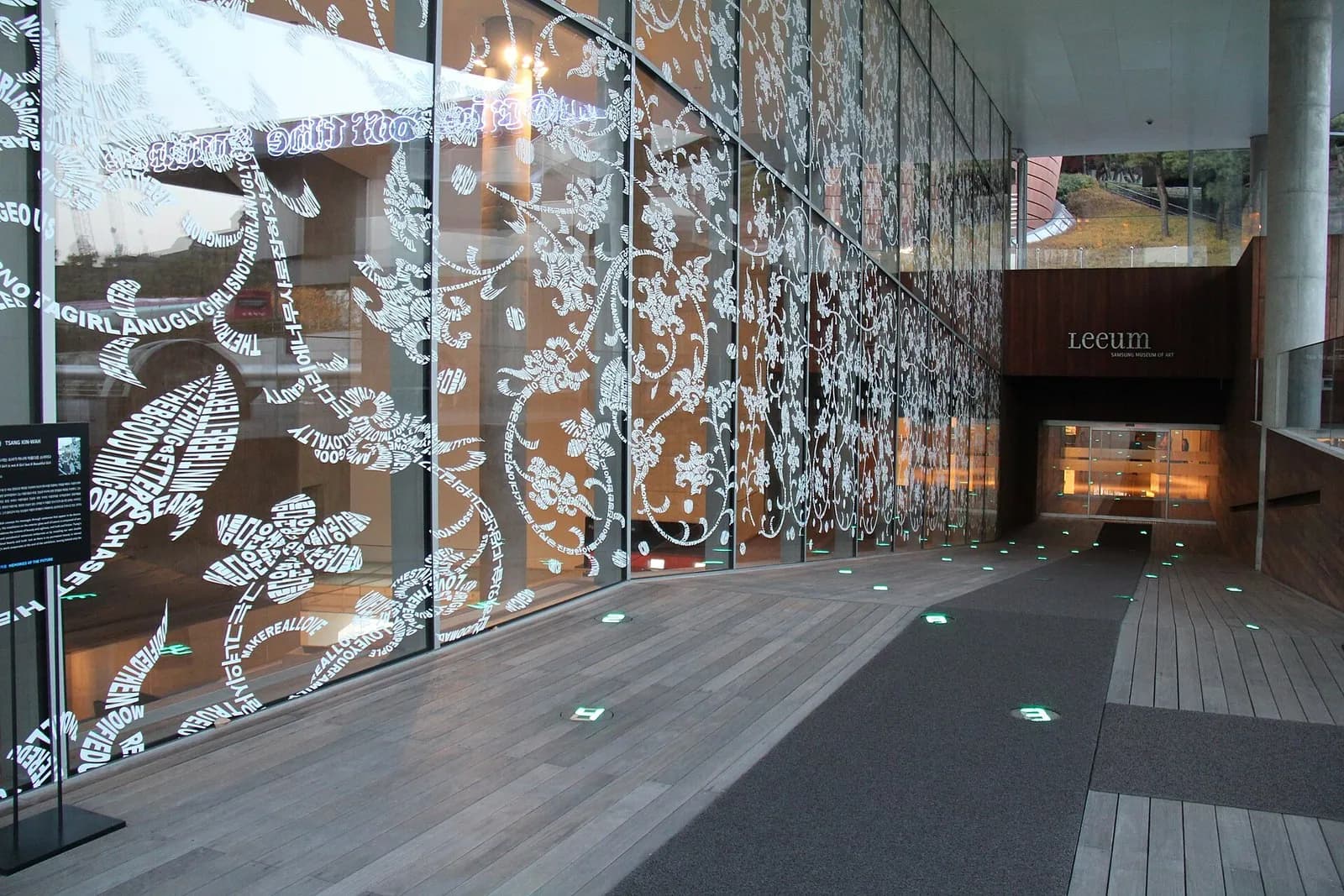 Neighborhoods
A wander through Hannam
Design, galleries and hilly side streets.
 Neighborhoods
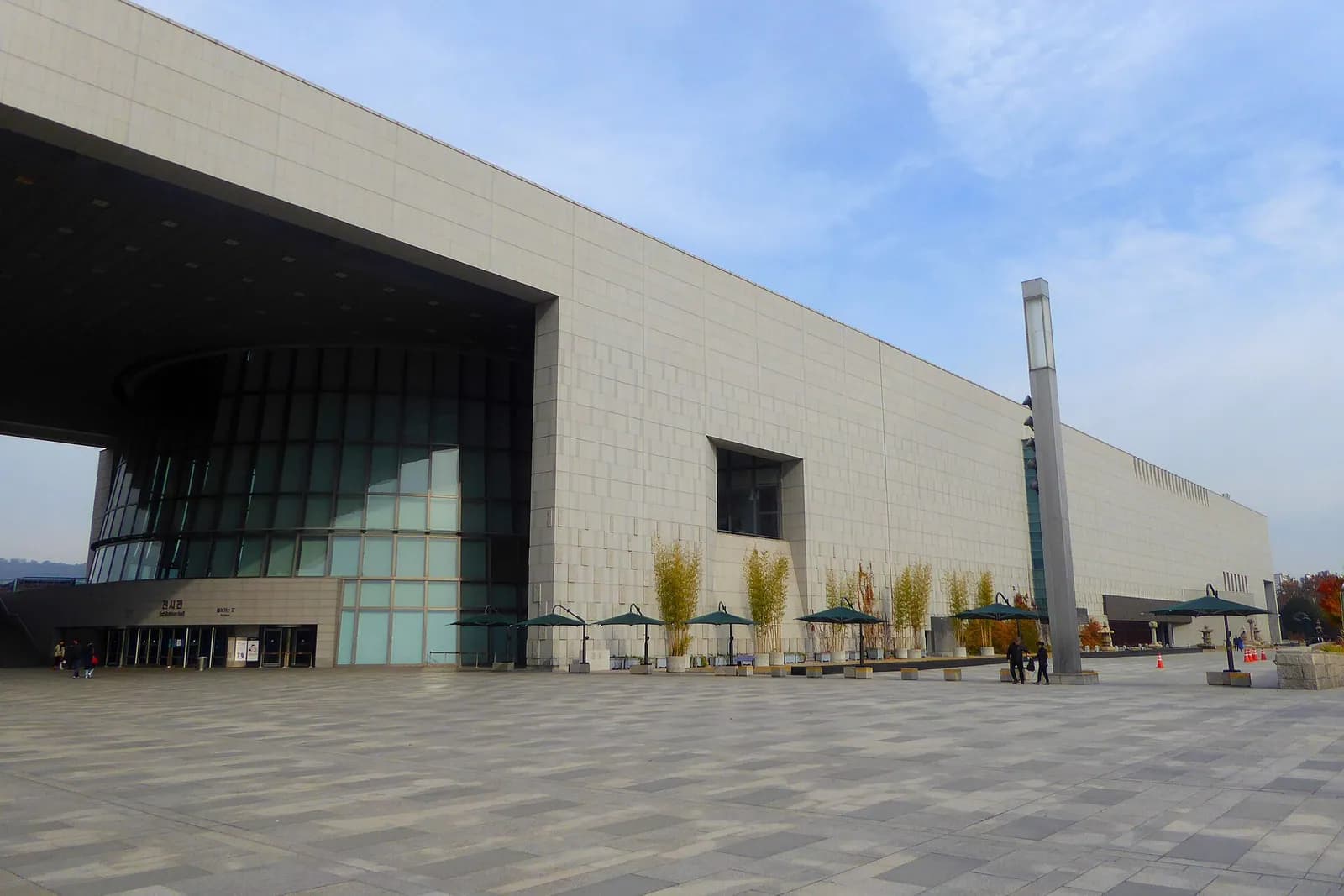
Make a day of Yongsan
Museums, a meal and a useful station.
 Your kind of trip
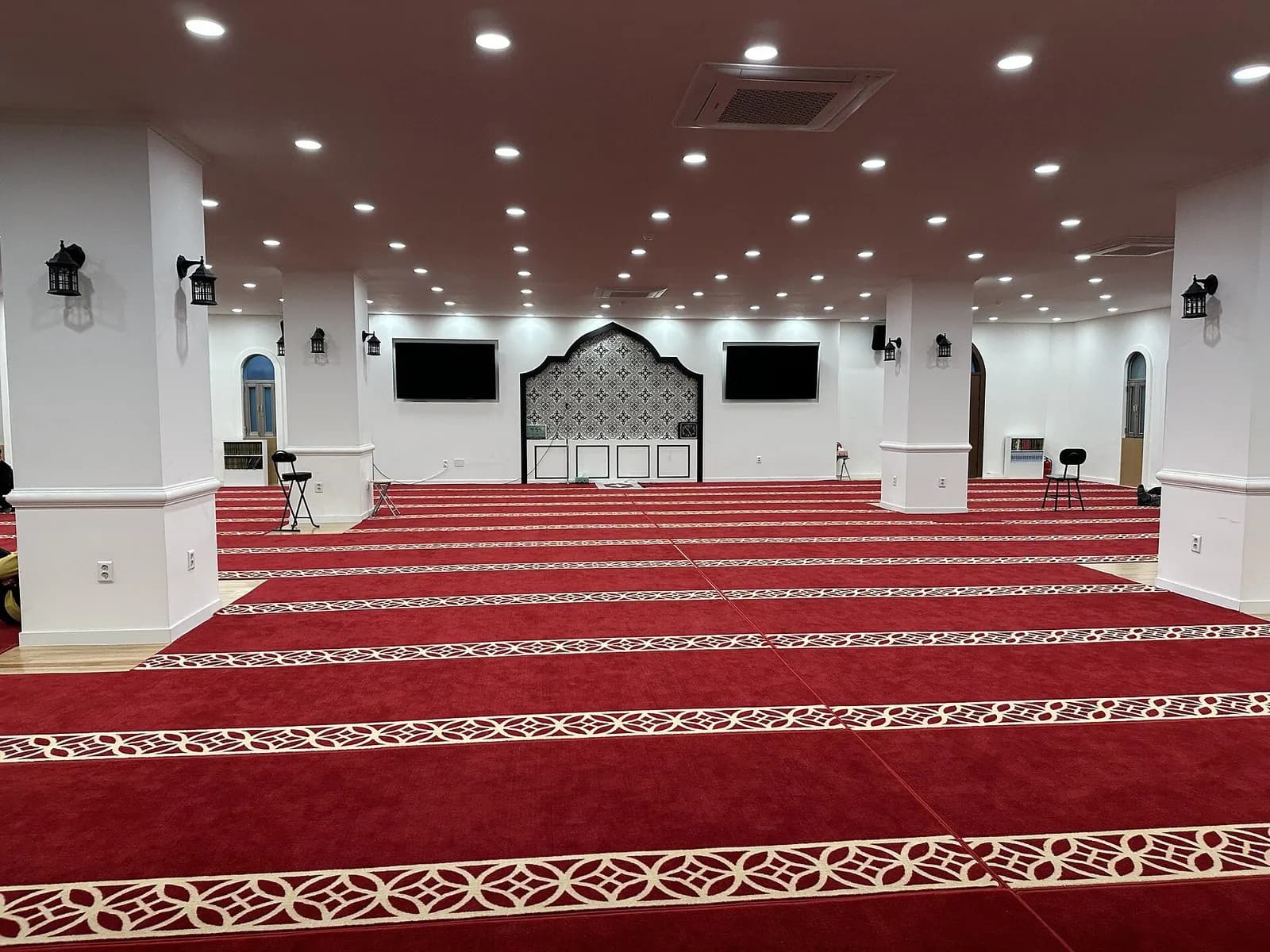
Eating in Seoul as a Muslim traveler
Check the kitchen, not just the label.