Mangwon-dong and the market
Browse, snack, then decide where to wander.
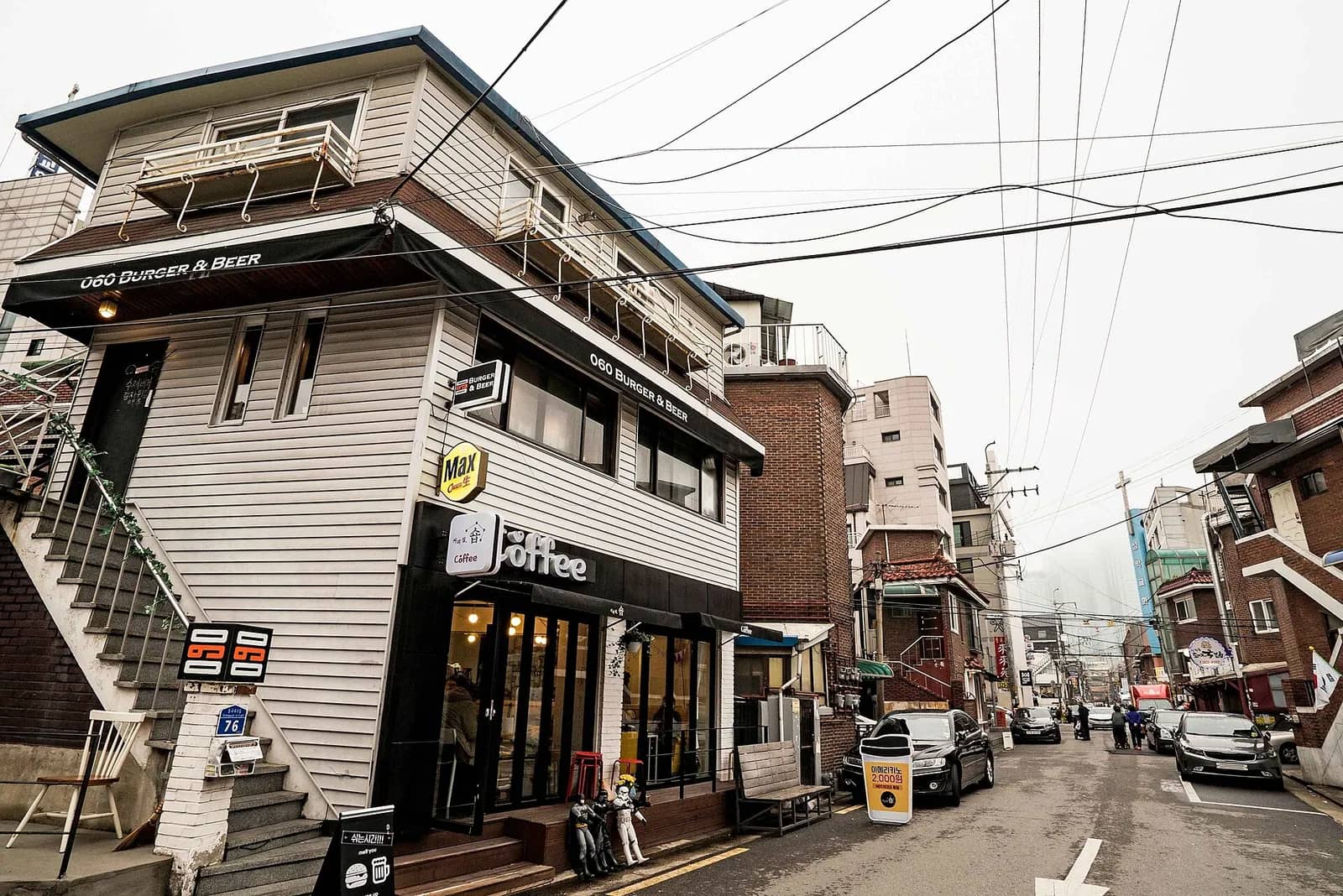
Here’s what to know.
Mangwon-dong is a residential area of Mapo-gu, on subway line 6 at Mangwon Station, west of Hongdae and Yeonnam. Its two anchors are Mangwon Market, a covered traditional market where residents buy groceries and cooked food, and Mangwon Hangang Park on the river. Prices are low and visitors are few.
Before you go
- Pin your arrival station and a meeting place.
- Check today’s opening hours before setting out.
- Leave time to walk and choose an indoor backup.
Where is Mangwon, and how do you get there?
Mangwon-dong sits in western Mapo-gu between Hapjeong and the Han River. Mangwon Station on subway line 6 is the access point, one stop from Hapjeong, where lines 2 and 6 meet, which puts it about ten minutes from Hongdae by subway or thirty on foot.
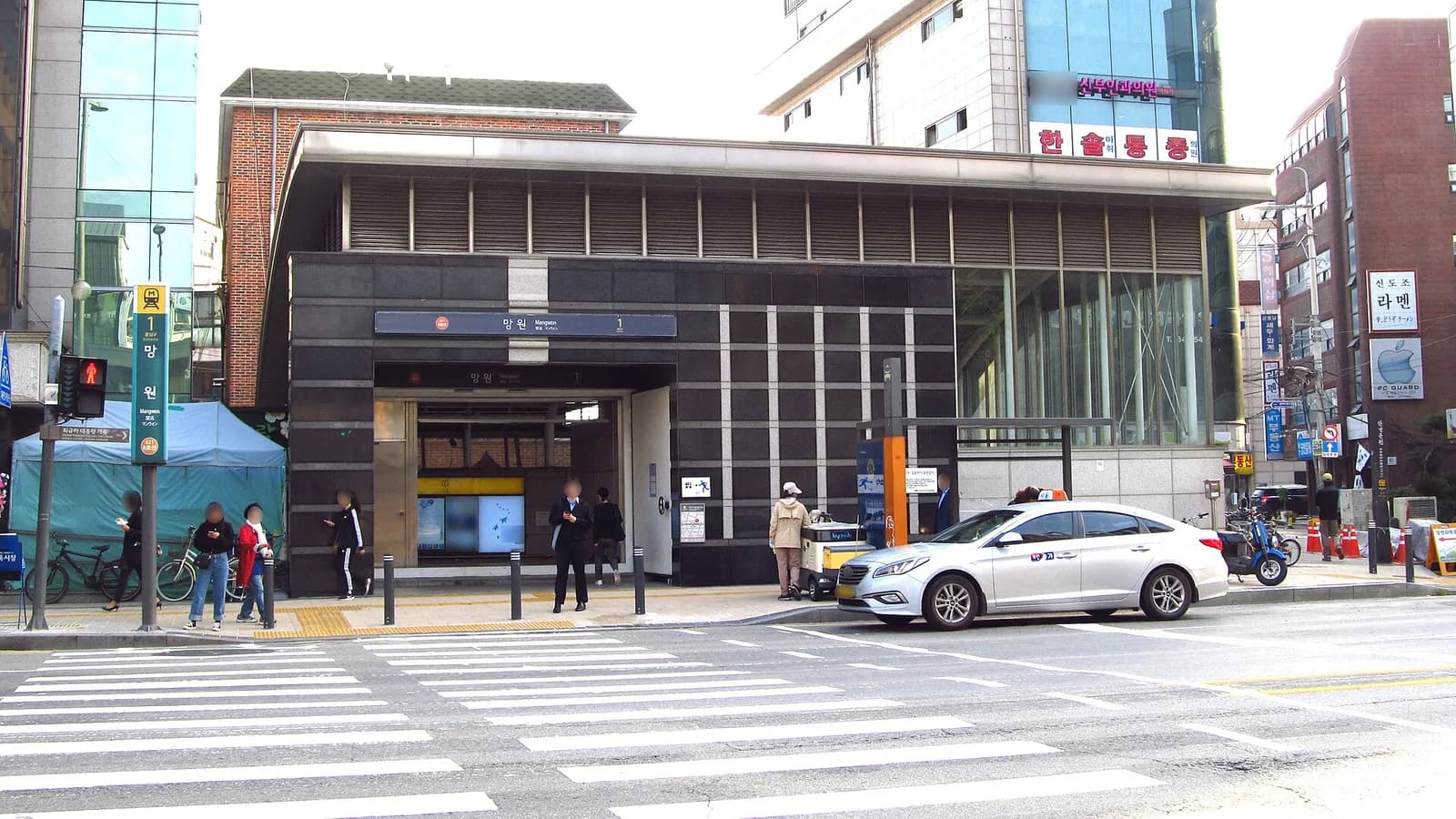
A little more detail
The neighborhood is flat and compact, laid out on a grid of low-rise streets between the main road and the river embankment. Everything described here is within a fifteen-minute walk of the station.
The river is the southern boundary. Mangwon Hangang Park runs along it, reached by pedestrian underpasses from the neighborhood side, and connects along the bank to Yeouido to the east.
What is Mangwon Market?
Mangwon Market is a covered traditional market that still functions as a neighborhood grocery rather than a tourist attraction. Its lanes carry vegetables, fish, butchers and household goods alongside stalls selling cooked food to take away.
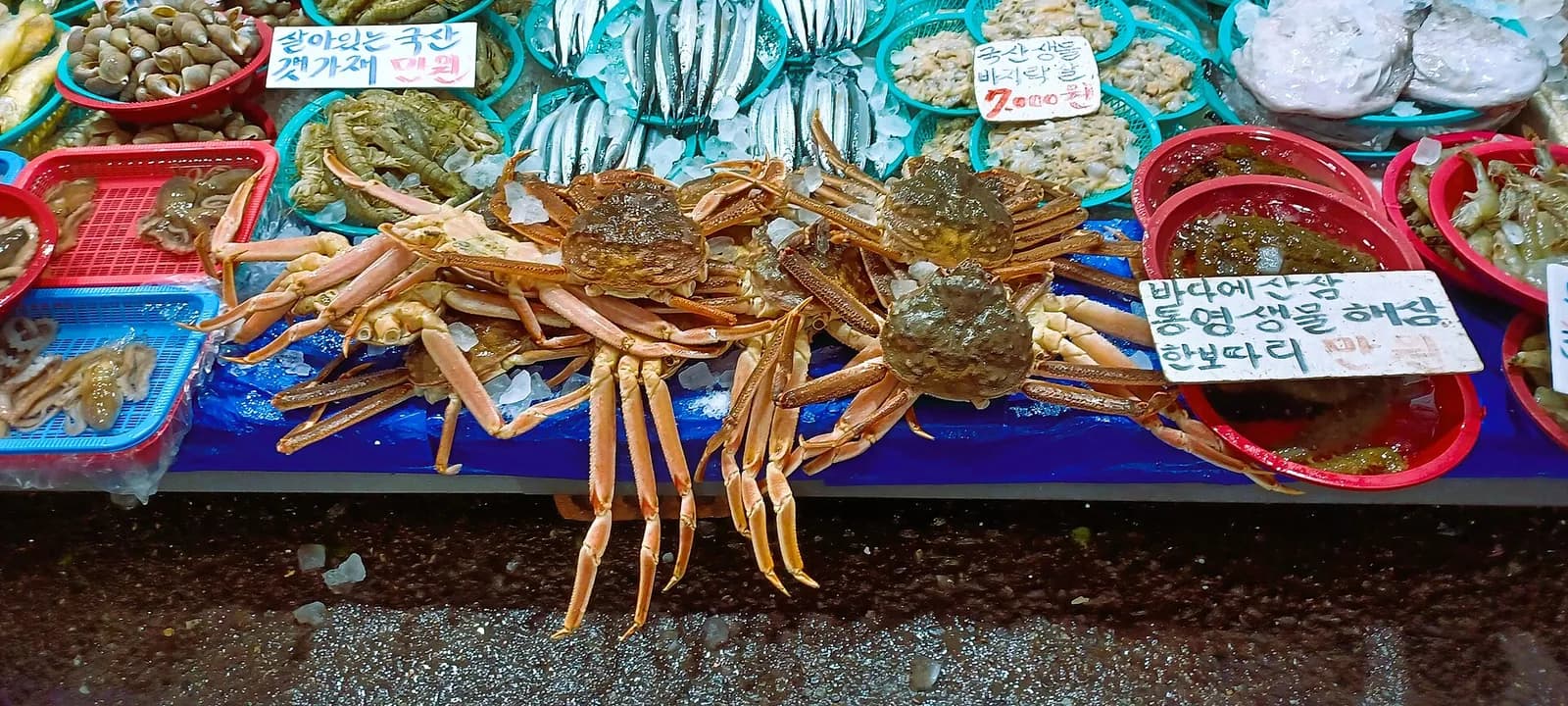
A little more detail
The cooked-food side is what visitors come for: fried chicken sold by the piece, tteokbokki, jeon, mandu, gimbap, croquettes and seasonal snacks, most of it priced for households buying dinner. The standard local habit is to buy from three or four stalls and eat at the river.
It is busiest in the late afternoon, when residents shop for the evening meal, and quieter in the morning. Unlike Gwangjang Market in central Seoul, there is limited sit-down seating; this is a market to carry food away from.
How does Mangwon compare with Hongdae and Yeonnam?
The three are neighbours on the same side of the city, and they form a descending scale of noise and price. Hongdae is the commercial and nightlife center, Yeonnam is its quieter cafe district, and Mangwon is an ordinary residential neighborhood that happens to have a good market and a river.
| Hongdae | Yeonnam-dong | Mangwon-dong | |
|---|---|---|---|
| Character | Nightlife and youth culture | Cafes and small restaurants | Residential, market, river |
| Prices | Rising, tourist-influenced | Mid to high | Low |
| Visitors | Many | Moderate | Few |
| Best hours | Evening to late | Afternoon | Late afternoon to sunset |
| Station | Hongik Univ (line 2) | Hongik Univ (line 2, exit 3) | Mangwon (line 6) |
A little more detail
What Mangwon has that neither of the others does is direct access to the Han River and a market used by residents. What it lacks is any sight: there is nothing to see here in the conventional sense, which is precisely why so few visitors come.
What do you do at Mangwon Hangang Park?
The standard evening here is to buy food at the market, walk ten minutes to the river, and sit on the grass or the steps facing the water. Convenience stores in the park sell drinks and instant noodles with hot-water machines, which is a Seoul habit worth trying once.
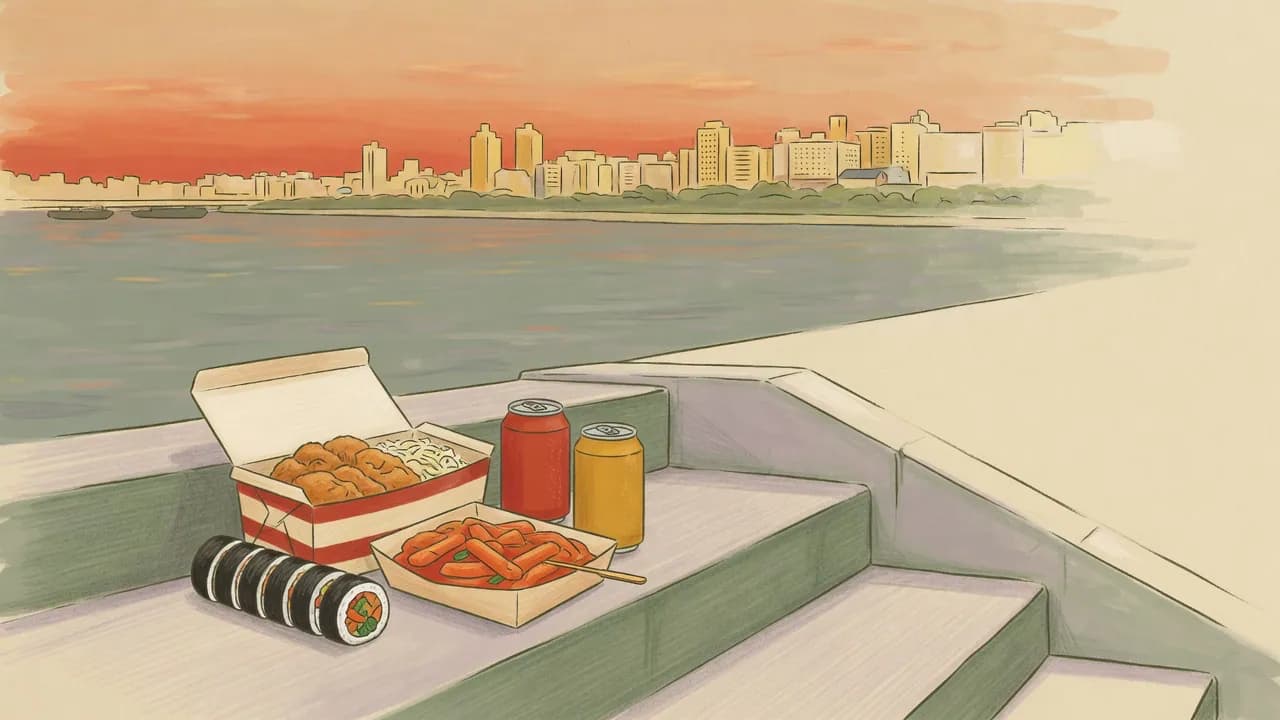
A little more detail
The park also has a bicycle path that runs the length of the north bank, rental bikes, basketball courts and a small boat dock. Riding east toward Yeouido takes about twenty minutes and passes under several bridges.
Sunset is the reason to time a visit for late afternoon. The park faces southwest across the river toward Yeouido's towers, and on clear evenings the whole embankment fills with residents doing exactly the same thing.
Is Mangwon a good place to meet a Seoul resident?
It is one of the most natural, because the default activity — buy market food, walk to the river, sit down — is cheap, outdoors, public and requires no reservation. That suits a first meeting better than a restaurant does.
A little more detail
It also shows a version of Seoul that tourist districts do not: a market where people are buying dinner rather than posing, and a riverside used by residents on an ordinary weekday.
localseoul matches travelers with ID-verified Seoul residents for coffee, food or a walk, free during early access. Mangwon sits just west of the Hongdae area covered by the pilot, and locals from that side of the city usually know it well.
Good questions.
How far is Mangwon from Hongdae?
About ten minutes by subway with one transfer at Hapjeong, or a thirty-minute walk west. Mangwon Station is on line 6; Hongik University Station, the Hongdae stop, is on line 2, the AREX line and the Gyeongui-Jungang line.
What should you buy at Mangwon Market?
Cooked food to take away: fried chicken by the piece, tteokbokki, jeon, mandu, gimbap and croquettes are the usual picks. Buy from several stalls, then walk to Mangwon Hangang Park and eat by the river, which is the local habit.
Is Mangwon Hangang Park worth visiting?
Yes, especially at sunset. It faces southwest across the river toward Yeouido, has a long cycle path with rental bikes, and convenience stores with hot-water machines for instant noodles. It is a park residents use rather than a tourist site.
Is Mangwon touristy?
No. It is a residential neighborhood with no conventional sights, and foreign visitors are uncommon. English menus are rare in the market. That is the appeal for travelers who have already done the central districts and want ordinary Seoul.
Plans and opening hours can change. Check the venue or official source before you go. How we put these guides together · Suggest a correction
Get a feel for the neighborhood.
Keep exploring.
All guides ↗ Neighborhoods
Take it slow in Yeonnam
A green path and a cafe detour.
 Everyday know-how
Let’s get coffee
Order, settle in, know the house rules.
 Everyday know-how
Split the bill, skip the guesswork
Ask before you order.