Where do language exchanges happen in Seoul, and are they worth it?
Find a language exchange that fits.
Here’s what to know.
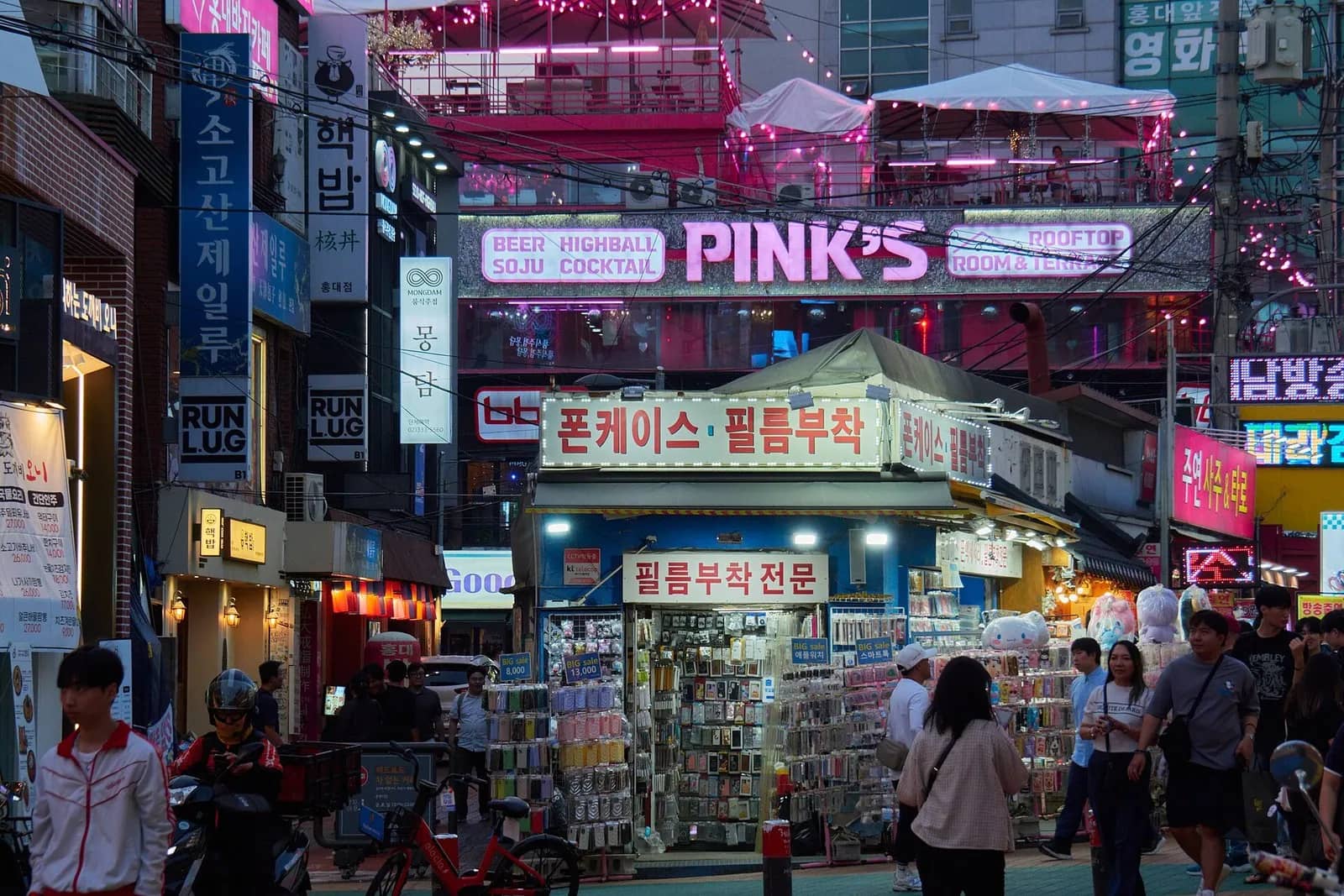
Seoul language exchanges run most nights in Hongdae, Itaewon and Gangnam, usually as free or low-cost bar and cafe events where pairs rotate every ten to twenty minutes. They are good for practicing Korean and meeting many people briefly. They are weaker if you want one substantial conversation or are only in the city for a few days.
Before you go
- Start with one shared interest.
- Choose a public place you can both find.
- Keep the plan simple and respect a no.
What is a Seoul language exchange actually like?
A typical event runs two to three hours in the back room of a bar or a rented cafe floor, with twenty to sixty people and a host who pairs or groups you and calls the rotations. You speak English for a set period, then Korean for the same period, then move. Entry is usually free or a small fee, and you buy your own drinks.
A little more detail
The attendee mix skews towards Korean university students and young professionals who want English practice, plus exchange students, English teachers and a rotating share of travelers. Most people come alone, so arriving alone is entirely normal and nobody will notice.
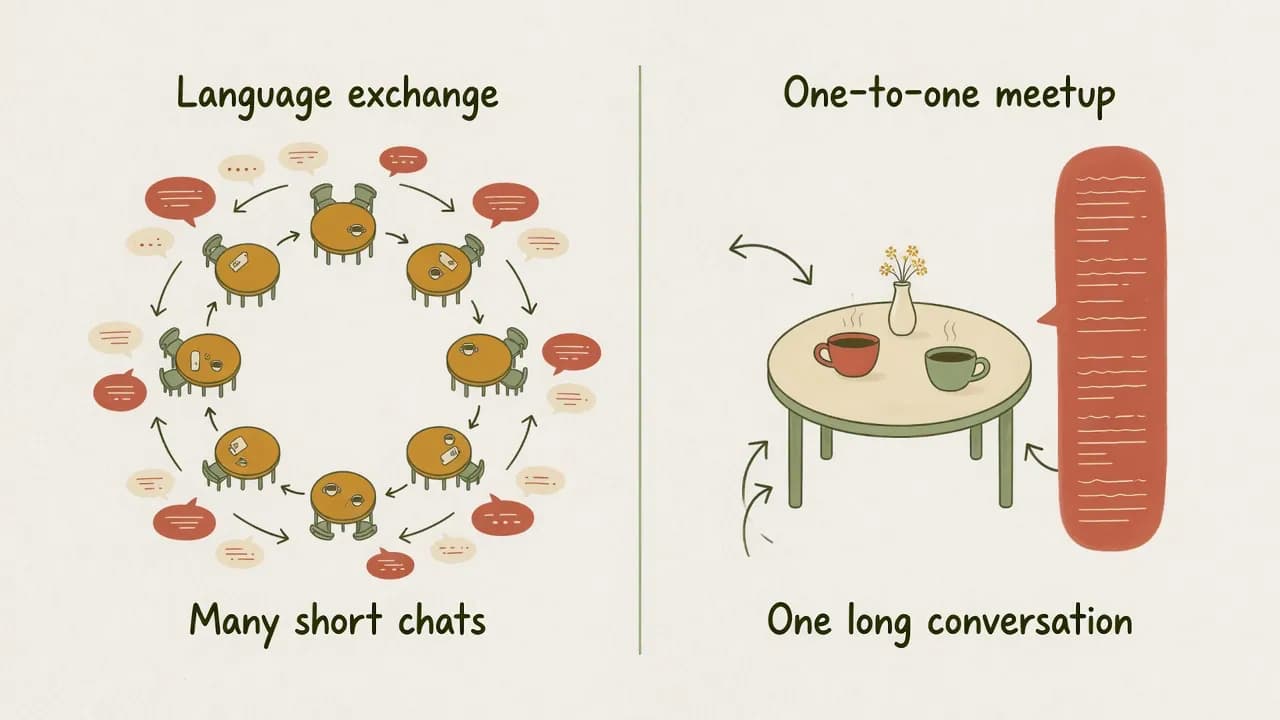
The rotation structure is the defining feature and cuts both ways. You will speak to eight or ten people in an evening, and almost every conversation will stop at the same three questions, because the timer resets before anything develops.
Where in Seoul do they happen?
Three areas carry most of the schedule, and they have distinguishable characters. Choosing by area is more useful than choosing by event name, because the same organizers run similar formats and the neighborhood determines who turns up.
| Area | Nearest station | Character | Best for |
|---|---|---|---|
| Hongdae | Hongik Univ. (line 2, AREX) | Students, informal, busiest schedule | First-timers, weeknights |
| Itaewon | Itaewon / Noksapyeong (line 6) | Most international, oldest scene | Speakers of languages other than English |
| Gangnam | Gangnam / Yeoksam (line 2) | Working professionals, after work | Serious Korean study, older crowd |
| Sinchon and Konkuk area | Sinchon (line 2), Konkuk Univ. (lines 2, 7) | University-run and campus-adjacent | Term-time, student crowd |
How do you find them as a visitor?
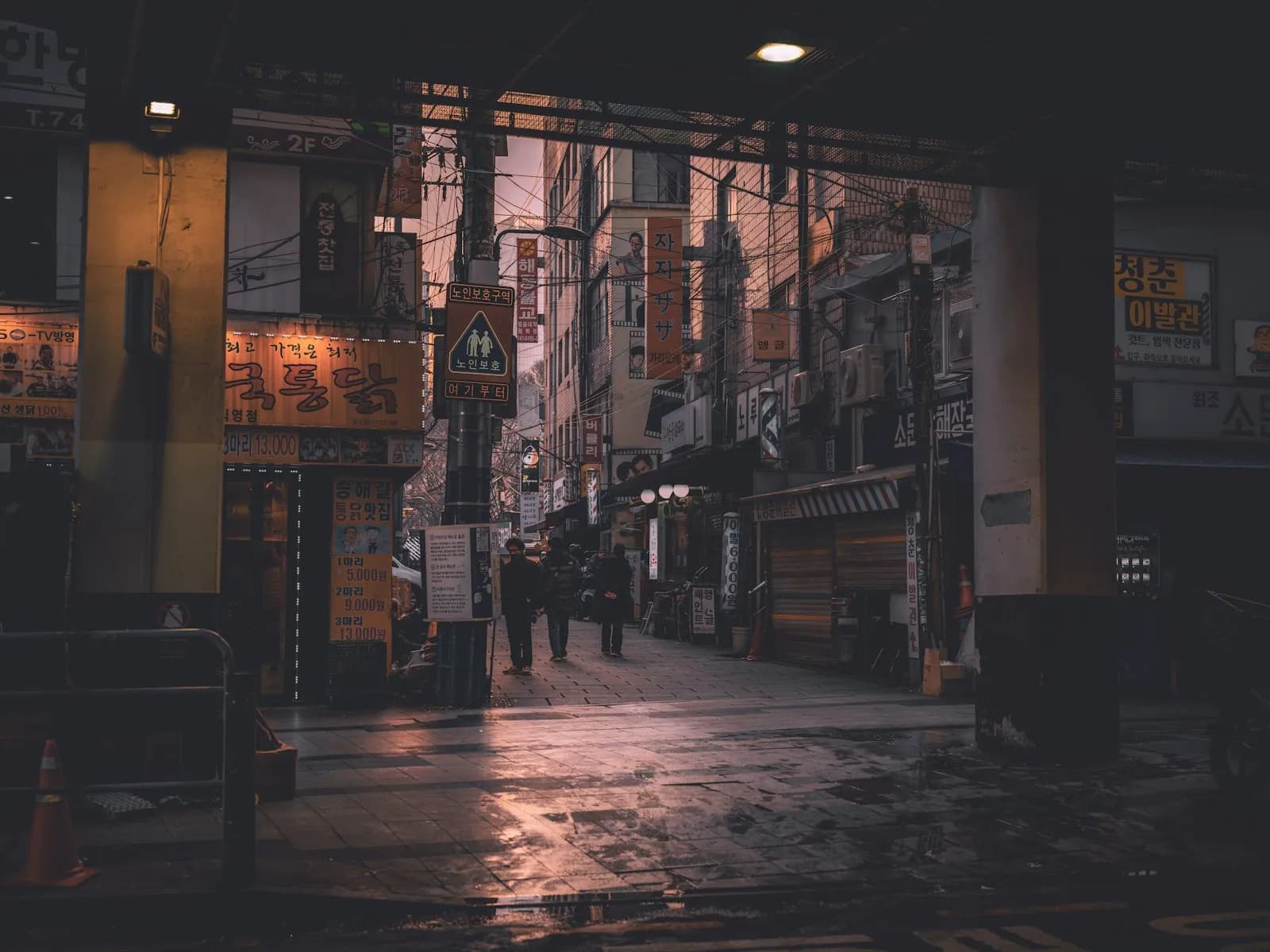
Look on general meetup platforms and on Korean community apps, and expect the listings to be scattered rather than centralised. International meetup platforms carry the English-facing events, which is what you want as a visitor. Korean-language apps carry a larger number of study-focused groups that assume you will attend repeatedly.
- Arrive within the first twenty minutes, because pairings are set early
- Bring a notebook rather than relying on your phone for new words
- Weeknights are calmer and better for conversation than Friday or Saturday
- Expect to buy one or two drinks; that is how the venue is paid
- Exchange KakaoTalk rather than Instagram if you want to hear from someone again
A little more detail
Hostels and guesthouses in Hongdae and Itaewon often keep a board or a staff member who knows which nights are running, and that is frequently faster than searching. University language institutes also run exchange programs during term, though these usually require enrolment.
Check the listing for whether it is a paid event with a fixed structure or a free open gathering. Paid events tend to be better organized and better balanced between Korean and foreign attendees; free ones tend to be larger and more variable.
Are they worth it on a short trip?
They are worth one evening and rarely worth more. The value is breadth: you get a quick, unfiltered sample of how young Seoul residents talk about their city, and you practice a language in a room where being bad at it is the point. That is a good use of a Tuesday night.
A little more detail
They are a poor fit if what you want is one conversation that goes somewhere. The rotation format resets every conversation just as it becomes interesting, and the ratio of foreigners to Koreans on busy nights sometimes means you spend the evening speaking English to other visitors.
If your goal is the second thing, a one-to-one meeting with a resident is the better instrument. localseoul matches travelers with ID-verified Seoul residents for coffee, food or a walk, free during early access, with the resident proposing a public place. The two formats are complementary rather than competing: the exchange is for volume, the one-to-one for depth.
What Korean is actually useful to bring?
Bring the ability to read hangul and about thirty words, and you will get more from the evening than someone who brings textbook grammar and cannot read a menu. Reading is the bottleneck for most beginners and it is the part that can be fixed in a weekend before you fly.

A little more detail
The phrases that carry a first exchange are introductions and repair phrases. "Jeoneun [name]-imnida" (I am [name]), "hanguk-mal jogeum haeyo" (I speak a little Korean), "dasi malhaejuseyo" (please say that again), and "cheoncheonhi malhaejuseyo" (please speak slowly). The last two matter more than any vocabulary, because they keep a conversation alive instead of ending it.
Do not worry about honorific levels at this stage. Using the polite -yo ending on everything is correct in every situation you will be in as a visitor, and nobody at a language exchange expects more.
What are the common complaints?
The most frequent one is imbalance. On popular nights in Hongdae the foreign attendance can outnumber Korean attendance, so the Korean-practice half of the evening thins out. Events that cap numbers or charge a small fee manage this better.
A little more detail
The second is that a minority of attendees treat the event as a dating venue. Hosts at organized events generally discourage this, and it is easy to disengage from, but it is worth knowing in advance so it is not a surprise. Choosing a study-oriented or paid event reduces it considerably.
The third is repetition. If you attend three exchanges in one week you will answer the same opening questions thirty times. One or two evenings is the point of diminishing returns for most visitors.
Good questions.
Do Seoul language exchanges cost money?
Many are free and ask only that you buy a drink at the venue. Organised events commonly charge a small entry fee that covers the room and sometimes a first drink. Fees vary by organizer, so check the listing rather than assuming either way.
Can I attend if I speak no Korean at all?
Yes. Complete beginners are common and events usually group by level. You will spend more of the evening speaking English than Korean, which is what the Korean attendees came for, so a beginner is useful to the room rather than a burden on it.
Which night is best?
Weeknights, particularly Tuesday to Thursday, are calmer and produce better conversation. Friday and Saturday events are larger, louder and shade into general nightlife, which suits some visitors and frustrates those who came to practice a language.
Are language exchanges a good way to make a lasting friend?
Occasionally, but they are optimised for volume rather than depth. The people who make lasting contacts through them usually attend the same event repeatedly over months. On a short trip, a single one-to-one meeting is more likely to produce a conversation you remember.
Plans and opening hours can change. Check the venue or official source before you go. How we put these guides together · Suggest a correction
Get a feel for the neighborhood.
Keep exploring.
All guides ↗ Make friends
Make a friend, not an itinerary
A coffee is a good place to start.
 Make friends
Solo doesn’t have to mean alone
Low-pressure ways to meet people.
 Make friends
What should we talk about?
Start with curiosity, skip the interview.