How do I meet locals in Seoul as a tourist?
A coffee is a good place to start.
Here’s what to know.
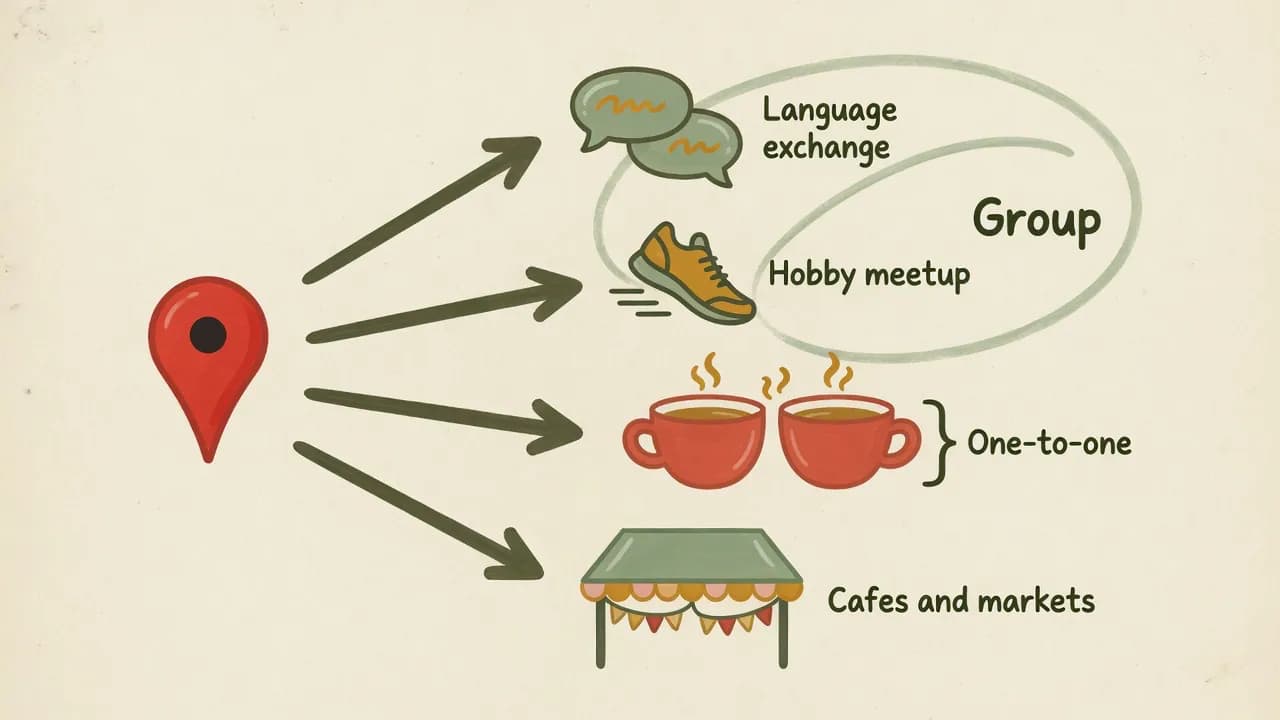
Four routes work in Seoul: language-exchange nights, hobby or sports meetups, one-to-one matching services that pair you with a verified resident, and simply spending time in neighborhood cafes and markets rather than tourist strips. Seoul residents are used to foreigners, but Korean social life runs through introductions, so a structure that provides the introduction is what makes the difference.
Before you go
- Suggest one neighborhood and a public cafe.
- Agree on a time and an easy way to say hello.
- Leave the rest of your day flexible.
Why is it hard to meet Koreans as a tourist?
It is hard because Korean social life is organized around existing groups rather than open ones. People meet through university circles, workplace teams, church, army friends and hobby clubs that they joined through someone they already knew. There is no strong culture of talking to strangers in a bar or a queue, so a visitor who waits to be approached usually is not.
A little more detail
The second reason is language asymmetry. Many Seoul residents read English well and speak it hesitantly, so they avoid starting a conversation they are not sure they can carry. This reads as coldness to visitors from countries where small talk is default. It is almost always caution, not disinterest.
The practical consequence is that any method which supplies the introduction works far better than any method which relies on spontaneity. That is true whether the introduction comes from a meetup organizer, a language-exchange host, a mutual friend or a matching service.
What are the main ways to meet locals in Seoul?
There are four routes that reliably produce a real conversation, and they differ mainly in how much time they need and whether you end up in a group or one to one. Group formats are easier to join and harder to have a real conversation in. One-to-one formats are the opposite.
| Route | Format | Best for | Trade-off |
|---|---|---|---|
| Language exchange nights | Group, rotating pairs | Practising Korean, meeting many people quickly | Conversation resets every few minutes |
| Hobby and sports meetups | Group, shared activity | Stays over a week or more | Most run in Korean and assume repeat attendance |
| One-to-one matching | Two people, one meetup | Short trips, an actual conversation | You meet one person, not a scene |
| Cafes, markets, bars in residential areas | Unstructured | Travelers who already speak some Korean | Unpredictable, often produces nothing |
Where in Seoul do these actually happen?
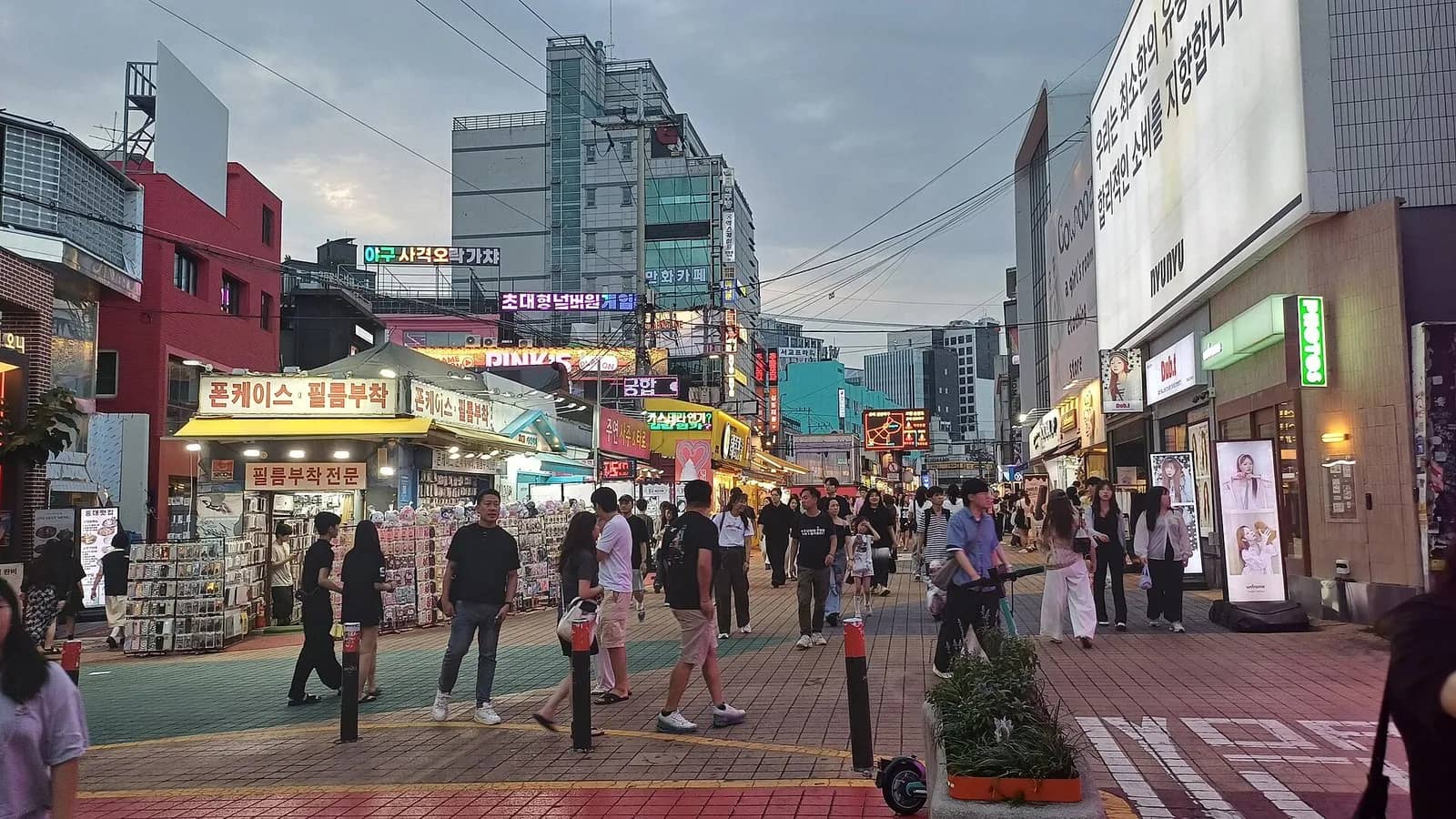
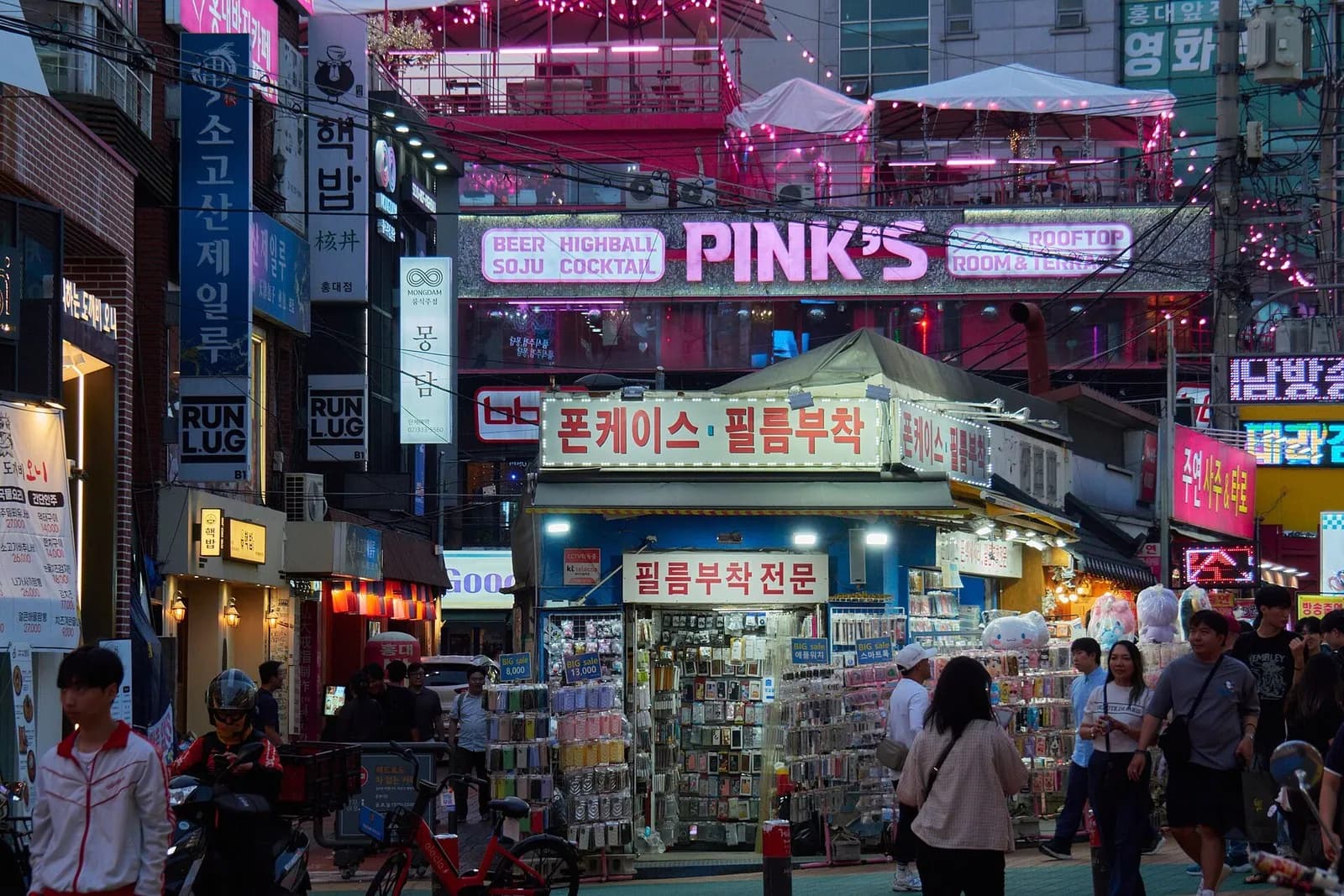
Language exchanges and international meetups cluster in Hongdae, Itaewon and Gangnam, because those areas have the bars and study cafes with rooms large enough to host them and the highest concentration of residents who want to practice English. Hongdae, around Hongik University Station on line 2, has the densest weekly schedule.
- Hongdae and Yeonnam-dong: language exchanges, indie venues, cafe alleys
- Itaewon and Haebangchon: the longest-running international crowd in the city
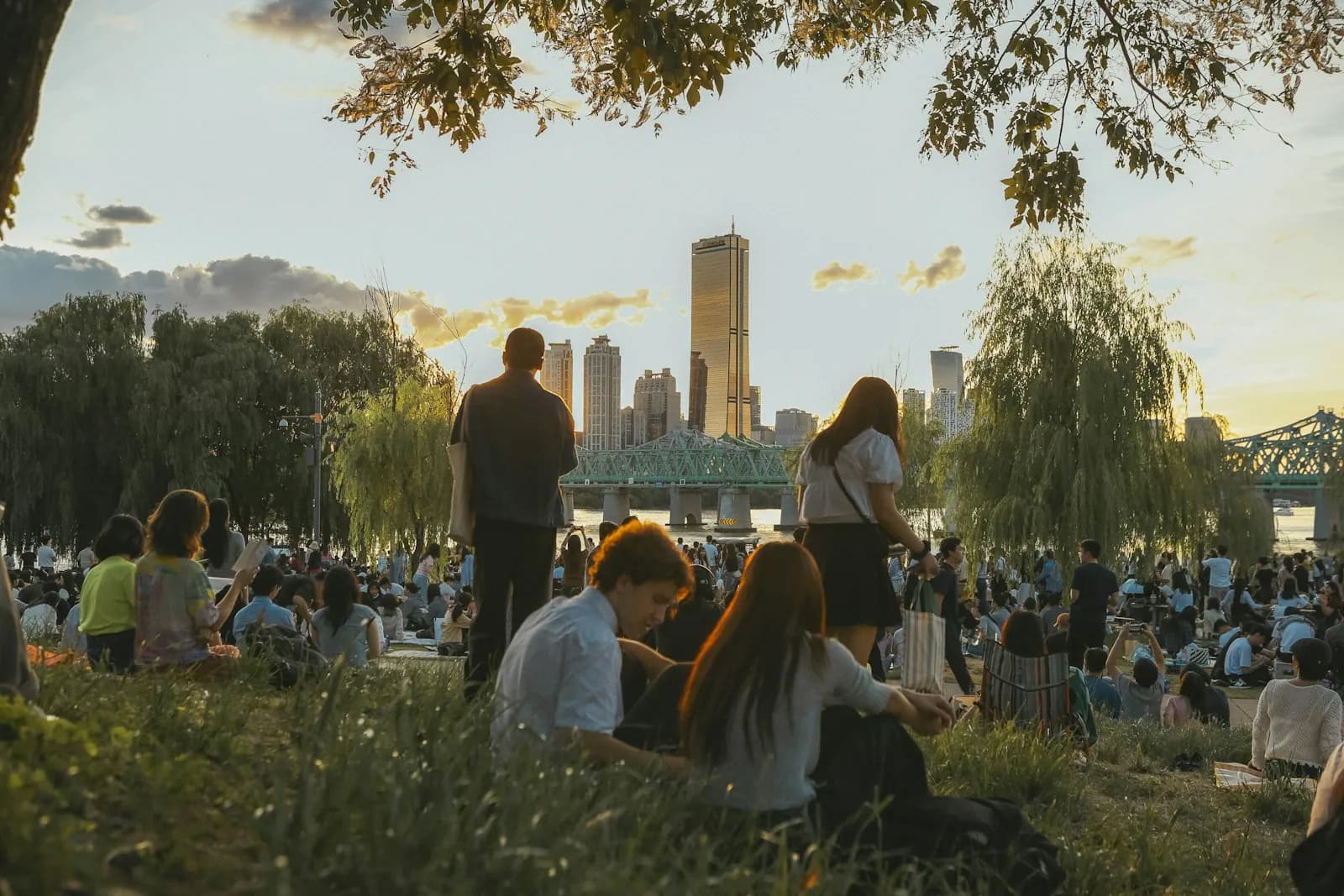
- Han River parks: running, cycling and picnic culture from spring to autumn
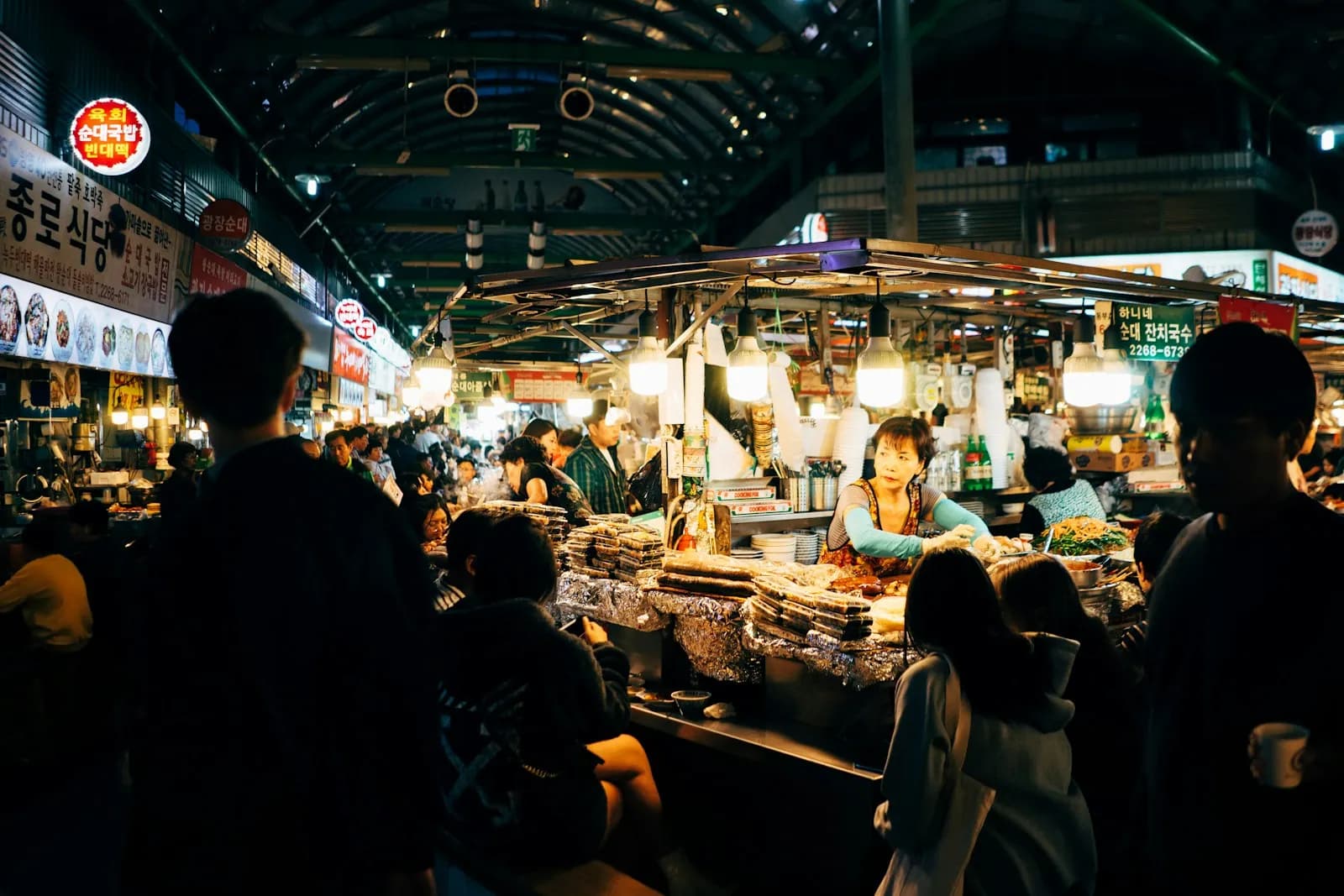
- Euljiro and Gwangjang Market: after-work eating and drinking, mostly Korean-speaking
- Seongsu: cafe-centred, daytime, easiest for a first meeting
A little more detail
Hobby meetups spread much wider. Running crews meet along the Han River paths at Yeouido, Ttukseom and Banpo, usually at 7 or 8 in the evening. Climbing gyms, board-game cafes and photography walks post through Korean apps rather than international ones, which is why visitors rarely find them.
One-to-one meetups tend to happen wherever the resident lives, which is the point. A Seongsu resident will suggest a roastery off Yeonmujang-gil, a Jongno resident a tea house in Seochon. These are the places that do not appear on a first-time itinerary because they are not attractions.
How does one-to-one matching work?
You describe your dates, the neighborhoods you will be in and what you are interested in, and a resident who knows that area decides whether to take it. localseoul runs this model for Seoul: travelers send a request, ID-verified residents see it on a board, and one of them proposes a public place and a time. Most requests hear back within 48 hours, and a directly named local has 72 hours to reply. It is free during early access, and after a verified meetup the local receives a KRW 10,000 Starbucks e-gift.
A little more detail
The structural difference from a group meetup is that the other person has already chosen to meet you specifically, based on what you wrote. That removes the part most travelers find hardest, which is walking into a room of strangers and finding someone who wants the same conversation you do.
What should you say and do at the meeting itself?
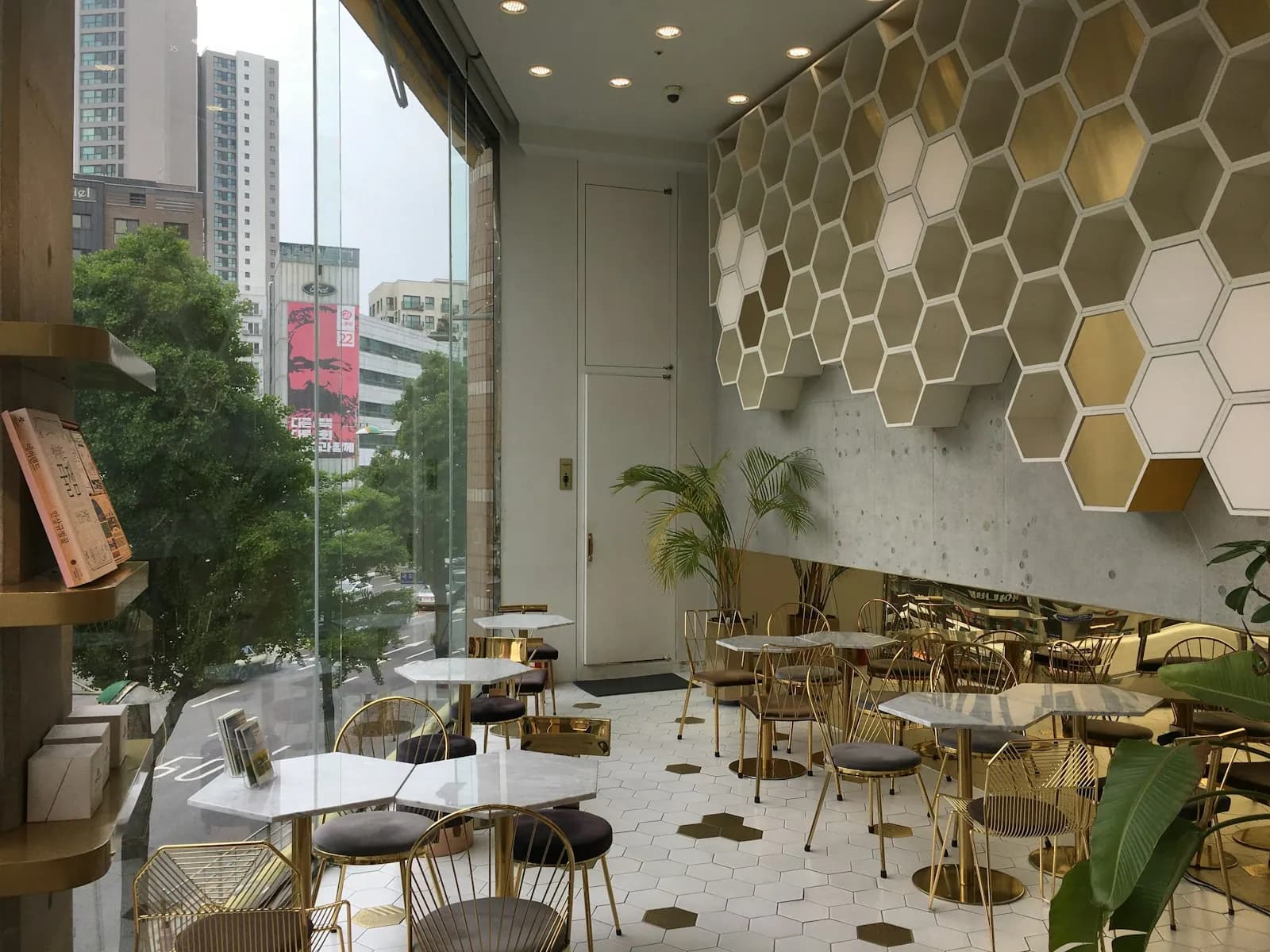
Arrive on time, meet in a cafe rather than a bar for a first meeting, and let the other person choose the place. Koreans meeting someone new almost always pick a cafe in the afternoon, because it has a natural end point and neither person is committed to a long evening. Suggesting dinner and drinks straight away reads as heavy.
A little more detail
A few Korean phrases change the temperature of a first meeting more than fluency would. "Annyeonghaseyo" (hello), "cheoeum boepgesseumnida" (pleased to meet you for the first time), "jal meokgesseumnida" (said before eating), and "gamsahamnida" (thank you) are enough. Pronouncing four phrases carefully is worth more than attempting a sentence you cannot finish.
Two things to avoid: asking about military service or North Korea in the first hour, and pouring your own drink if alcohol appears. Both are small, and both are noticed.
How much Korean do you need?
None to meet someone, some to make it comfortable. Most residents who volunteer to meet visitors do so partly because they want to use English, so the conversation will run in English by default. Learning to read hangul, which takes a few hours, is the single highest-return preparation because it turns menus and station signs from images into words.
A little more detail
Translation apps handle the rest. Papago is more accurate for Korean than the general-purpose alternatives and works offline if you download the language pack before you fly. Typing a question into it and showing the screen is completely normal behavior in Seoul and nobody will think it is odd.
What does not work?
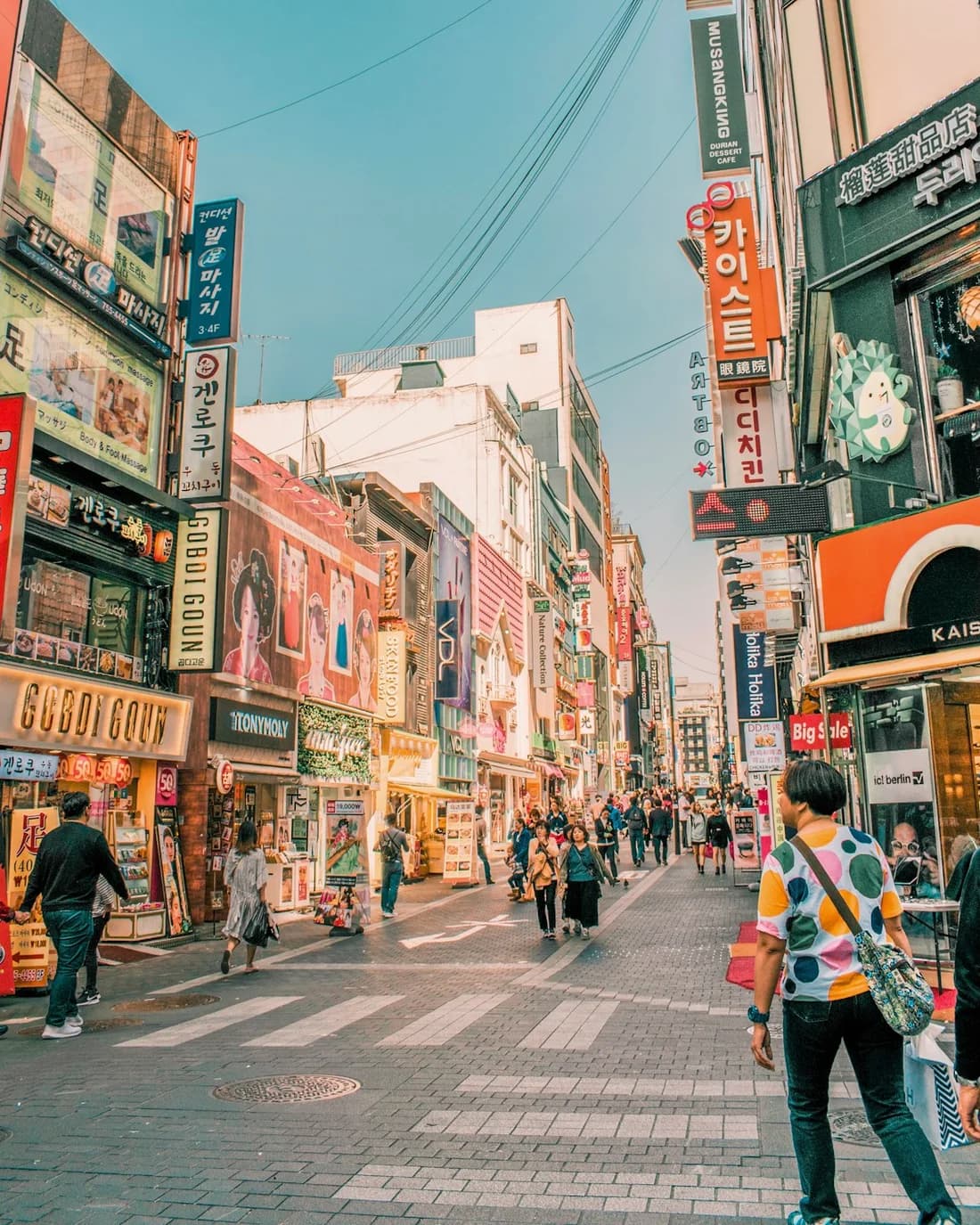
Approaching people on the street, in Myeongdong especially, does not work and marks you as someone selling something or running a survey. The same applies to starting conversations in queues or on the subway, where the norm is that strangers do not speak.
A little more detail
Dating apps used as friendship apps also underperform. Intent is ambiguous, and Korean users who wanted a language partner rather than a date have usually moved to a platform where that is the stated purpose. Being explicit about what you want, in whatever format you choose, saves both people an awkward hour.
Good questions.
Do Koreans want to meet foreign travelers?
Many do, particularly people in their twenties and thirties who want to practice English or who have studied or worked abroad. What is missing is usually the occasion rather than the willingness, which is why structured formats such as language exchanges or matching services produce meetings that street-level spontaneity does not.
Is it safe to meet a stranger in Seoul?
Seoul has low rates of street crime and a dense, well-lit public transport network, and meeting in a cafe in the afternoon is low risk. Standard precautions still apply: pick the place yourself or agree to a public one, tell someone where you are going, and leave if the other person pushes for a private location.
What is the best neighborhood for a first meeting?
Seongsu or Hongdae in the afternoon. Both have many cafes, easy subway access on line 2, and a normal mix of residents and visitors, so neither person feels out of place. Myeongdong is the weakest choice because it is almost entirely tourists and shop staff.
Does it cost anything to meet a local through localseoul?
No. Matching is free during early access, and travelers do not pay the local anything. Each person pays for their own coffee or food. After a verified meetup localseoul sends the local a KRW 10,000 Starbucks e-gift, which comes from localseoul rather than from the traveler.
How far ahead should I arrange a meeting?
One to two weeks before your trip is comfortable. That gives a resident time to see the request, check their schedule and propose a day, and gives you time to build it into an itinerary. Same-week requests sometimes work, but weekends fill first.
Plans and opening hours can change. Check the venue or official source before you go. How we put these guides together · Suggest a correction
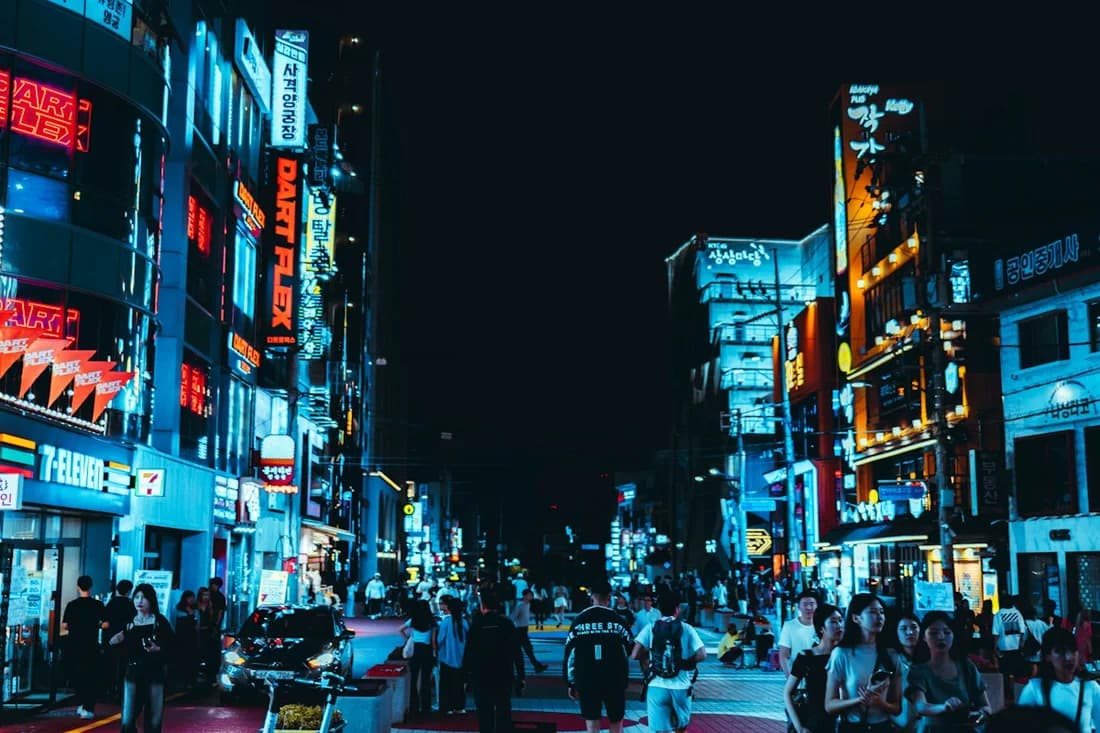
Get a feel for the neighborhood.
Keep exploring.
All guides ↗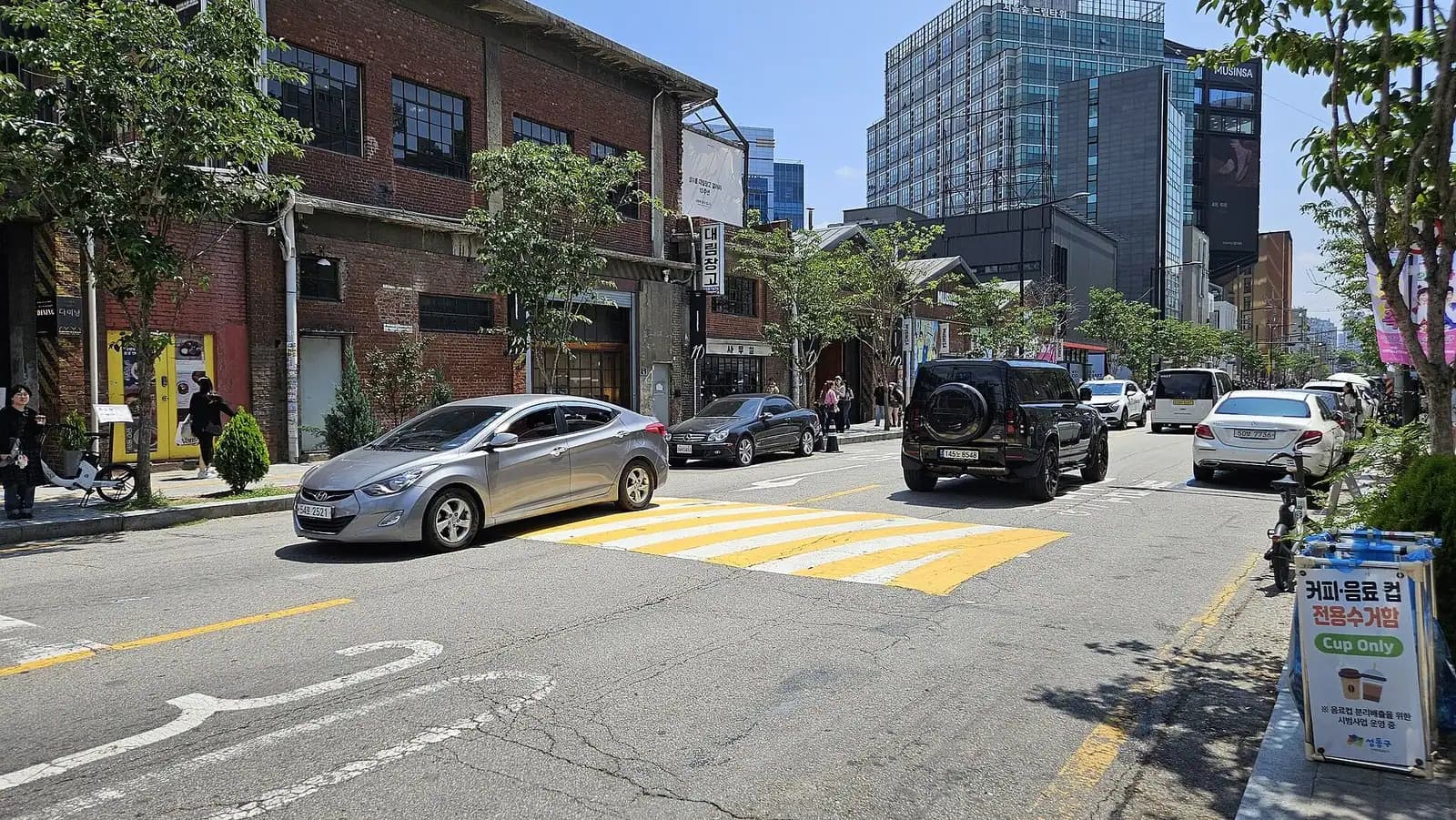 Make friends
Good company on a short trip
Make the first hello easier.
 Make friends
Solo doesn’t have to mean alone
Low-pressure ways to meet people.
 Make friends
Beyond “annyeong”
Find a language exchange that fits.