Gwanghwamun and Jongno with a local
Palace-side Seoul, with time to look around.
Here’s what to know.
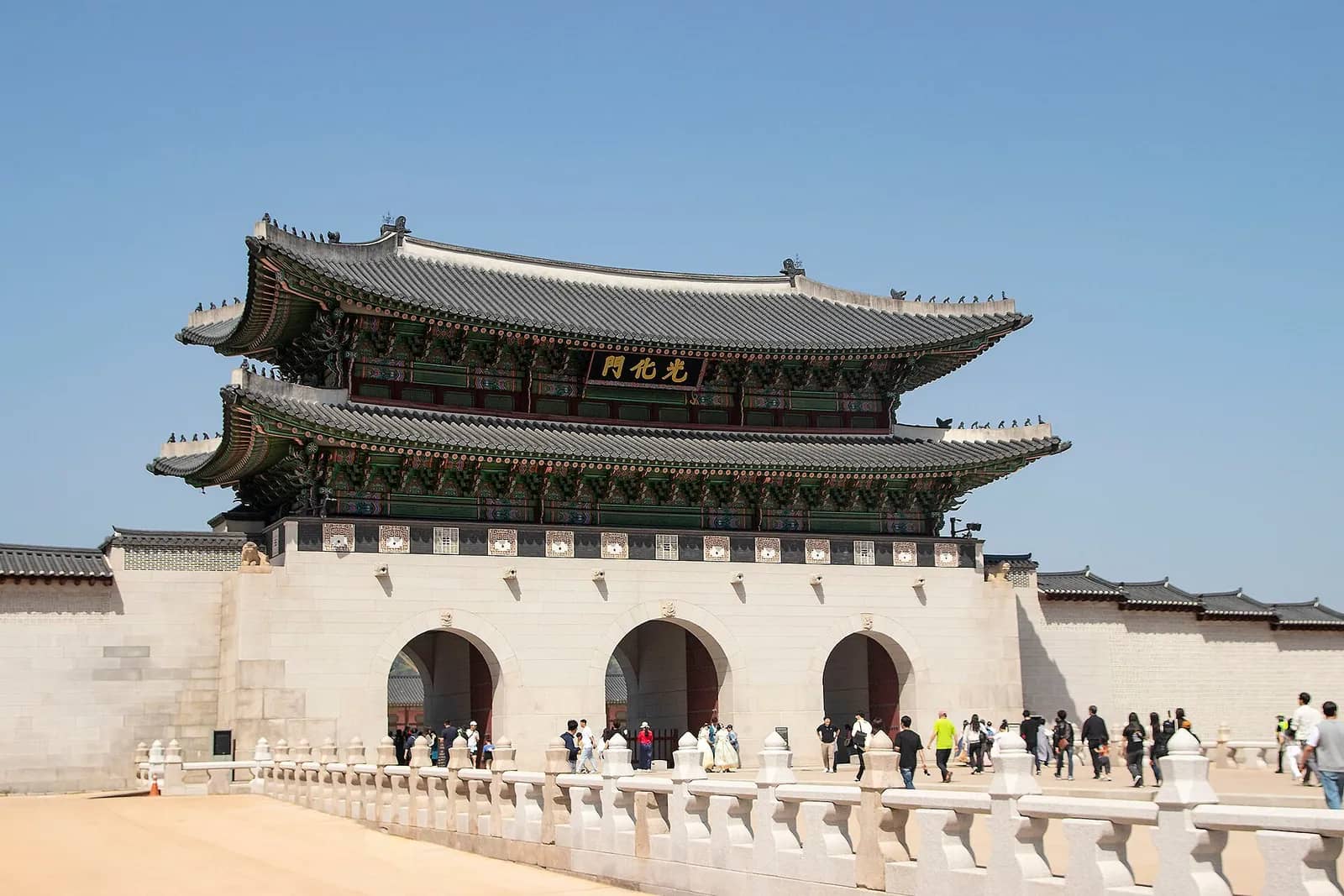
Gwanghwamun is the main gate of Gyeongbokgung Palace and the plaza and avenue running south from it, in Jongno-gu. Around it are government buildings, office towers and the Cheonggyecheon stream. East along Jongno are Insadong, Jogyesa temple and the covered food alleys where office workers eat and drink.
Before you go
- Pin your arrival station and a meeting place.
- Check today’s opening hours before setting out.
- Leave time to walk and choose an indoor backup.
What is Gwanghwamun, exactly?
Gwanghwamun is the southern gate of Gyeongbokgung Palace, and by extension the name of the plaza and the wide avenue, Sejong-daero, that runs south from it toward City Hall. The plaza carries statues of King Sejong and Admiral Yi Sun-sin and functions as Seoul's main civic square.
A little more detail
The nearest station is Gwanghwamun on subway line 5; Gyeongbokgung Station on line 3 sits at the palace's southwest corner, and City Hall Station on lines 1 and 2 is at the avenue's southern end. All three are within a fifteen-minute walk of each other.
This is the working center of the country as well as a sight: ministries, newspaper headquarters and corporate towers line the avenue, which is why the area empties on weekend mornings and fills at weekday lunchtime.
What is there to see around the plaza?
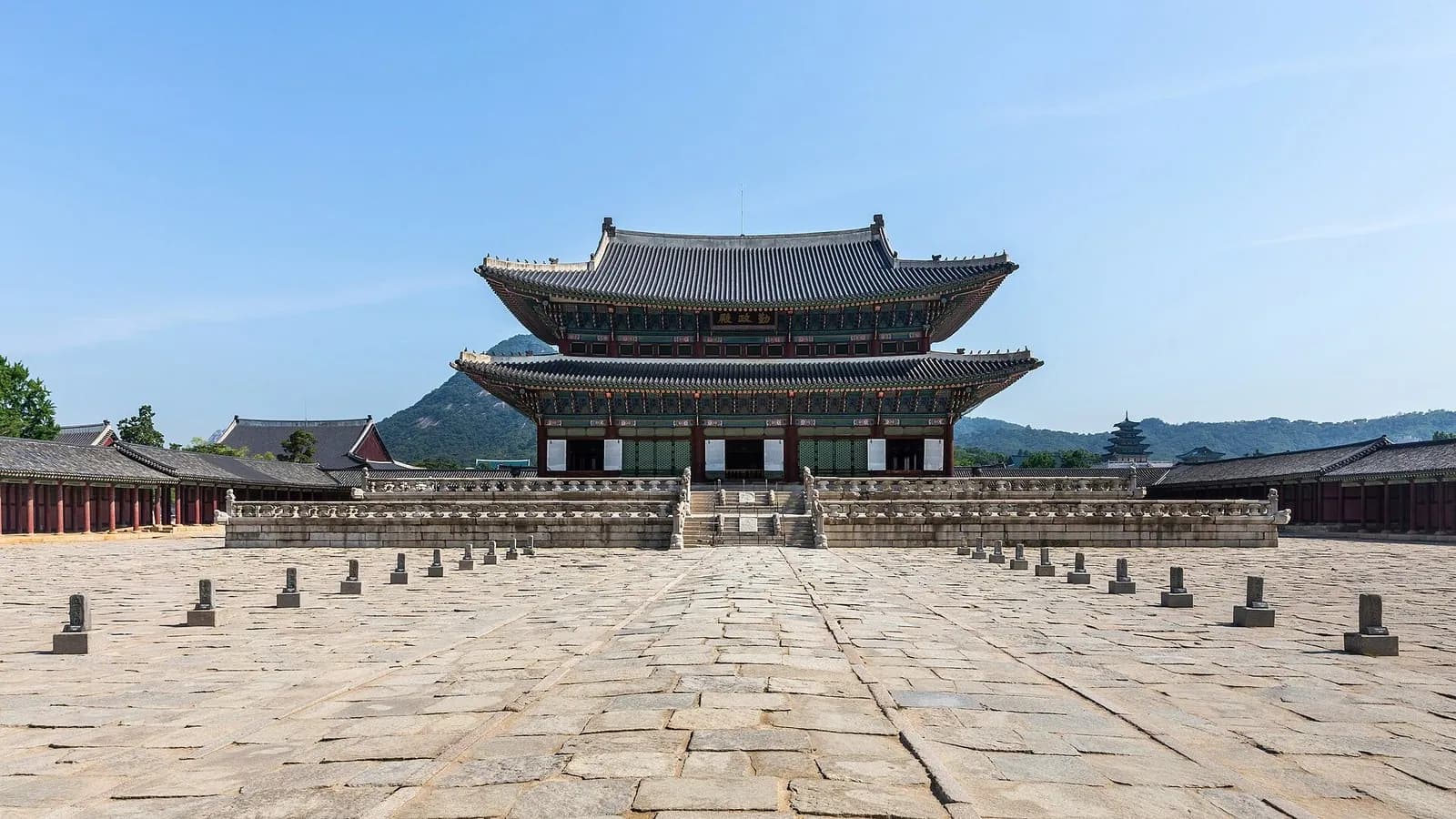
The palace is the anchor. Gyeongbokgung is directly north of the gate, with the National Folk Museum and the National Palace Museum on its grounds, and it closes on Tuesdays. Wearing hanbok gives free entry, which is why rental shops cluster nearby.
A little more detail
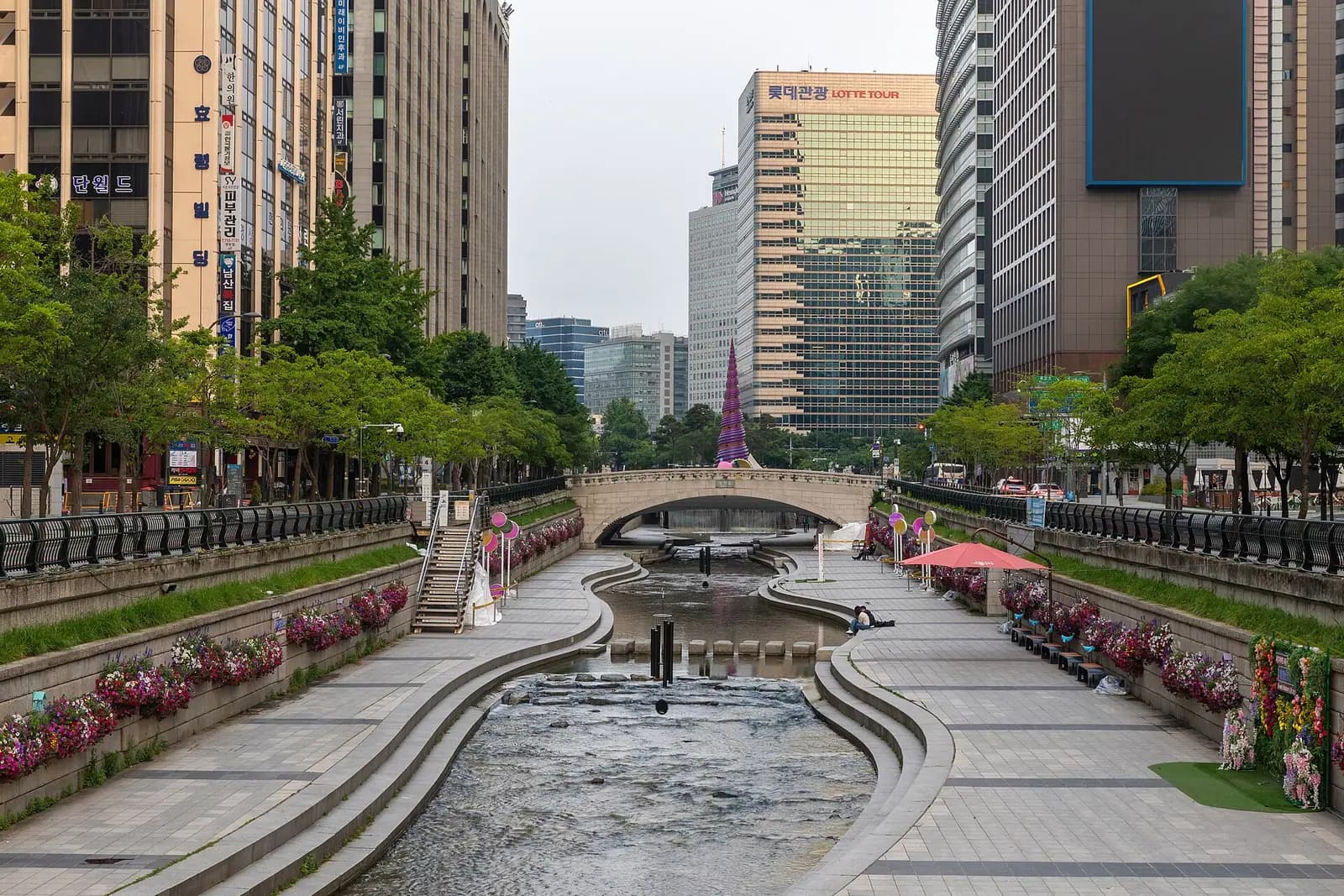
Cheonggyecheon, the restored stream, begins a few hundred meters southeast of the plaza and runs east at a level below the road. Walking it is the most pleasant way to move from the Gwanghwamun area toward Euljiro and Dongdaemun, and it is several degrees cooler than the street in summer.
Underneath the plaza are exhibition halls on Sejong and Yi Sun-sin, useful in rain or extreme heat, and the avenue itself is regularly used for public events and demonstrations, particularly on Saturdays. Large rallies here are normal civic life; they are policed, announced in advance and easy to avoid if you prefer.
Where do people actually eat in Jongno?
Not on the plaza. The eating is a few streets east and north, in the office alleys of Jongno 1-ga through 3-ga and in Jongno's covered lanes, where lunch is served at speed from noon and drinking starts around six.
| Time of day | Where to be | What it is for |
|---|---|---|
| Morning | Gyeongbokgung and the palace museums | The main sight, before the crowds |
| Lunch (12:00-13:00) | Office alleys of Jongno 1-ga to 3-ga | Set meals and soups with the weekday crowd |
| Afternoon | Insadong, Jogyesa, Cheonggyecheon | Crafts, a working temple, a shaded walk |
| Early evening | Ikseon-dong or Jongno 3-ga | Coffee, then grilled fish or pork belly |
| Night | Euljiro, one stop south | Unmarked upstairs bars |
A little more detail
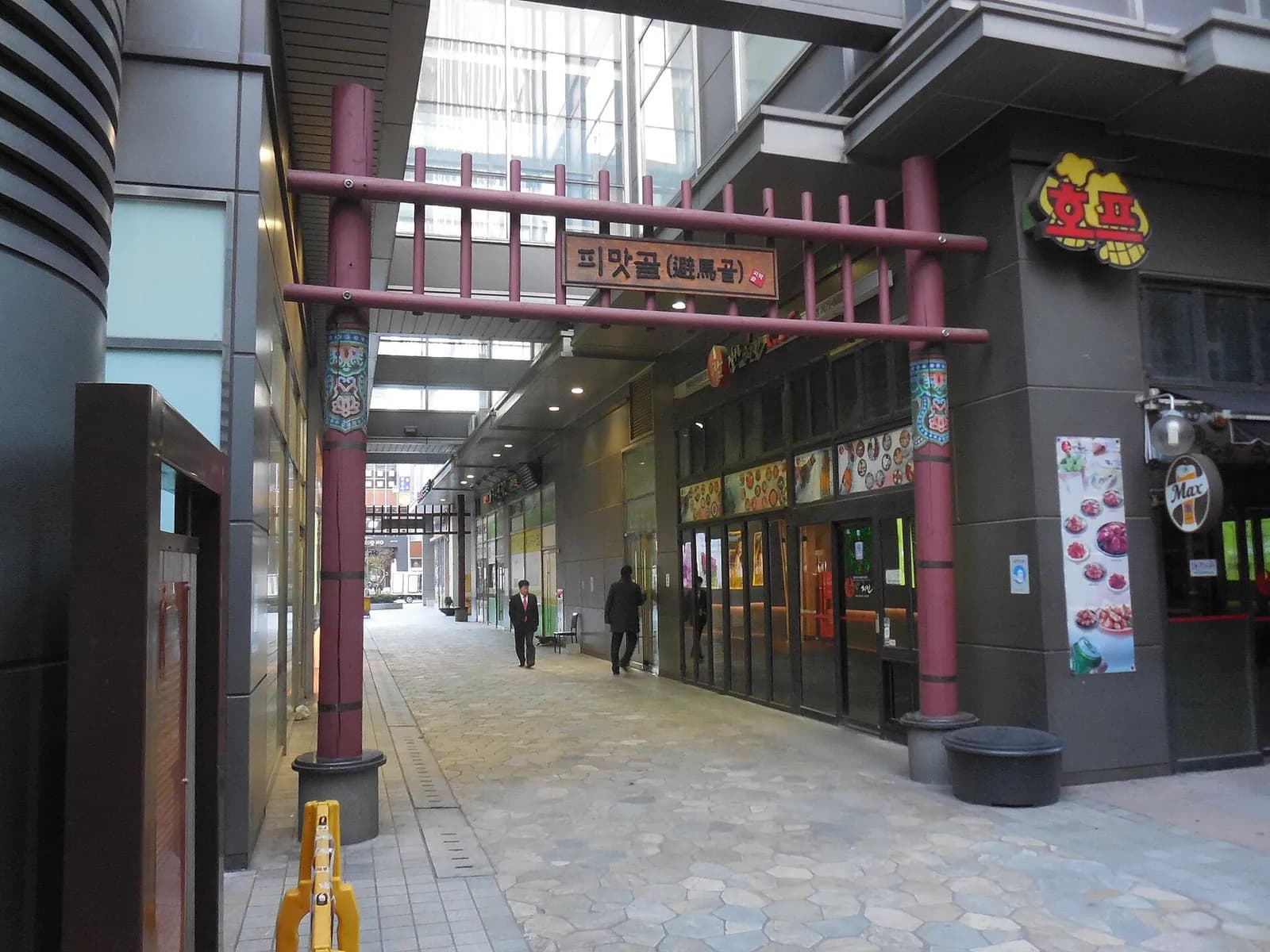
The best-known type is the grilled-fish and pork-belly alley around Jongno 3-ga, with plastic stools spilling into the lane, and the old standing bars where a set of side dishes arrives with the first drink. Another is the historic band of small restaurants behind the main road, on the line of what was once Pimatgol, the back lane where commoners walked to avoid officials' processions.
The daytime version is simpler: baekban set meals, gomtang, kalguksu and gukbap houses that feed the surrounding offices and have been doing it for decades. Queues between noon and one are normal and move fast.
How does Gwanghwamun fit with the rest of central Seoul?
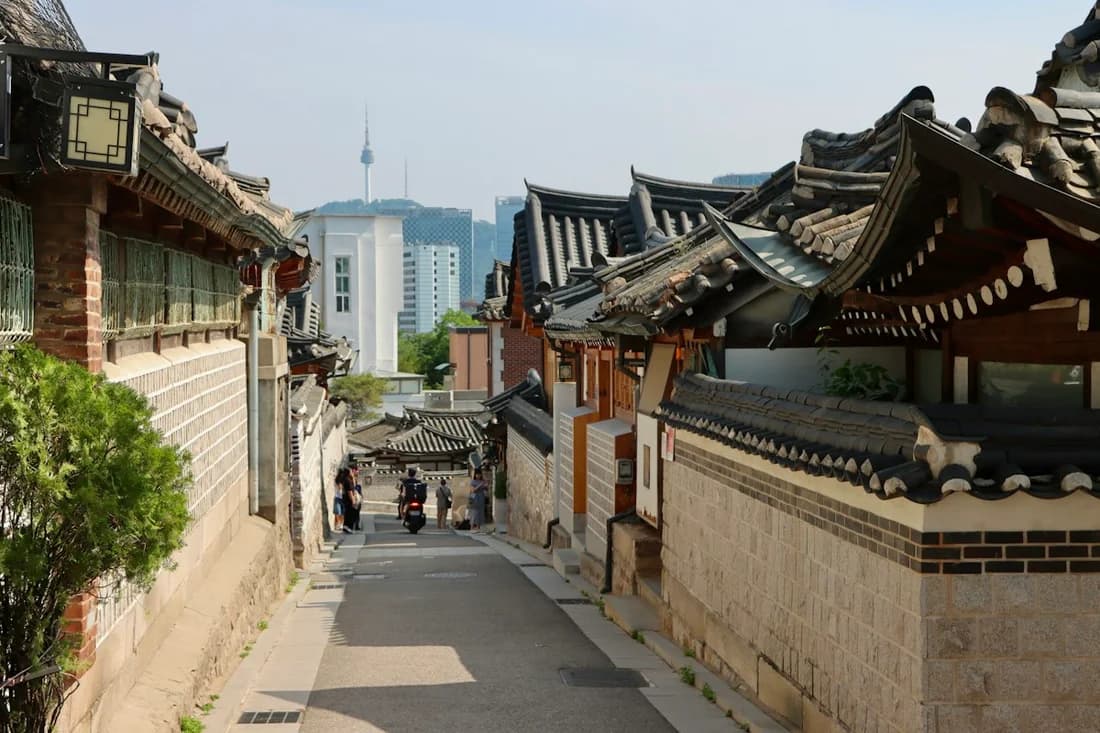
It is the hinge of the old city. Seochon lies west of the palace, Bukchon and Samcheong-dong northeast, Insadong and Ikseon-dong east, Euljiro and Myeongdong south. All of them are within thirty minutes on foot from the plaza, which makes this the most efficient base for a first visit.
A little more detail
The most common first-trip mistake is to treat the palace as a half-day and then take the subway elsewhere. The better use of the area is to walk outward from it, because the surrounding neighborhoods are each ten to fifteen minutes away and connect on foot rather than by transfer.
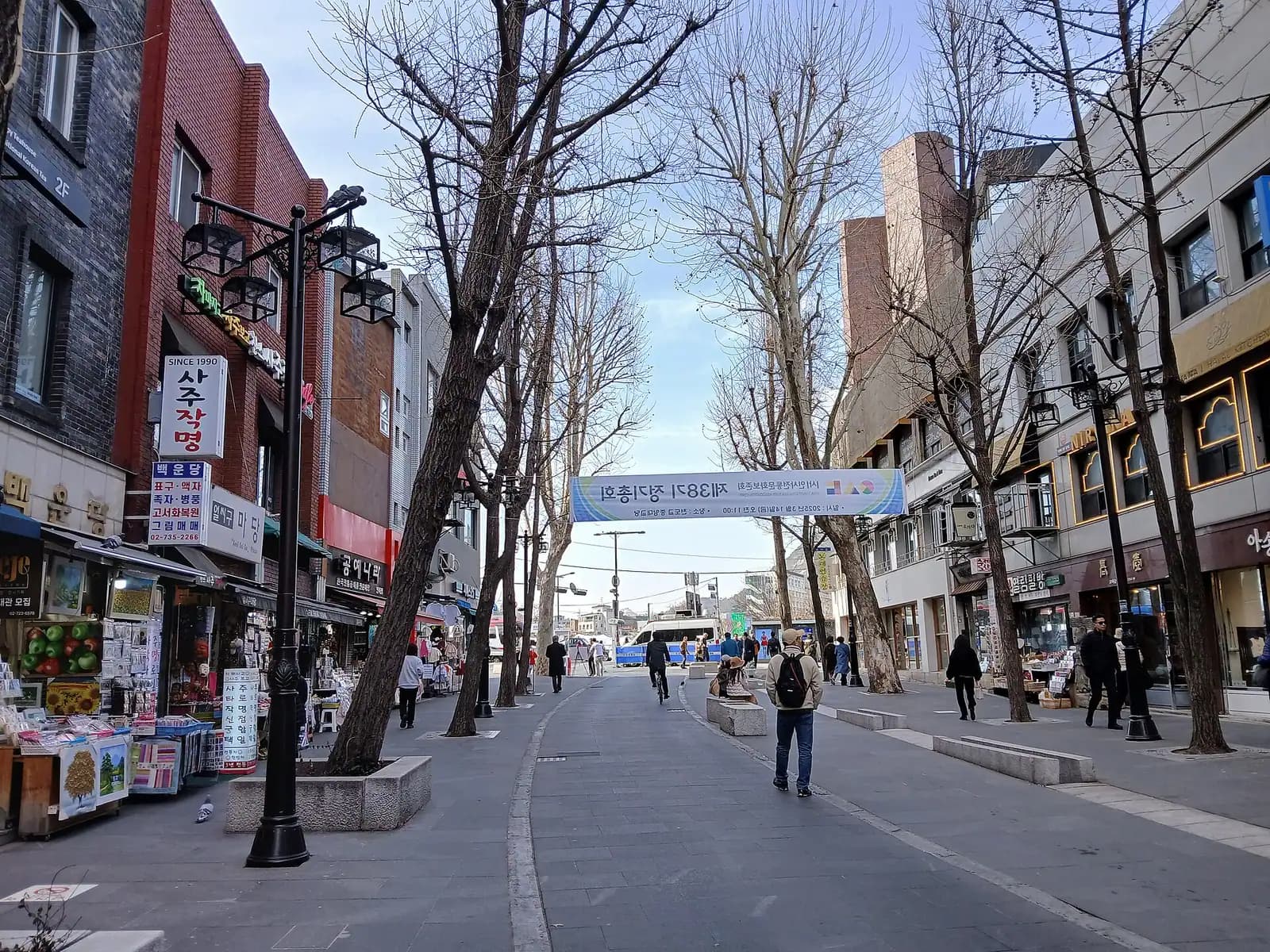
Insadong deserves a specific note: it is a well-known craft and tea street, and the section closest to Jongno is heavily commercial, while the alleys off it hold older tea houses and galleries. Jogyesa, the central temple of Korean Seon Buddhism, is a working temple a few minutes west of it.
What can a resident add here?
This is the most documented square kilometer in Korea, so a local adds less historical explanation and more practical judgement: which lunch queue is worth joining, how to order in a standing bar, which alleys survived redevelopment and which are reconstructions.
A little more detail
It is also the easiest central area to arrange a first meeting in, because the landmarks are unambiguous. Gwanghwamun Station exit 2 or the statue of King Sejong are places nobody can mistake, which matters in a city where addresses are rarely used for navigation.
localseoul matches independent travelers with ID-verified Seoul residents for coffee, food or a walk, free during early access. It is a social introduction rather than a guided tour, and Gwanghwamun and Jongno is one of the selectable areas on the request form.
Good questions.
Which station do you use for Gwanghwamun?
Gwanghwamun Station on subway line 5 opens directly onto the plaza. Gyeongbokgung Station on line 3 is closer to the palace's ticket gate and to Seochon, and City Hall Station on lines 1 and 2 is at the southern end of the avenue.
Is Gwanghwamun Plaza worth visiting at night?
Yes, briefly. The palace gate and the avenue are lit, the plaza is quiet after office hours, and Cheonggyecheon nearby is a pleasant night walk. Most of the eating and drinking, though, happens in the Jongno alleys to the east.
Are the protests on Sejong-daero a problem for visitors?
Rarely. Demonstrations on the avenue are a normal part of civic life, announced in advance and policed. They can close traffic lanes and crowd the plaza, mostly on Saturdays. Walking one street east or west avoids them entirely.
How far is Gwanghwamun from Bukchon and Insadong?
Both are within about a fifteen-minute walk east or northeast of the plaza, with Insadong closer and Bukchon uphill beyond it. Anguk Station on line 3 sits between them if you would rather not walk.
What is Pimatgol?
A historic back lane parallel to Jongno, used by commoners to avoid having to bow to passing officials. Most of the original lane was lost to redevelopment, but the name still attaches to the band of small restaurants behind the main road.
Plans and opening hours can change. Check the venue or official source before you go. How we put these guides together · Suggest a correction
Get a feel for the neighborhood.
Keep exploring.
All guides ↗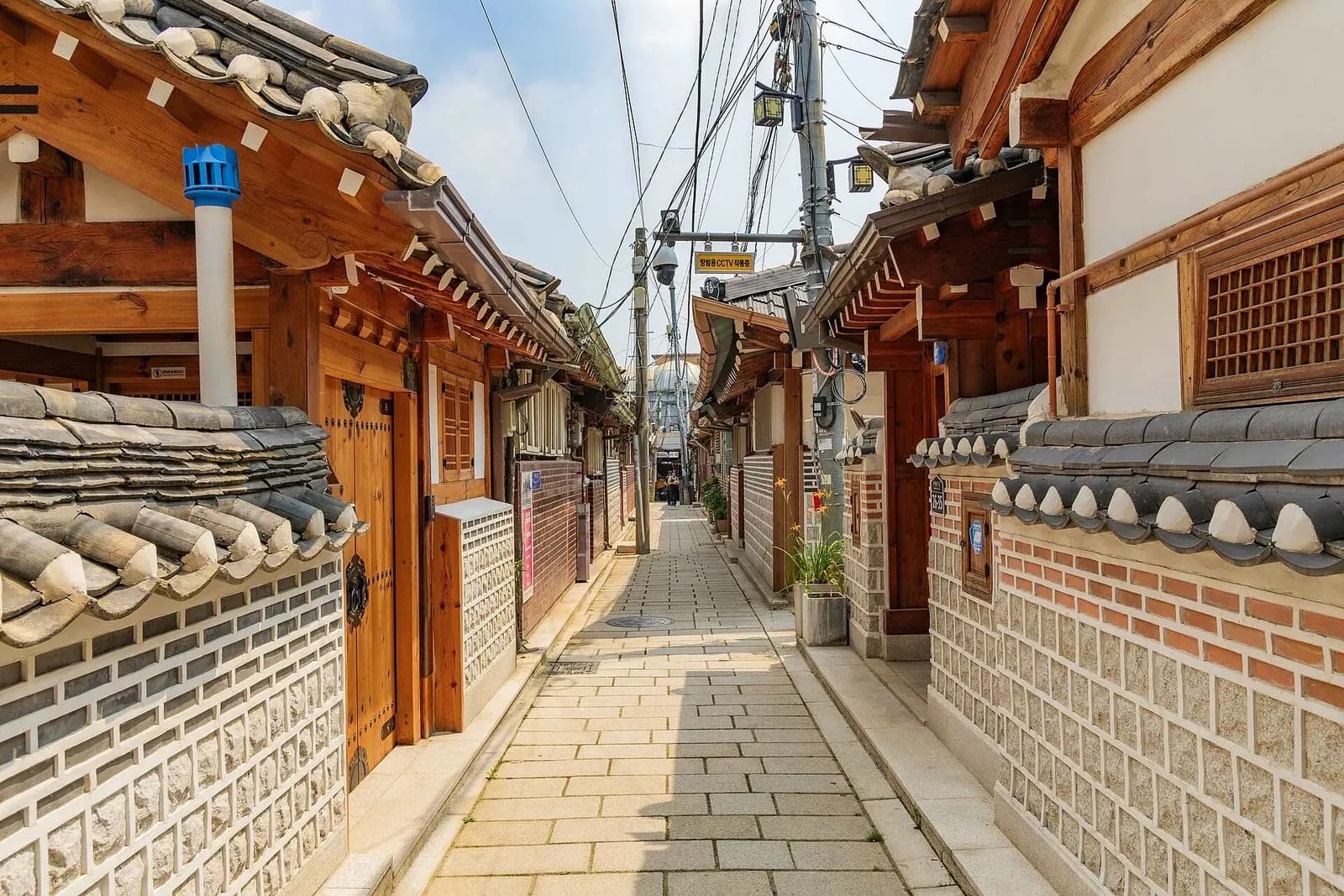 Neighborhoods
The other side of the palace
A Seochon walk with a cafe stop.
 Neighborhoods
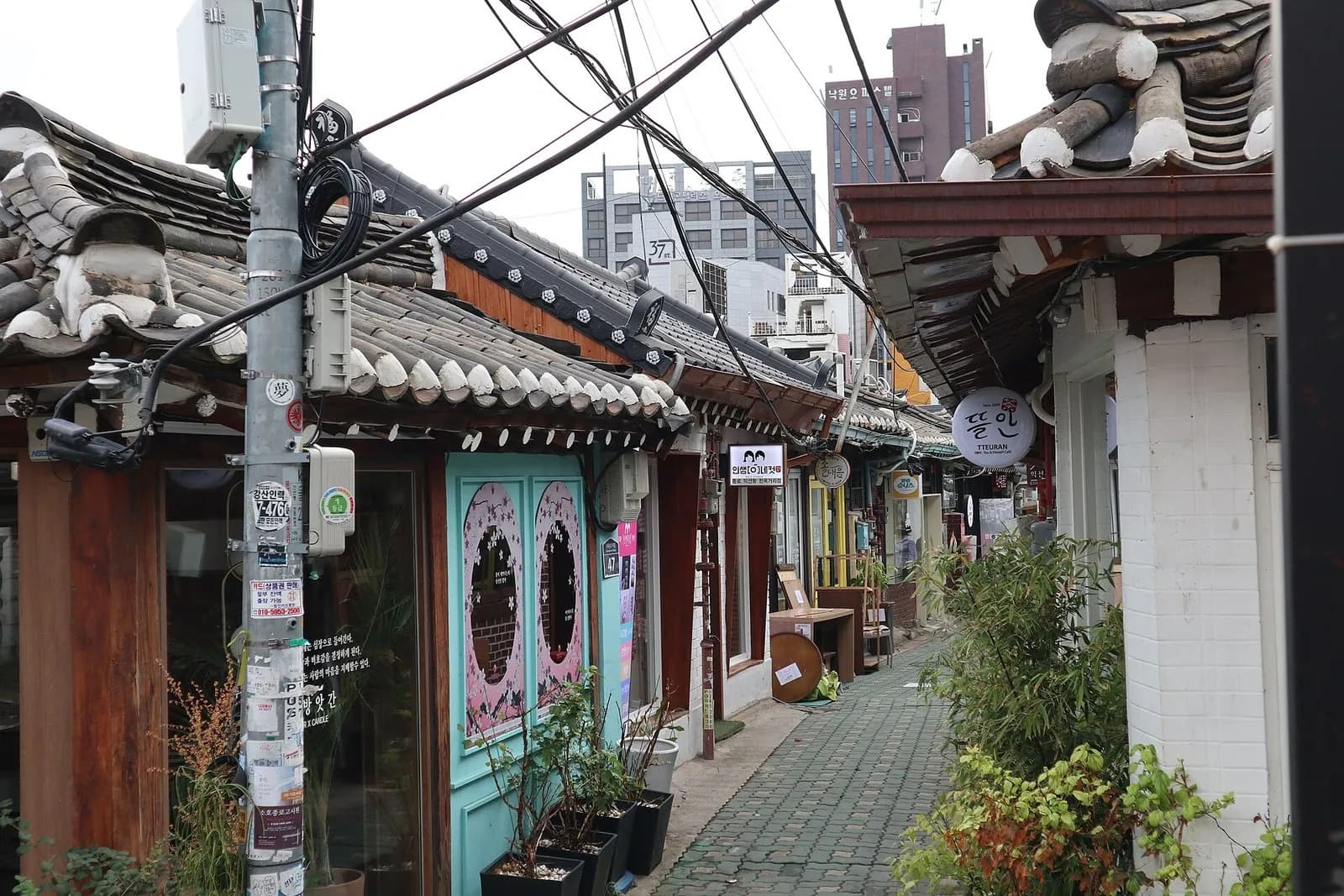
Little lanes of Ikseon-dong
Hanok cafes, narrow streets, a quieter time to go.
 Your kind of trip
Your first three days in Seoul
Pick a neighborhood. Leave room to wander.