Free walking tours in Seoul vs a one-to-one local meetup
Know what you’re signing up for.
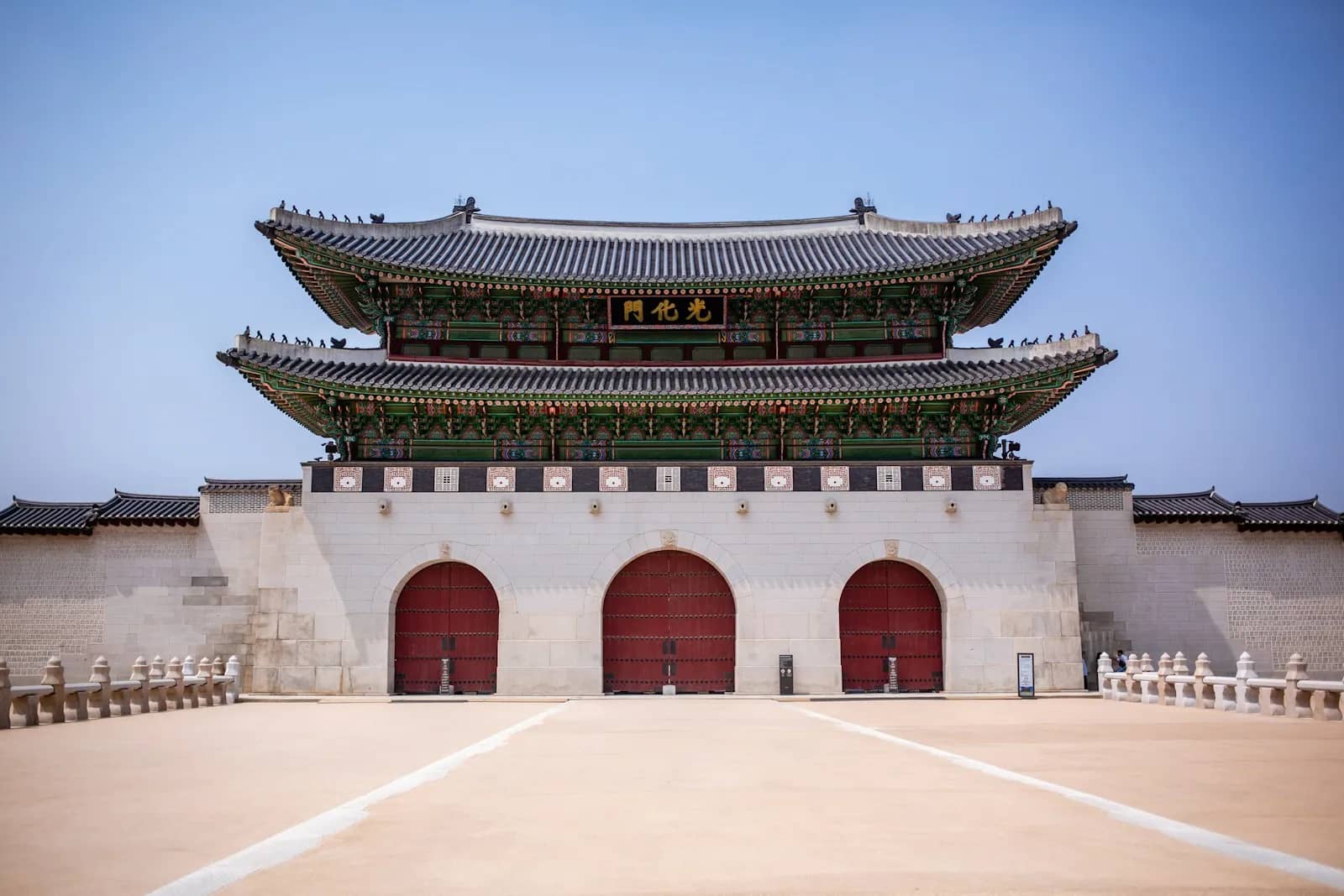
Here’s what to know.
Free walking tours are tip-based group tours, usually two to three hours around the palaces and Jongno, led by a guide who is paid by whatever the group gives at the end. A one-to-one meetup is a social coffee or meal with a resident. Tours teach you the city center; a meetup tells you how people live in it.
Before you go
- Decide whether you want a social meetup or a paid service.
- Check the current availability and provider terms.
- Agree on the plan and any costs beforehand.
How do free walking tours in Seoul actually work?
They are tip-based rather than genuinely free. You book a slot online or turn up at the meeting point, walk with a group for roughly two to three hours, and pay the guide whatever you think it was worth at the end. The guide's income is the tips, so the model depends on the tour being good.
A little more detail
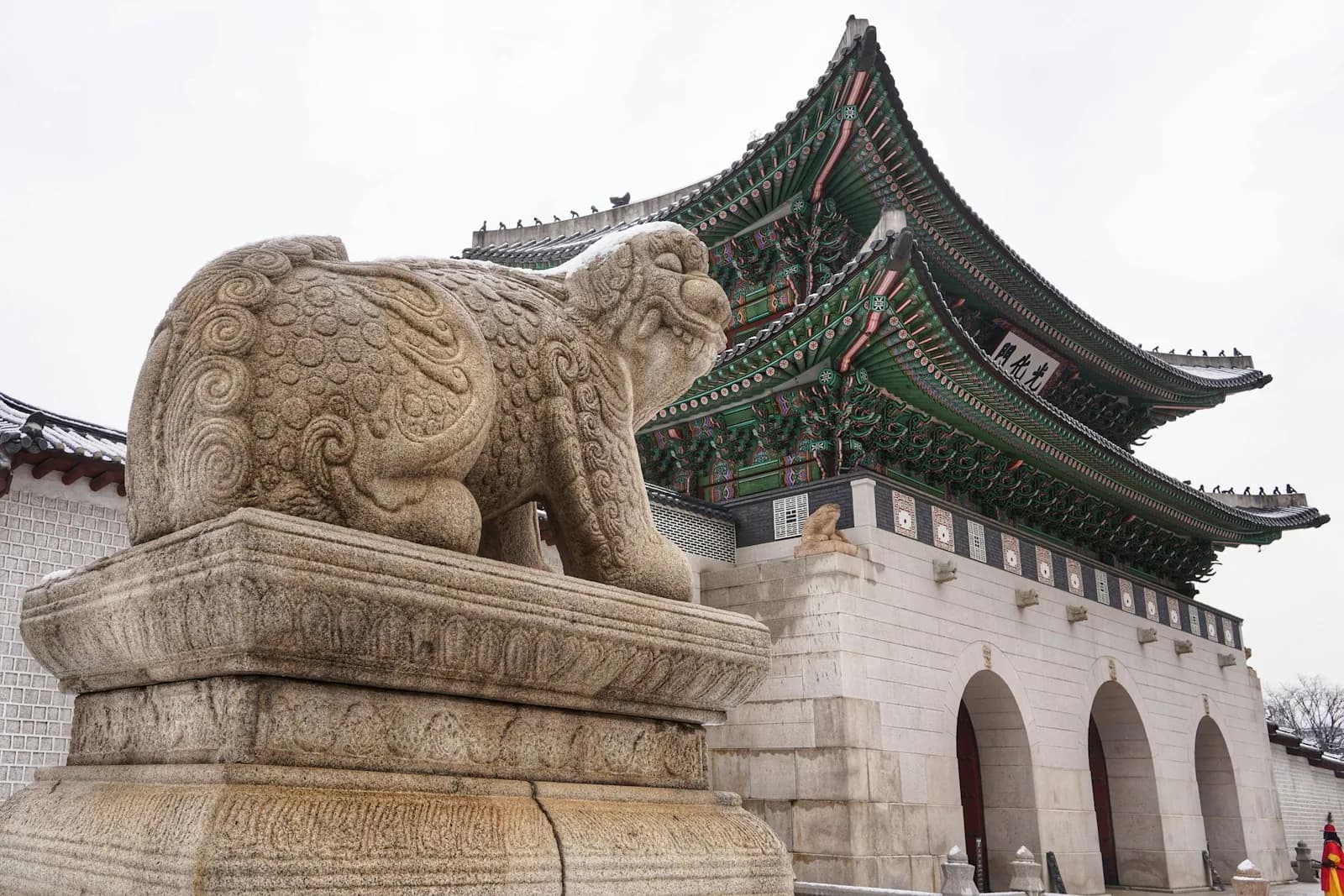
In Seoul the routes concentrate on the historic core: Gyeongbokgung and Gwanghwamun, Bukchon and Samcheong-dong, Insadong, Jongno's alleys, and sometimes Deoksugung and the old city wall. Some operators run themed evening walks around Euljiro or market food, and city and district offices also run free volunteer-led walks with fixed timetables.
Group sizes vary from a handful to thirty. Large groups mean you hear the commentary and rarely get to ask anything, which is worth checking before you choose an operator.
What do you learn on a walking tour that you cannot learn alone?
Sequence and context. The value of a good guide is not the individual facts, which are on every information board, but the order they put them in: why the palace faces that way, what the Japanese colonial period did to that street, why Jongno's alleys are laid out as they are. That structure is hard to assemble from signage.
| Free walking tour | One-to-one local meetup | |
|---|---|---|
| Cost | Tip-based, you decide at the end | Free on localseoul during early access |
| Group | Usually 5 to 30 people | You and one resident |
| Content | History and the city center | Ordinary life, food, neighborhoods |
| Questions | Limited, shared with the group | Unlimited, it is a conversation |
| Certainty | Scheduled, runs most days | Depends on a local accepting |
| Area | Palaces, Jongno, the old center | Six pilot neighborhoods |
| Guide role | Working, paid by tips | Not paid by you, not a guide |
A little more detail
You also get orientation on day one. Two hours of walking teaches you how the center connects, which makes the rest of the trip easier. Many travelers deliberately do a walking tour on their first morning for exactly this reason.
And it is a low-friction way to be around other people without committing to anything, which matters if you are traveling alone and have just landed.
What does a one-to-one meetup give you that a tour cannot?
Answers to your specific questions. On a tour you are one of twenty and the commentary is fixed. Over coffee you can ask what an apartment in this district actually costs, what people eat on a Wednesday, whether the queue outside that place is worth it, and what the guide would never say into a group microphone.
A little more detail
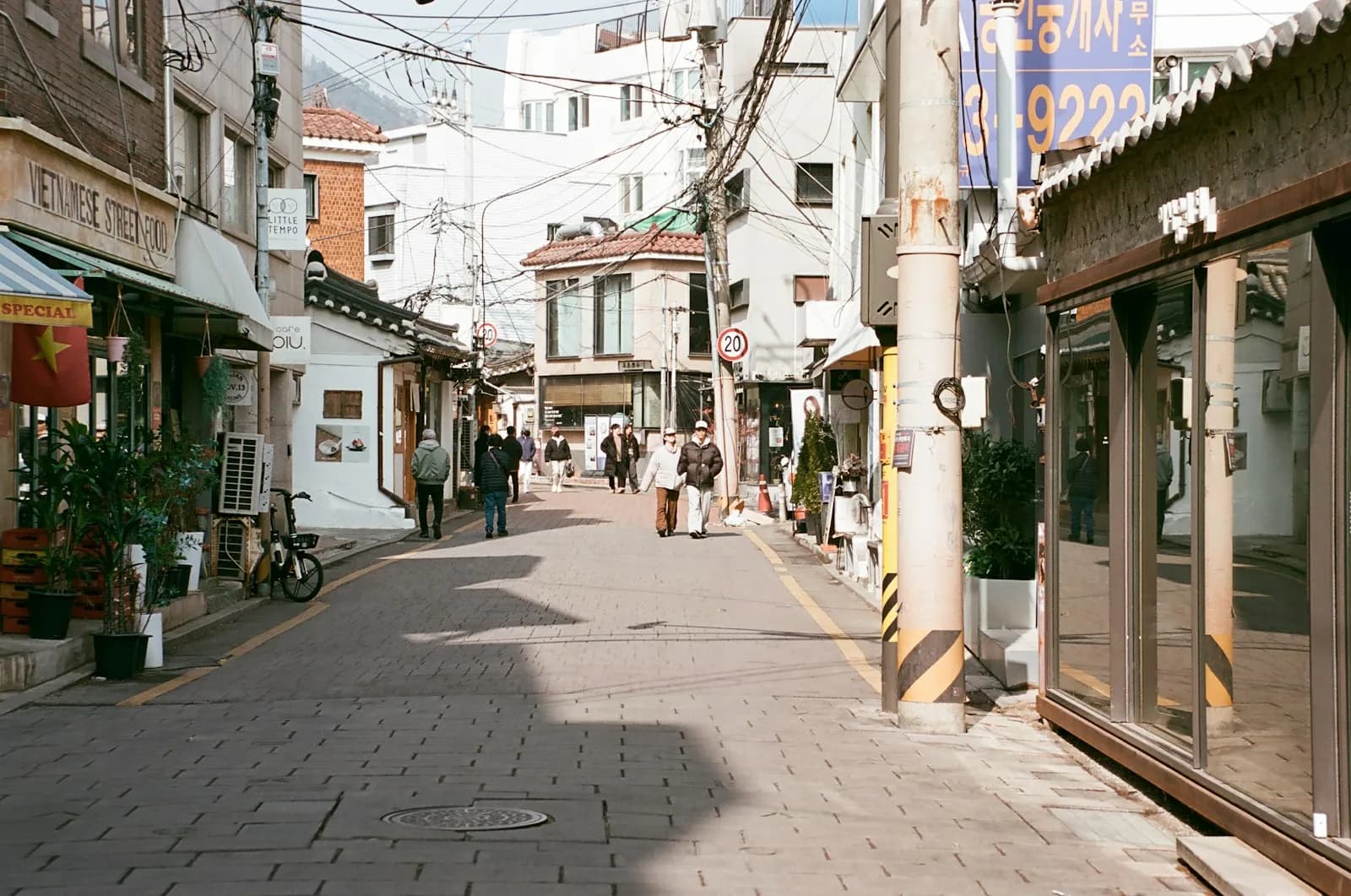
You also get the parts of Seoul that are not historic. Walking tours go where the history is, so Gangnam, Seongsu, Mangwon and most of the city where people actually live never appear. A resident's Seoul is mostly the other kind.
localseoul arranges this side: free early-access matching between independent travelers and ID-verified Seoul residents for coffee, food or a walk. You send one request with dates and neighborhoods, a local accepts and proposes a public place, and most requests hear back within 48 hours.
What are the drawbacks of each?
Walking tours suffer from group size, weather and repetition. A large group in August heat is unpleasant, questions get crowded out, and the guide is delivering material they have delivered hundreds of times. Tip-based also means the social pressure at the end is real, so carry cash and decide your number in advance.
A little more detail
One-to-one meetups suffer from uncertainty. There is no guarantee, no schedule to join and nothing to refund, because nothing is purchased. The early-access pilot covers twelve areas, a meetup happens only if a local chooses to accept, and locals are not guides and will not deliver a history tour.
Neither is a substitute for the other. A tour cannot become a friendship and a coffee cannot become a lecture on the Joseon dynasty.
How should you combine them on a first Seoul trip?
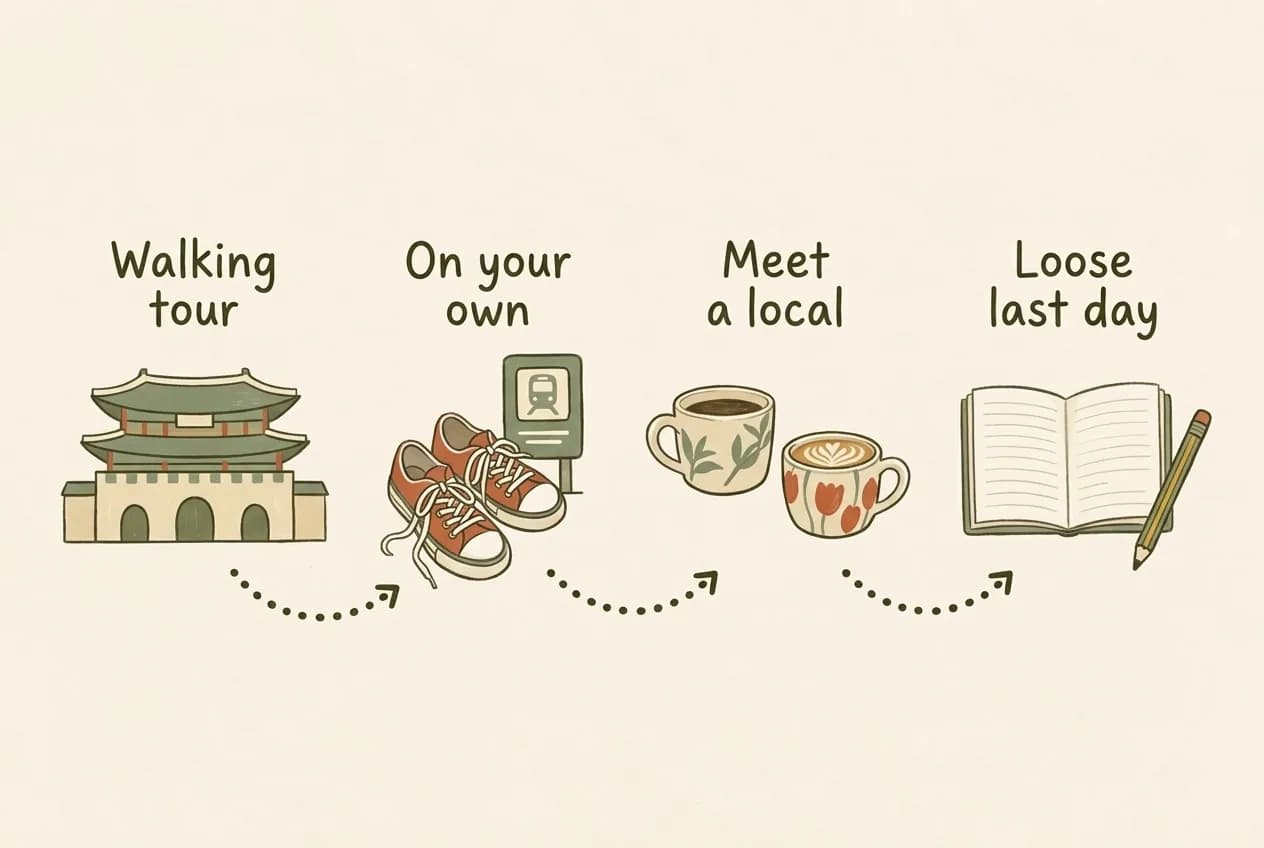
Put the walking tour early and the meetup later. A tour on your first or second morning gives you the geography and the history, which means that when you meet a resident on day three you can ask sharper questions than where should I go.
- Day one: walking tour or palace volunteer session for orientation.
- Day two: neighborhoods on your own, on foot and by subway.
- Day three: coffee or a meal with a resident, somewhere near where you are staying.
- Keep the last day loose to use whatever you were told.
- Carry cash for tips; many walking-tour guides cannot take cards.
A little more detail
Keep an afternoon or an evening free after the meetup. The useful output of talking to someone who lives here is a list of places you had not heard of, and that is only useful if you have time left to use it.
If you only have two days, skip the tour and do the palace with the free volunteer-led session on site, then spend the social slot on the meetup. Two days does not survive a three-hour group walk plus everything else.
How much should you tip a free walking tour guide?
There is no fixed amount and the guide will not state one, which is the point of the model. Judge it against what a comparable paid tour would have cost and what the guide actually delivered over two or three hours, and pay accordingly in cash.
A little more detail
Korea does not have a tipping culture in restaurants or taxis, so do not generalise from this. The tip-based walking tour is an imported format and is the exception rather than the rule, which is why it is worth knowing about separately.
If the tour was poor, a small amount is acceptable and nobody will confront you. If it was good, the guide is relying on it, and the difference between groups is how they make a living.
Good questions.
Are free walking tours in Seoul really free?
Commercial ones are tip-based: there is no fixed charge, and the guide is paid by what the group gives at the end. Separately, Seoul city and district offices and the palaces run genuinely free volunteer-led tours at published times, where no payment is expected.
How much should I tip a walking tour guide in Korea?
No amount is stated, so judge it against what a comparable paid tour would cost and how good the two or three hours were, and pay in cash. Tipping is otherwise not customary in Korea, so do not carry the habit into restaurants or taxis.
Do walking tours cover neighborhoods outside the old center?
Mostly not. Routes concentrate on Gyeongbokgung, Bukchon, Insadong and Jongno, with some evening or market themed walks. Areas where people actually live, such as Seongsu, Mangwon or the Gangnam side, rarely appear on a standard free tour.
Can a local meetup replace a walking tour?
No. A resident meeting you socially is not a guide, has not prepared a route and will not deliver history commentary. The two work best in sequence: a tour for orientation and context, then a meetup for the ordinary city a tour never enters.
Plans and opening hours can change. Check the venue or official source before you go. How we put these guides together · Suggest a correction
Get a feel for the neighborhood.
Keep exploring.
All guides ↗ Find your fit
A local friend or a tour guide?
Different plans, different expectations.
 Find your fit
Planning for a private guide
What to check before you book.
 Your kind of trip
Your first three days in Seoul
Pick a neighborhood. Leave room to wander.