Working from Seoul for a month: how to build a social life
Build a life beyond your work table.
Here’s what to know.
A month is enough, but only if you front-load it. Korean friendships form through repetition, not through one good conversation, so pick one neighborhood, become a regular somewhere, join one recurring activity, and arrange several one-to-one meetings in your first fortnight. Waiting until week three leaves no time for a second meeting.
Before you go
- Decide what matters most for your day.
- Check current hours, weather and transport.
- Leave a buffer between plans.
Why do most month-long stays end up lonely?
Because people spend the first two weeks working and exploring, and only start looking for company once the novelty wears off. By then there is no room for the second and third meetings that turn an acquaintance into a friend. Seoul is a city where you can spend a month entirely comfortably without speaking to anyone beyond a transaction, which is precisely the trap.
A little more detail
The second reason is structural. Korean social life runs heavily through existing groups, school and university cohorts, workplaces, church, hobby clubs, and those groups are warm once you are in and invisible from outside. Nothing about that is unfriendliness; it just means the entry point has to be a repeated activity rather than a chance encounter.
So the useful mental model is: your goal in week one is not to make friends, it is to create three or four places and times that repeat.
Where should you base yourself for a month?
Pick one neighborhood and stay in it, because being a regular is the whole strategy. The useful criteria are workable cafes, a subway line you will actually use, evening life within walking distance, and a rent level you can live with for a month. Crossing the Han River daily will quietly kill your social life.
| Area | Suits you if | Trade-off |
|---|---|---|
| Hongdae and Yeonnam-dong | You want live music, cheap food, students, language exchanges | Noisy at night, very young crowd |
| Seongsu | You want specialty coffee, design and startup people, a park | Cafes are busy and loud at weekends |
| Gangnam | You are working with Korean companies or want gyms and services | Expensive, corporate, thin street life after 10 pm |
| Euljiro and the old center | You want bars, galleries and everything within a short walk | Few good daytime work cafes; it is a night district |
| Itaewon and Hannam | You want an established international community fast | Least Korean-immersive option of the five |
What actually works for meeting people in Seoul?
Recurring group activities work best, one-to-one meetings work fastest, and apps work least. The strongest single move is joining something that meets weekly: a running crew, a climbing gym, a board game or book club, a dance or cooking class, a church if that applies to you. Four sessions across a month is enough repetition for people to start inviting you to things outside the activity.
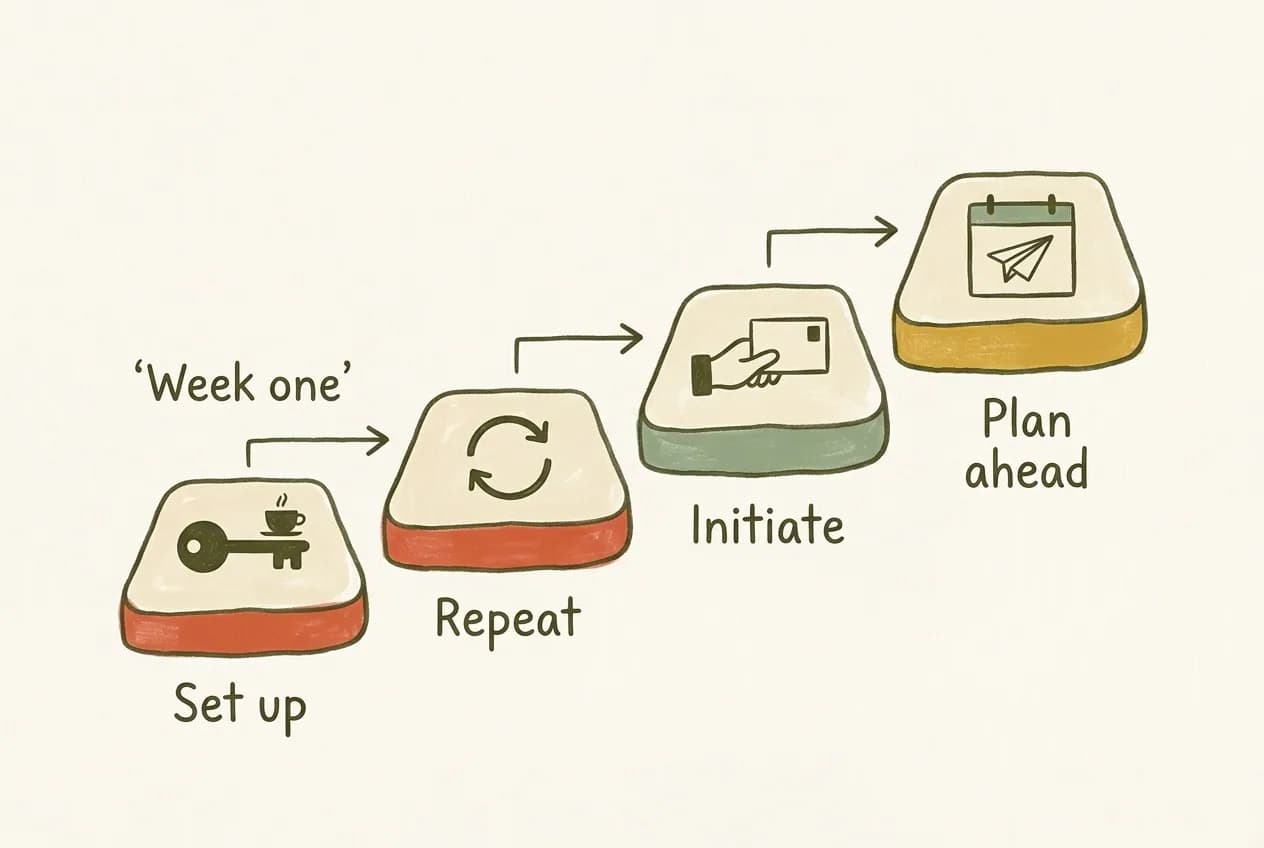
- Week one: sort accommodation, pick your cafe, join one weekly activity, send out one-to-one meeting requests.
- Week two: go back to everything from week one. Repetition is the mechanism.
- Week three: initiate. Suggest the second meeting yourself rather than waiting to be invited.
- Week four: make plans that extend past your departure, which is how a month turns into a returning visit.
- Throughout: say yes to the after-dinner second round more often than feels natural. Korean social life happens on the second round.
A little more detail
Language exchange is the specific Seoul case worth knowing. Meetings happen constantly in Hongdae, Gangnam and near the big universities, most are free or cost the price of a drink, and the quality varies enormously; some are genuine study, some are effectively a bar night. Go to two or three different ones rather than judging the format from one.
Coworking spaces help less than people expect socially, because most members are heads-down. They are excellent for a desk and mediocre for friendship. Cafes where you become recognisable over three weeks do more.
How do one-to-one meetings fit in?
They are the fast lane, because a two-hour conversation with one person tells you more about the city than ten group events. They also fill the awkward first fortnight when your weekly activity has only met once. The catch is that one-to-one meetings with strangers need some kind of verification behind them, which is where a platform matters rather than an open chat app.
A little more detail
localseoul is one option and is free during early access: you send a request with your dates, the neighborhoods you want and a short message, ID-verified Seoul residents see it on a board, and one who likes it proposes a time and a public place. It is a social meetup for coffee, food or a walk, not a tour and not dating, and each person pays their own way. For a month-long stay you can send requests across your stay rather than all at once.
Treat each meeting as possibly one-off and occasionally the start of something. Some will be a pleasant coffee and nothing more, which is normal; one in a handful becomes a person you message when you come back.
What practical things make a month in Seoul easier?
Get the infrastructure done in the first three days. A local SIM or eSIM, a rechargeable transit card, KakaoTalk installed because that is where all Korean social coordination happens, and Naver Map or KakaoMap because Google Maps navigation is limited in Korea. Without KakaoTalk you will keep meeting people and then have no way to follow up, which is the single most common mistake.
A little more detail
Payments are the other friction point. Many Korean services and delivery apps require a Korean phone number or a domestic card, and a foreign card is refused more often than you expect for online ordering even though it works fine in person. Ask early rather than discovering it when you are hungry at 11 pm.
On visa status, working remotely for a foreign employer while on a short-term visit is a gray area that depends on your nationality and the specifics of your arrangement, and Korea has introduced a dedicated workation visa route for longer remote stays. Check the current official rules for your passport rather than relying on nomad forums.
How do Korean friendships work once you have made one?
They tend to be slower to start and more committed once started. Early interactions can feel formal, and the shift usually happens over a shared meal and drinks rather than through conversation alone. Age matters more than in many Western contexts because it shapes the language used, so the question of what year you were born is social navigation and not an intrusion.
A little more detail
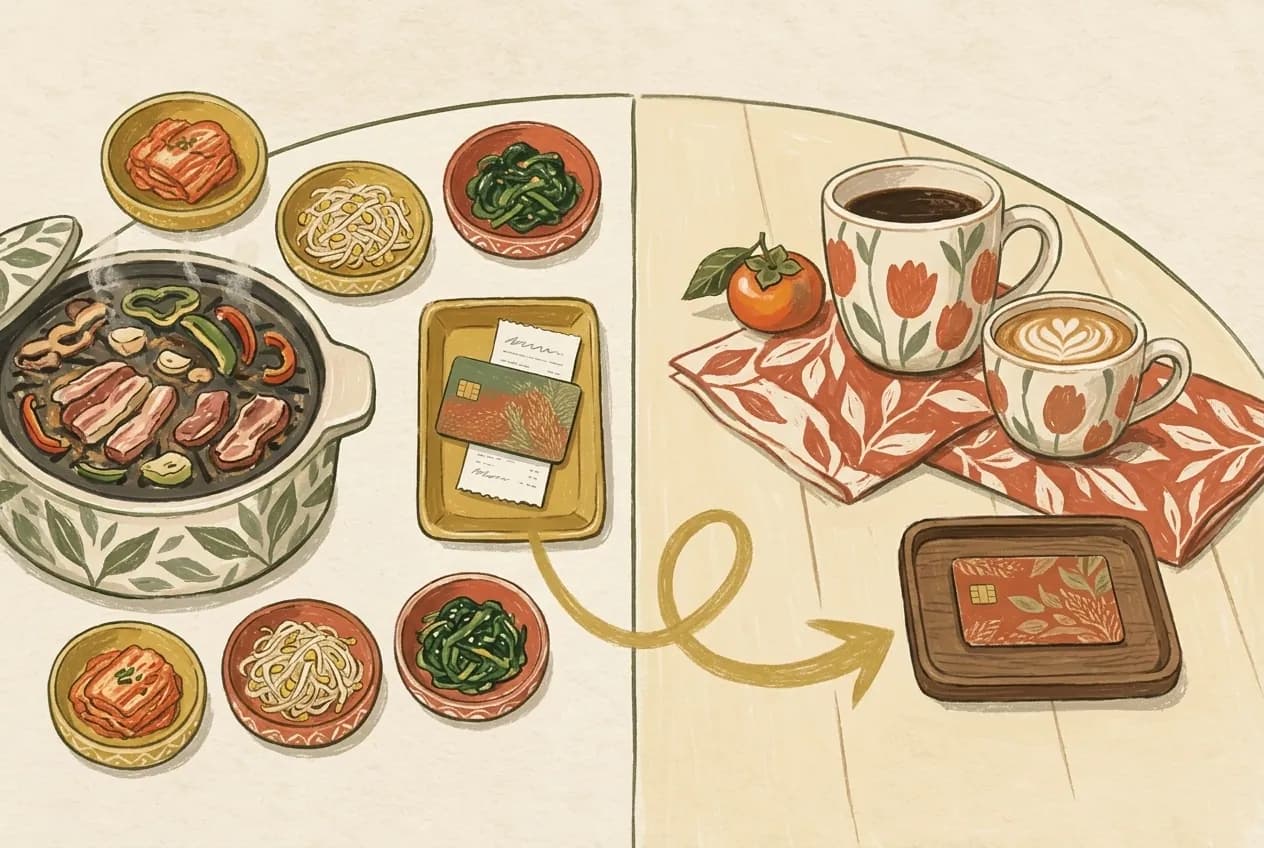
Reciprocity is tracked loosely but genuinely. If someone pays for the meal, the expectation is that you pay for the coffee afterwards or the next round, not that you split every item. Offering and being turned down twice before it is accepted is normal.
Finally, be direct about wanting to stay in touch. Koreans often assume a visiting foreigner is temporary and will not push, so saying that you plan to be here for a month and would like to meet again is information they cannot infer.
Good questions.
Is a month long enough to make real friends in Seoul?
Yes, if you build repetition early. Korean friendships form through repeated contact rather than one meeting, so join a weekly activity and arrange one-to-one meetings in your first fortnight, leaving room for second and third meetings before you leave.
Where do digital nomads stay in Seoul?
Hongdae and Yeonnam-dong for cheap food and a young crowd, Seongsu for cafes and design and startup people, Itaewon and Hannam for an established international community, Gangnam for services and corporate proximity. Pick one and stay in it rather than moving around.
Do I need KakaoTalk?
Effectively yes. Korean social coordination runs on KakaoTalk, and without it you will meet people and have no practical way to follow up. Install it in your first days along with a Korean map app, since Google Maps navigation is limited in Korea.
Can I legally work remotely from Korea on a tourist entry?
It depends on your nationality and your arrangement, and it is not a settled question. Korea has introduced a dedicated visa route for longer remote stays. Check the current official immigration guidance for your passport rather than relying on forum advice.
Are Seoul language exchanges worth going to?
They vary widely, from genuine structured study to what is essentially a bar night. Most are free or cost a drink, and they cluster around Hongdae, Gangnam and the big universities. Try two or three different ones before deciding the format does not suit you.
Plans and opening hours can change. Check the venue or official source before you go. How we put these guides together · Suggest a correction
Get a feel for the neighborhood.

Keep exploring.
All guides ↗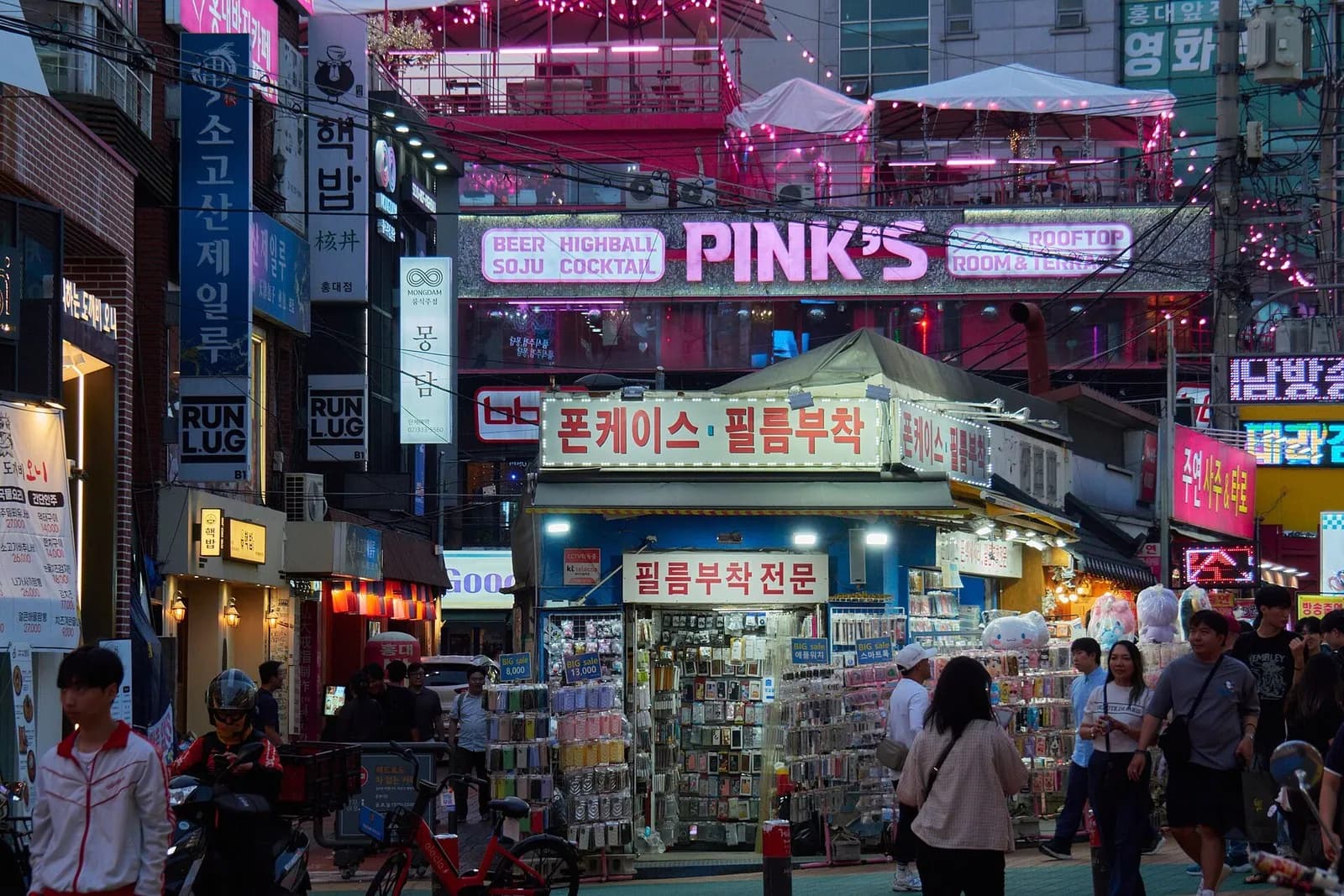 Make friends
Beyond “annyeong”
Find a language exchange that fits.
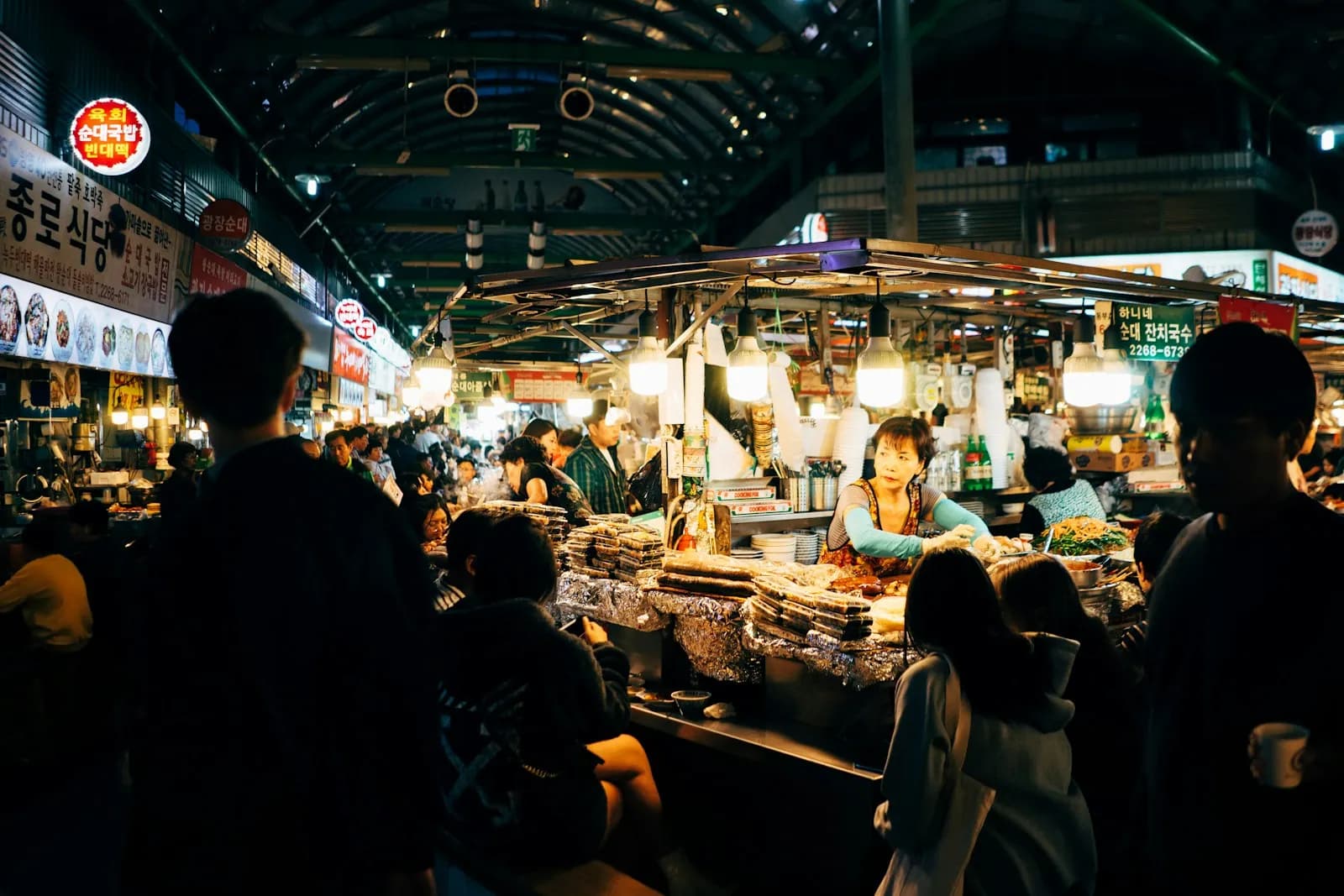 Make friends
Solo doesn’t have to mean alone
Low-pressure ways to meet people.
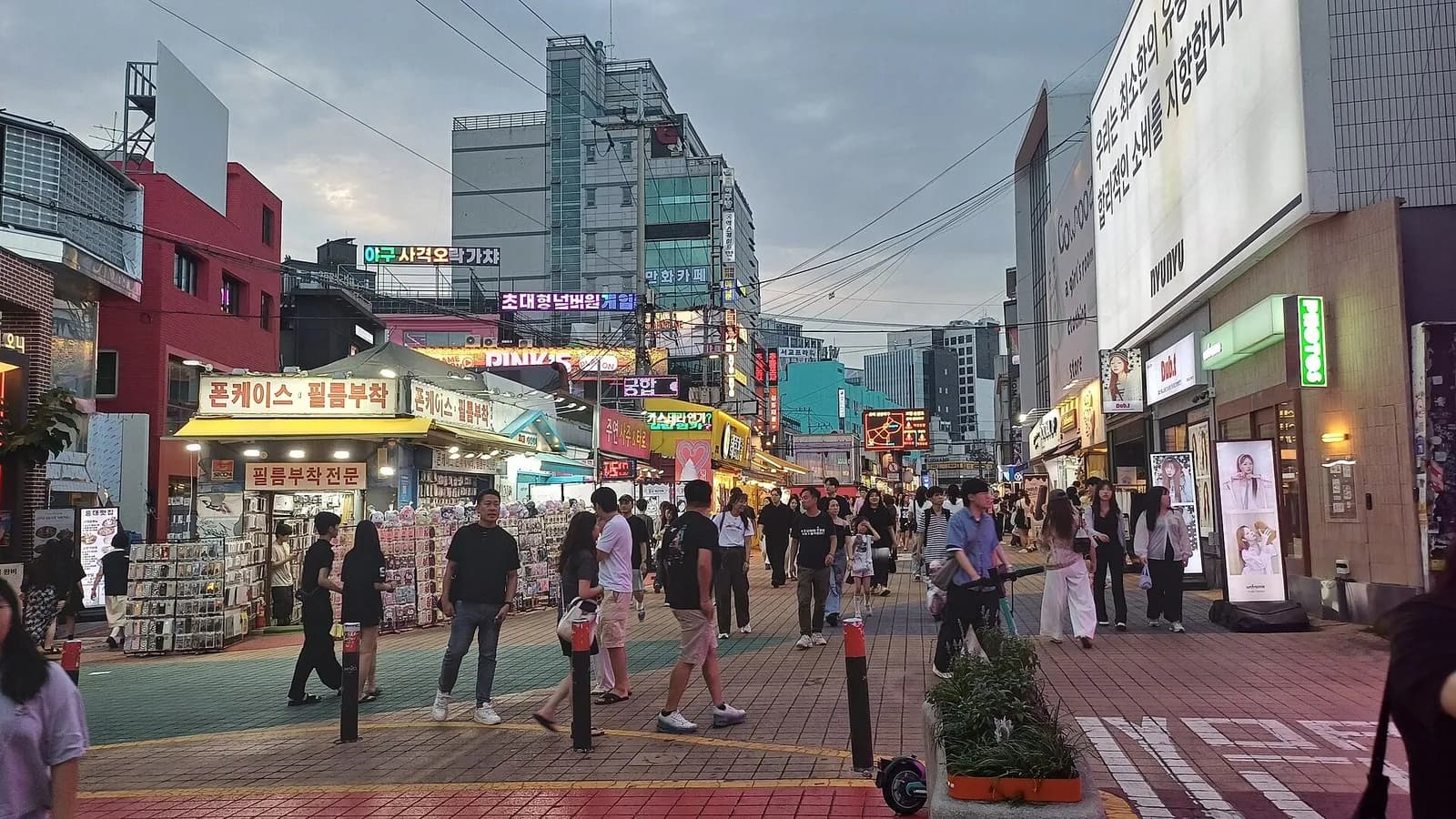 Make friends
Make a friend, not an itinerary
A coffee is a good place to start.